
Innovation districts in Amsterdam: from strategy to implementation
Paul Jansen (Arup / IADP) and Lucas Mol (Municipality of Amsterdam)
This article is published as a chapter in the book by Jacques van Dinteren and Paul Jansen (eds,) ‘Organised Innovation Spaces’. Nijmegen: Innovation Area Development Partnership (2026). The book will be digitally available in autumn 2026. See:
With its 2023 strategy, Amsterdam has set out a clear framework for developing innovation districts as places where economic, spatial, and network assets converge, and where knowledge is purposefully deployed for societal impact. In 2024, Arup refined this framework further and advised moving into implementation mode: delivering nine fully fledged innovation districts simultaneously is highly ambitious for Amsterdam, precisely because the ‘software’ (community, programming, governance, impact) is just as crucial as the physical development. Arup therefore recommends clustering within a small number of urban innovation ecosystems, and governance at three scales (city, ecosystem, area). This article primarily sets out how these ideas can be translated into policy, linked to the starting conditions and pitfalls described by Jacques van Dinteren.
In Amsterdam, the debate over innovation districts has matured rapidly. Not because the concept is new, but because the city realised that ‘innovation labels’ only gain value when they provide a governable logic for investment, collaboration and accountability.
The 2023 strategy positions innovation districts explicitly as places where knowledge and innovation can be used to maximum effect for societal impact, precisely through the combination of economic, spatial and network assets. This means that an innovation district is not a synonym for ‘an area with lots of offices’ or ‘a campus with a few start-ups’, but an instrument for structurally organising proximity, cross-overs and the flow from research to application.
At the same time, that definition contains an implicit policy claim: if you take it seriously, you must steer simultaneously on property and public space, on talent and entrepreneurship, and on community and programming. Underestimating any one of those dimensions increases the likelihood that you will achieve urban transformation, but not a sustainable innovation ecosystem.
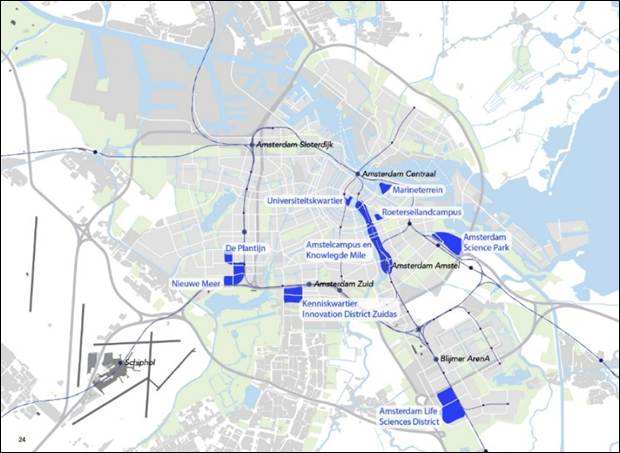
Figure 1: innovation districts in Amsterdam (source: Municipality of Amsterdam)
That exact tension is also central to Van Dinteren’s analysis, which argues that the concept of the innovation district has often been embraced in recent years. At the same time, it is legitimate to ask whether it primarily functions as an engine of urban transformation or city marketing, and only then as an engine of innovation (Van Dinteren, 2023). In other words, the policy challenge is less about formulating additional ambitions and more about designing an implementation model that integrates ambition and capacity. In Amsterdam, this is evident in the shift from a strategic framework (2023) to prioritisation and phasing (Arup, 2024), and subsequently to a joint implementation agenda.
If you want this to work as policy, you must therefore treat the term innovation district as an ‘operating concept’: it defines not only what you want to be, but above all how you programme, finance, steer and recalibrate, and how you prevent every area from trying to build the same complete set of amenities, governance and profiling, while the administrative and financial capacity for that is simply limited. And even if it were available, it would often be undesirable because different areas function differently.
The Amsterdam framework
The 2023 strategy offers a valuable foundation because it operationalises the concept of innovation districts along three assets that must reinforce one another. Economic assets relate to the mix and critical mass of companies, knowledge institutions and ‘innovation facilitators’ that create proximity advantages and determine distinctiveness; spatial assets must promote interaction and maximise the likelihood of serendipitous encounters through the quality of buildings, public space and amenities; network assets concern the diversity of networks and the extent to which governance actively stimulates those networks.
The strategy explicitly states that an innovation district is only ‘successful’ when all three assets are fully developed, which explains why some areas can appear strong (for example, many companies or attractive buildings) yet still lag in ecosystem terms.
The GIID framework with seven development principles then functions as a decision structure: specialisation and critical mass help determine what a district truly stands for and whether there is enough ‘weight’ to attract talent and investment; spatial quality and social networks focus on day-to-day functioning and dynamics; inclusion, finance and governance make clear that this is not purely economic development, but a broad urban project that must be open and accessible.
Precisely these last three principles are often the hardest from a policy perspective, because they require structural choices about public commitment, the distribution of costs and benefits, and mandates. Inclusion requires that amenities are attractive and accessible to people in surrounding neighbourhoods and that diversity is actively encouraged; finance explicitly also concerns investment in network organisation and affordable space for start-ups; governance is described as the structure that stimulates networks, builds joint branding, steers growth by attracting suitable parties and can even apply an exit strategy.
If you translate this into concrete steering questions for policy, you end up with a convenient set: what profile and which target groups do we choose (and which do we not), how do we safeguard proximity and encounters in the spatial plan, which parties feel co-ownership of the ecosystem and make a structural contribution, how do we organise accessibility and societal connections without this becoming a separate ‘participation track’, and, above all: which form of governance fits the development phase.
The importance of that phase logic is later made explicit by Arup. However, it is already embedded in the strategy: the extent to which assets are developed differs by area, and therefore, the policy intervention must differ too.
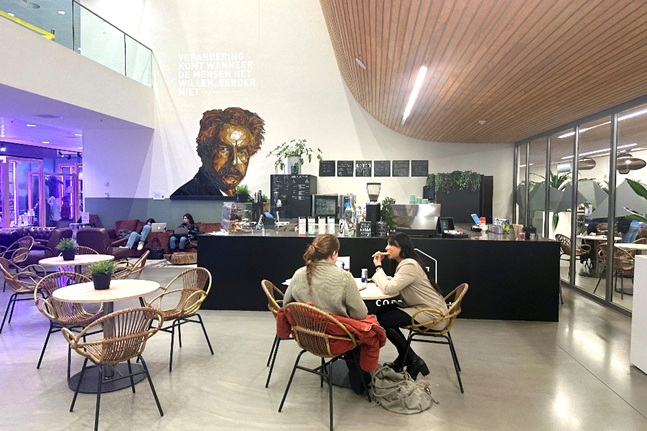
Figure 2: Hogeschool van Amsterdam, Knowledge Mile, Amsterdam (photo credit: Paul Jansen)
When is an innovation district more than a label?
The ‘conditions for successful development’ described by Van Dinteren (2023) help to read the Amsterdam framework as more than an ambitious policy document; they clarify what a public authority needs to be sharp on in the initial phase to prevent an innovation district from becoming mainly an appealing narrative without a deliverable basis.
Van Dinteren notes that Amsterdam applies three conditions: there must be a knowledge carrier that attracts other parties; there must be space to develop the area in line with innovation district principles; and there must be an ecosystem that is willing to collaborate on the district. These three conditions align one-to-one with Amsterdam’s asset approach. However, they subtly change the policy question: not ‘which area has potential’, but ‘which area already has a credible knowledge carrier, development space and willingness for collective action’.
This matters because Van Dinteren simultaneously warns that the popularity of the concept can also stem from the need for an engine for urban transformation or marketing. Regarding scale and the physical-functional requirements of proximity, Van Dinteren refers to Rosenthal & Strange, who argue that intensive interaction mainly takes place within the ‘first mile’ (around 1.6 km), and to the ‘5-minute campus’ idea, which stimulates unplanned encounters when most amenities lie within a short walking radius, leading, in terms of scale, to compact, walkable areas. In geographically larger innovation districts (think of the 22@ area in Barcelona), this often results in ‘smaller’ clusters.
This provides policymakers with a touchstone: when Amsterdam designates an area as an innovation district, the spatial design (routes, active ground-floor frontages, nodes, amenities, quality of stay) must demonstrably support encounters and cross-fertilisation; otherwise, the claim that it ‘maximises serendipitous encounters’ is not substantiated.
Van Dinteren also notes that many plans promise that innovation districts will substantially strengthen residents in surrounding, often vulnerable, neighbourhoods, but that sound research into those effects is often lacking. He also identifies risks, including displacement from rising housing costs and reduced liveability due to congestion. This is relevant in Amsterdam because inclusion is explicitly a core principle in the strategy. However, that principle is credible only if policy also builds in mechanisms to identify and mitigate adverse side effects.
From ‘nine districts’ to deliverable prioritisation and a focus on software
At its core, the Arup quick scan is not a revision of the strategy, but implementation advice that explicitly answers the questions that inevitably come up in practice: which instruments are needed, what do we do first and what later, what additional actors and forms of collaboration are required, and how do we concretely shape governance, outreach and impact.
The most decisive message is that delivering nine fully fledged innovation districts simultaneously with both socio-economic programming and physical area development is very ambitious for Amsterdam, but that there is also much to be gained from developing the nine areas in line with the principles of an innovation district, even if the end goal is not achieved immediately, and that the importance of the ‘software’ (socio-economic dynamics, active networks and communities) cannot be underestimated.
From a policy perspective, this is a turning point because it challenges the conventional assumption that area development automatically produces ecosystem development. Arup proposes a different order: you can invest in inviting places and buildings, but without structural community organisation, programming, business development, outreach and a shared narrative, the effect remains fragmented and often invisible. That latter point is further supported by Arup’s observation that there are examples of societal impact at both micro and macro levels, but that they remain ‘a well-kept secret’ and therefore need to be made far more visible.
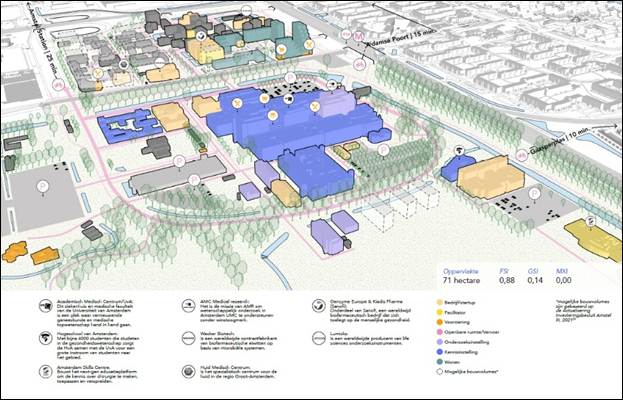
Figure 3: The Life Sciences District (source: Municipality of Amsterdam)
For that reason, Arup also introduces different development phases, in which area development and ecosystem development proceed in parallel. In practice this means that the same instruments should not be deployed everywhere at once, but that a minimum set of preconditions should be defined per phase: in the initiation phase the focus is on organising a coalition of the willing and a first positioning; in the start-up phase on quick wins in placemaking and programming that make the place ‘work’; in the growth phase on scaling through business support, talent pathways and amenities; and in the development phase on further professionalising the whole and structurally monitoring impact.
Although Arup does not prescribe this as a strict protocol, it is implicit in the direction: prioritising is not ‘less ambition’, it is the condition for making ambition deliverable and preventing the limited capacity of programme managers, community builders, and public resources from being spread too thinly across too many places.
It is also proposed to work through different development phases, clarifying that progress toward an innovation district is not an all-or-nothing process. A thriving innovation district as an end state is a fine aspiration. However, if a campus in the start-up phase is further developed (in line with innovation district principles) toward the growth phase (for instance, by actively activating the ecosystem), this constitutes progress.
Clustering and ecosystem steering
The core of Arup’s proposed approach is that it treats Amsterdam’s district portfolio as a set of locations within a small number of urban innovation ecosystems.
The proposal is to stimulate several thematic ecosystems in Amsterdam: a Tech & AI ecosystem (including Science Park and Nieuwe Meer), a Life Sciences/biotech ecosystem (including Health & Innovation District, Kenniskwartier Zuidas, the Life Sciences District and Science Park) and an Urban future & sustainability ecosystem (including Marineterrein, Science Park and Knowledge Mile/Amstelcampus).
Arup also advises exploring how inner-city knowledge areas (with a profile that cannot be directly linked to one of these themes), such as the University Quarter (UK) and the Roeterseiland Campus (REC), can be functionally connected to these ecosystems, and even to draw up a combined vision for UK, REC and Knowledge Mile (KM) describing both socio-economic programming and spatial ambitions.
From a policy perspective, this is effective because it addresses two problems simultaneously. First, it makes specialisation manageable: you do not need to have every district operate as a ‘full-stack’ ecosystem; instead, you organise specialisation and critical mass at the ecosystem level, enabling the bundling of profiling, acquisition, and human capital strategies.
Second, collaboration becomes less noncommittal: when ecosystems have a shared action plan, governance, and proposition, it becomes easier to make joint decisions about facilities, space for growth, investment priorities, and international positioning.
Arup provides explicit direction by advising that an action plan be drawn up for each ecosystem, setting out how the ecosystem will be activated, who the key players are, how internal and external profiling will take place, and which joint activities will be developed, with the municipality as lead and starting from an implementation organisation.
In terms of policy architecture, clustering therefore does not mean that areas become less important, but that the ‘economic logic’ shifts to a level where economies of scale arise, and where individual areas function as a kind of ‘clubhouse’ for a specific niche within the broader ecosystem.
Governance at three scales, clear tasks and avoiding ‘management overkill’
Both the 2023 strategy and Arup underscore that governance is not a side issue; it is the structure that stimulates networks, builds joint branding, and can steer an area’s growth by attracting appropriate parties.
Arup makes this concrete by organising governance at three scales, with different objectives at each, and explicitly warns that the aim is not to set up a range of new, complex structures, but to improve targeted collaboration without ‘overkill’ in organisational arrangements.
At the city level, Arup advises structurally connecting the nine districts in a triple-helix network, both politically and through the civil service, to better understand one another, inspire one another, and learn from one another. At the city level, work can be done on a joint communications strategy, positioning/branding and shared subsidy trajectories.
At the ecosystem level, the message is: work pragmatically through concrete action plans and an ‘active steward’ role that strengthens and guides existing initiatives to prevent duplication.
At the area level, governance must align with the development phase and context; Arup therefore advises that, for each area, an analysis of the stakeholders and existing agreements be conducted and, on that basis, the appropriate governance model chosen, ranging from a public–private partnership to self-governance or community-led governance.
This aligns strikingly closely with Van Dinteren’s observation that management and organisation are crucial but extremely difficult due to fragmented ownership and divergent interests, and because residents cannot be ignored in a mixed-use area; precisely for that reason, transparency, accessibility and empathetic, flexible stewardship are essential.
From a policy perspective, it follows that governance is not merely an organogram, but a set of agreements about mandate, role clarity and responsibilities: who decides on portfolio choices, who manages the ecosystem action plan and which parties own programme deliverables, and who at the area level is responsible for placemaking, programming and local outreach.
A mix of instruments per asset and per phase
A key risk of innovation district policy is that the toolkit fragments along municipal silos: area development and mobility on the one hand, economic programmes on the other, and network initiatives somewhere ‘in between’.
The strength of Amsterdam’s asset model is precisely that it invites you to group instruments around the functional logic of innovation. Spatial assets then call not only for densification and property programming, but for design choices that systematically provoke encounters: attractive public spaces, active ground-floor frontages, places where different target groups cross paths in everyday routines, and multimodal accessibility so that participation in events and collaboration is easy.
Van Dinteren puts this sharply by stating that public spaces are not merely aesthetic additions, but essential components that facilitate collaboration and creativity. Moreover, well-designed public spaces contribute to branding and identity, while physical barriers (such as major infrastructure) can act as psychological thresholds. These insights provide designers and developers with usable criteria for the property and the public realm against which they can test proposals.
Economic assets simultaneously require a recognisable ‘chain’ of support for entrepreneurs: access to talent, laboratories and testing facilities, guidance on valorisation, access to capital, and international networks.
Network assets, finally, require programming as the core product: not ad-hoc events, but a structural agenda that deliberately stimulates both strong ties (trust, repetition) and weak ties (new relationships that bring new information), as the strategy explicitly distinguishes.
The policy point is that ‘programming’ is not a communications tool but a development instrument: in early phases, it creates visibility and attracts new parties; in growth phases, it supports cross-overs and talent retention; in mature phases, it makes impact transferable and legitimises follow-on funding.
Arup’s phasing also allows for minimum requirements per phase: in the start-up phase, placemaking is often the fastest instrument for making a place work, but Arup emphasises that placemaking involves spatial, economic, and network assets and must therefore be approached integrally, not as a stand-alone activation.
If you set this up well in policy terms, you end up with a ‘phase-based menu’ of interventions that does not necessarily have to be laid down in long lists, but does need to function as a decision tree in project and investment decisions: every major spatial intervention must demonstrate how it supports encounter and network formation; every economic measure must demonstrate how it strengthens the ecosystem and is also made visible and accessible; and every governance step must demonstrate which assets it accelerates.
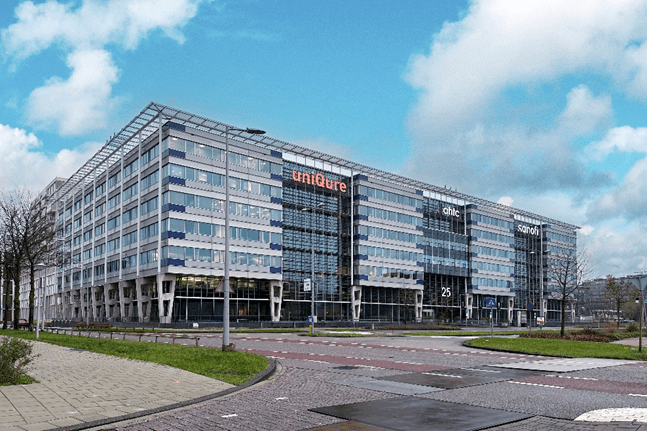
Figure 4: one of the buildings in the Amsterdam Life Science District (photo credit: Paul Jansen)
Funding and organisational capacity
The financial core of innovation districts is paradoxical: the largest public and private euros often go to ‘hardware’ (buildings, infrastructure), while success largely depends on relatively small but structural ‘software costs’ such as community management, programming, business development, outreach and impact reporting.
Arup explicitly notes that public parties often lead in stimulating socio-economic dynamics, and that the importance of this software cannot be underestimated. The 2023 strategy aligns with this by stating that developing the various assets requires a level of organisation and financial resources (often a combination of public and private capital), ranging from investment in network organisation to affordable accommodation for start-ups.
Van Dinteren explains why structural funding is crucial: it takes 20 to 25 years (or longer) for an innovation district to fully develop, and precisely for that reason, a detailed plan with a fixed horizon is not the best starting point; change should be expected, and strategies must be able to adjust flexibly, with transparency and accountability essential.
This has direct policy implications for Amsterdam. First, funding for software should not be treated as a temporary project subsidy, but as a multi-year provision that grows with phase and ambition, ideally with co-funding by anchor institutions and other stakeholders, because governance is preferably funded jointly to create shared ownership and buy-in.
Second, the city must design mechanisms to prevent any place from establishing its own organisation with its own overhead, as that becomes both expensive and administratively diffuse. Arup’s emphasis on pragmatic action plans at the ecosystem level and on avoiding ‘overkill’ is guiding here.
Third, policy must explicitly safeguard that organisational capacity does not disappear after an event that undermines momentum.
Visibility, findability and legitimacy
Arup’s observation that impact examples often remain a well-kept secret shows why impact reporting is essential: visibility is a precondition for legitimacy, as well as for acquisition, talent attraction, and the continuity of funding.
At the same time, Amsterdam must find a balance that Van Dinteren explicitly addresses: social promises are often made generously in many innovation district plans, while robust evidence is often lacking. Risks such as displacement and congestion are real.
Amsterdam’s 2023 strategy acknowledges this by positioning inclusion as a development principle and stating that innovation districts must be open and accessible to everyone, and that amenities should also be attractive to people in surrounding neighbourhoods.
The policy consequence is that impact and inclusion should not be added as separate chapters, but built into core products as quality criteria. The proposition overview should therefore not only show ‘who is who’, but also which societal applications are visible, how residents can participate (for example, through open days, low-threshold events, lifelong learning (LLO) pathways), and which effects (positive and negative) are being monitored.
The narrative should not only project ambition but also include a credible ‘reason to believe,’ as stakeholders phrase it. If Amsterdam does this, an implementation model emerges in which profiling, governance, and legitimacy reinforce one another: you make visible what is happening, you organise collaboration around focus areas and ecosystems, and you explain to the public what the city gains from it, and how you will recalibrate when social effects turn out to be undesirable. That makes innovation district policy not only attractive, but also defensible and sustainable.
References
- Municipality of Amsterdam (2023). Strategie innovatiedistricten. Amsterdam (December 2023).
- Arup / Paul Jansen (2024). Nota Strategie Innovatie Districten – Amsterdam: Ontwikkelfase en prioritering, vervolgacties (ID AMS, version Dec 2024).
- Van Dinteren, Jacques (2023). Conditions for the successful development of an innovation district. Paper for the 40th IASP World Conference on Science Parks and Areas of Innovation, Luxembourg, 12-15 September 2023.

