
Trends in the innovation landscape: 2016 – 2026
Jacques van Dinteren, Innovation Area Development Partnership (IADP) / Zjak Consult
Over approximately a decade, Western Europe’s ‘organised innovation spaces’ have transitioned from isolated science parks to more integrated regional innovation ecosystems. This shift has been driven by the Fourth Industrial Revolution, hybrid working patterns, and increasing demand for environments that combine high-specification, secure laboratories and prototyping or maker facilities with a welcoming public realm that encourages interaction and placemaking. A European Commission taxonomy helps organise the landscape by categorising formats such as science and technology parks, innovation districts, campuses, incubators, and living labs, while recognising newer policy tools, including testbeds and regulatory sandboxes. Innovation districts, in particular, have expanded rapidly as accessible urban areas that attract talent and facilitate cross-sector experimentation. Meanwhile, science parks continue to play a vital role in providing deep-tech infrastructure and opportunities for scaling. Policy is becoming more regional and mission-driven, linking innovation to societal transitions such as climate, health, and security.
When the Innovation Area Development Partnership (IADP; see iadp.co) was founded at the start of 2016, we envisioned a small collaborative network: a group of professionals working interdisciplinarily to develop organised innovation spaces. However, within just a few months, the scope of work expanded quickly. Many organisations and companies expressed interest, particularly in sharing knowledge about these dynamic areas. As a result, IADP initially became a knowledge platform. Additionally, the partners are well equipped to initiate (often interdisciplinary) projects together.
What began as a small group of around seven partners has grown over ten years into an organisation with more than fifty partners in the Netherlands and Belgium. We also enjoy looking beyond our national borders. IADP has been a member of IASP (International Association of Science Parks and Areas of Innovation) since its inception, thereby establishing international contacts and facilitating knowledge exchange. IASP considers IADP to be the Dutch representation at its congresses and other activities.
Ten years is not a particularly long period, but looking back, a great deal has happened in our field. In this article, some are highlighted. The focus is mainly on the Western European context. Since the start of IADP in 2016, Western Europe has seen a shift in how innovation is organised and supported spatially. While science parks and innovation districts remain essential focal points, they have become more strategically integrated within regional ecosystems, European policy frameworks, and societal transitions.
The context
The Fourth Industrial Revolution has accelerated innovation and made it more complex. Mechanical, medical, electronic, industrial, and other technologies are converging, leading to innovative developments. As a result, organisations increasingly require locations where collaboration, testing, and scaling are in proximity. For innovation areas, this means not only greater demand for specialised labs and new ways of working together, but also for urban quality and new locations that attract talent and enable interaction (Figure 1).
This technological wave also affects working methods. Hybrid working has become established since the coronavirus crisis. Companies and institutions are seeking a new balance between home, office and laboratory. This increases the value of places that combine interaction and concentration, such as secure labs and maker spaces, as well as informal meeting places and short walking and cycling routes.
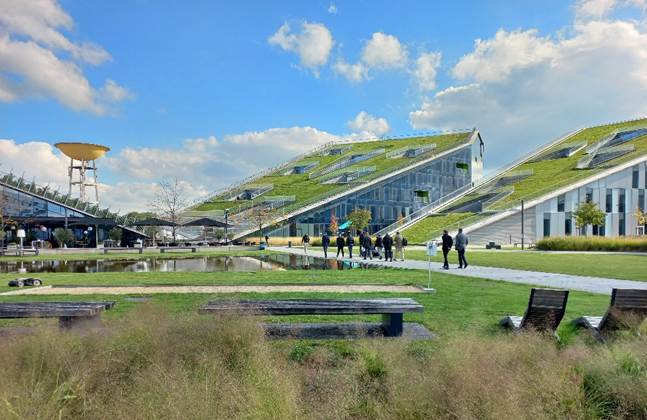
Figure 1: The quality of public space. Corda Campus in Hasselt, Belgium (photo credit: Jacques van Dinteren)
Organised innovation spaces
Science parks have been gradually developing in the Netherlands since the 1980s. In the 1990s, around seven science parks could be identified. As development gained momentum, incubators and accelerators also appeared, and some science parks were designated as campuses. An industrial co-innovation park, such as the High Tech Campus in Eindhoven, was reconfigured into a science park following Philips’ reduced prominence. Moreover, in recent years, numerous initiatives in the Netherlands have emerged to develop innovation districts, raising the question of whether there are too many initiatives.
The picture for Western Europe is essentially the same, although there are apparent differences in pace between countries. Various types of so-called organised innovation spaces also exist there. However, there is often disagreement about what exactly these spaces are and which types can be distinguished. In 2022, the European Commission sought to clarify the issue, ensuring that everyone used the same terminology in policy and subsidy discussions. This would facilitate consistent language across all areas, thereby aligning policy, design, and financing more effectively. The Joint Research Centre (JRC) of the European Commission, therefore, commissioned a taxonomy of organised innovation spaces (Sanz, 2023). Science & technology parks, innovation districts, industrial co-innovation campuses, areas of innovation, incubators/accelerators and living labs are grouped together in this taxonomy with typical differences in scale, governance and services. Within this framework, science parks are the veterans of the innovation landscape, whilst innovation districts and living labs have certainly been ‘the new kids on the block’ over the past ten years.
Partly in response to the rise of living labs, at the end of the previous decade, the European Commission opened the door to so-called ‘regulatory sandboxes’ and ‘testbeds’. A testbed is a (physical or digital testing environment where new technology, services, or processes can be safely and controllably tried out, measured and scaled up. The central question is: does it work? A regulatory sandbox is a temporary, demarcated regulatory framework in which companies, with permission from a supervisory authority, may test innovative products or services in the market with (partial) exemptions or customisations compared to standard legislation and regulations. The central question, then, is whether it is permitted under the legal and statutory frameworks. Science parks often provide good infrastructure for testbeds (labs, 5G, simulation). Innovation districts, on the other hand, lend themselves to ‘real-world’ testbeds (due to their characteristic mixed urban environment) and to pilots with actual users.
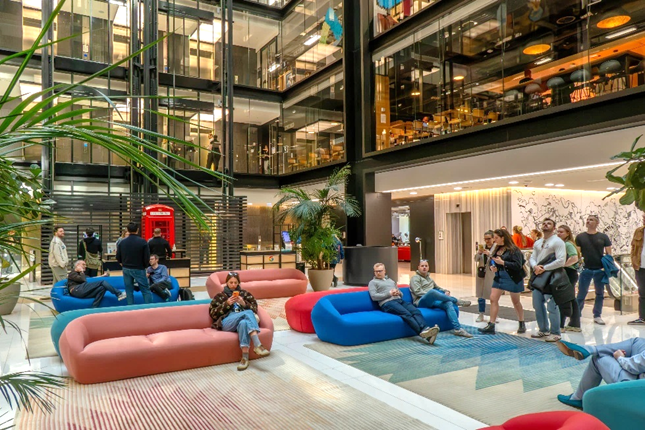
Figure 2: the entrance hall of Google in the Knowledge Quarter, a well-known innovation district in London, UK (photo credit: Jacques van Dinteren)
The rapid rise of innovation districts
In Western Europe, innovation districts have sparked a revolution over the past decade (Figure 2). Where the knowledge economy was once confined to often remote science parks, innovation is now also focused on easily accessible (usually central) urban districts that combine work, living, education, and culture. The driving force behind this is as much demographic as it is economic: talent wants to walk to the laboratory, have coffee with a designer around the corner, and attend a concert in the same area in the evening. The 22@Barcelona area is considered the first European innovation district to emerge, with a significant element of trial and error. That area certainly serves as a source of inspiration, but the 2014 article by Bruce Katz and Julie Wagner concerning innovation districts has perhaps had a greater impact. Add to this that local authorities sought new urban energy after the financial crisis, that universities became more consciously engaged with the city, and that companies discovered that density and diversity accelerate creativity.
Thus, vibrant ecosystems have developed around stations, port areas, and old industrial complexes, where start-ups, scale-ups, corporations, and knowledge institutions meet daily. Maker spaces sit alongside prototyping labs; venture studios share the same premises as a university of applied sciences. Public space also plays an important role: encounters occur on the street, in cafés, and in other public areas, giving rise to new projects. The infrastructure is both urban and digital, featuring high-quality public transport, fast fibre-optic connections, short commuting distances, and a cultural layer that attracts talent. As a result, teams move more quickly from idea to prototype, from pilot to market.
In the United Kingdom, innovation districts have even united in the UK Innovation Districts Group (UK IDG). As a peer network, they aim to harness the power of place-based innovation to increase productivity and prosperity and accelerate inclusive urban growth. This should lead to increased social returns from innovation districts. Globally, there is also the GIID, which brings together several (primarily American) innovation districts.
Science parks under pressure?
Most science parks have prospered in recent decades, but this success can also breed complacency. Innovation districts now respond more effectively to current trends. A science park is not an innovation district and will not quickly become one. However, a science park can learn from the successes of innovation districts. For example, is the science park large enough to permit (dedicated) housing? Can more be done regarding the quality and atmosphere of the work environment? Could a broader target group be attracted that works on innovations from the same knowledge base? How can multimodal accessibility be improved?
Science parks and innovation districts sometimes seem to be fishing in the same pond. However, apart from the need for science parks to modernise, the two types of organised innovation spaces are primarily complementary. Innovation districts excel in the early phase, cross-over creativity and visibility. Science parks excel in (environmental) space, tranquillity and robust facilities. For deep tech, wet labs, cleanrooms, and pilot production, for example, the science park remains unrivalled. For rapid pilots, new combinations of disciplines and attracting urban-oriented talent, the innovation district is often the ideal location in turn.
From individual spaces to a regional ecosystem
When discussing innovation, we can examine organised innovation spaces (and we must continue to do so). However, over the past decade, we have noticed that, for example, during IASP congresses, attention has increasingly shifted to the region. Organised innovation spaces in which companies and institutions are located can function effectively only in an innovation-oriented region. The linkages of companies and institutions based in an organised innovation space are, of course, not limited to that location; they also extend to the region and often extend far beyond. Moreover, while science parks and the like are essential concentrations of innovative companies and institutions, this does not preclude innovative companies and organisations from finding a place elsewhere in the region from time to time. Moreover, from the other side, there is little point in establishing a science park or another type of innovation space if innovation-oriented organisations do not already characterise the region.
In the Netherlands, the regional scale level is gradually gaining ground with the national government. The Spatial Economic Vision, established in 2025, and the Draft National Spatial Strategy, presented in August 2025, recognise innovation areas as indispensable links for the future economy. The Spatial Economic Vision establishes regional customisation (leveraging regional strengths) as a guiding principle, among others. The Draft National Spatial Strategy emphasises, as an extension of this, that each region has a unique innovative ecosystem. A good connection to knowledge institutions, infrastructure, and the labour market increases both regional and national earning power, with major campuses serving as focal points. However, the matter rests with these determinations; further elaboration is currently lacking. This may be remedied in the Implementation Agendas currently under development.
In European innovation policy, conversely, the regional level is more readily recognisable and partly leading. The New European Innovation Agenda, released in July 2022, provides direction for Innovation policy. This agenda concentrates on deep tech, closing the scale-up gap, enhancing talent and capital policies, and strengthening regional ecosystems as key priorities for execution. The latter has been detailed under the Regional Innovation Valleys section. The European Commission selected 151 regions that must fortify their ecosystems. These regions are also expected to collaborate with less innovative regions in research and innovation, thereby narrowing disparities in these areas and boosting investments.
From specialisation to a broader approach
The European Commission’s request for greater clarity on the terminology used around organised innovation spaces should help objectify discussions on ‘branding versus content’, which addresses whether a science park should adopt a particular profile. There appears to have been a trend in recent years toward a broader approach by science park management, in particular. Whether this is connected to the rise of innovation districts is unclear, but these districts, by their nature (dispersed ownership, no sharp demarcation), generally lack a clear profile. This develops organically and encompasses different types of companies whose potential complementarity can precisely stimulate innovations.
In this context, the concept of ‘shared knowledge base’ is relevant. A shared knowledge base is the common foundation of knowledge, skills, technologies and market logic upon which organisations in an innovation environment build. The idea is that one does not simply cluster around a single sector, but brings together parties that are substantively related; they essentially speak the same language, allowing ideas to transfer more easily and making collaboration more worthwhile. This relatedness, often referred to as ‘related variety’, increases the likelihood of cross-fertilisation and productive knowledge spillovers. In practical terms, the shared knowledge base takes shape through shared facilities, infrastructure and information systems. By sharing laboratories, workshops, data, and community activities, a routine exchange emerges, thresholds are lowered, and an ecosystem grows in which learning, innovating, and scaling reinforce one another. Scale plays a role here. In large-scale innovation spaces, a mix of activities works well when grounded in the same knowledge base; this yields many possible combinations and unexpected connections. Small-scale organised innovation spaces could flourish precisely through specialisation, but should have strong linkages with companies and knowledge institutions elsewhere to avoid a standstill in innovation.
Notably, another shift has also occurred over the past decade. Possibly stemming from the idea of a shared knowledge base, innovation policy has shifted from a largely sectoral approach to a focus on mission-driven approaches. In doing so, governments deliberately attempt to organise actors across sectoral boundaries to address complex societal challenges and to coordinate resources and instruments in one direction. At the EU level, this has been made concrete in the Horizon Europe program for 2021-2027, with five missions (cancer, climate adaptation, climate-neutral and smart cities, healthy soils, and restoration of oceans and waters) that bundle knowledge, policy, and financing towards time-bound objectives. A similar movement occurred in the Netherlands. In the Parliamentary letter ‘Towards mission-driven innovation policy with impact’ (13 July 2018, Ministry of Economic Affairs and Climate Policy), the classic top sectors policy was transformed into a mission-driven approach. No separate missions had been established as of 2018. The Parliamentary letter did, however, already mention four societal themes as a focus for elaborating missions. Subsequently, the themes were explicitly established in the Parliamentary letter ‘Revised missions of mission-driven innovation policy’ (30 May 2023). These concern five central missions: climate & energy, circular economy, agriculture-water-food, health & care, and, finally, security.
Demand for space
Following the continued growth and demand for innovation noted above, it is only logical that demand for buildings and floor space is also increasing. Between 2016 and 2025, demand for high-quality lab and R&D space grew sharply. This growth is not only about additional square metres but also about how such places are organised, operated, and financed. Increasingly, the focus has shifted from shell-only buildings to full-service offerings that include services, management, and support. You also see more multi-tenant sites and shared facilities, such as core labs and shared equipment. This helps start-ups and scale-ups get going faster and grow more quickly. Shared research infrastructure with expert support facilitates collaboration, accelerates research, and makes expensive equipment accessible to more organisations.
Space constraints also encouraged new solutions. Interest in adaptive reuse rose strongly. This means converting vacant offices, retail premises or business parks into, for example, laboratories. It can reduce space shortages and lower CO₂ impact. At the same time, the outcome depends heavily on the existing building and the extent of the required changes.
Over the same period, it also became clear that sustainability and energy are demanding requirements. Climate targets and local obligations play a role, as do practical issues: how to organise energy solutions across a campus and how to deal with grid congestion. This is logical, because laboratories often use far more energy per square metre than offices. As a result, energy savings and intelligent building systems are not ‘nice to have’ but essential. In the Netherlands, this became especially visible over the past decade as grid operators increasingly had to manage scarce connection capacity, which can delay plans for new, energy-intensive buildings.
In conclusion
As mentioned earlier, ten years is not long, but in the dynamic world of organised innovation spaces, several clear trends have nevertheless emerged. Innovation districts have established themselves as urban engines where knowledge, talent, and entrepreneurship converge. At the same time, science parks continue to demonstrate their value as a robust foundation for deep-tech and scaling, among other benefits. At the same time, coordination at the regional level is growing: governments and others are well aware of the importance of connecting individual organised innovation spaces with companies and institutions outside these spaces to form a regional ecosystem. Within this, more space is being created to experiment in testbeds and sandboxes. The transition to hybrid working, accelerated in part by the coronavirus crisis, is fostering mixed, high-quality, well-designed work and learning environments with attractive public spaces (Figure 3). Further anchoring of regional collaboration and national frameworks is logical. In terms of content, we observe a broadening of target groups and themes, with a greater focus on societal issues than on specific sectors.
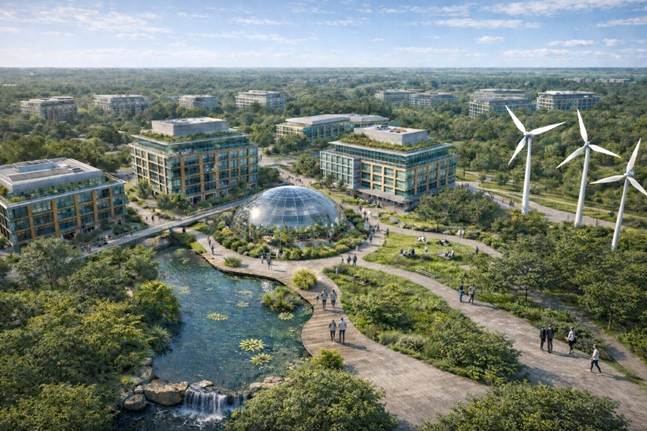
Figure 3: the near future
Against this backdrop, the Innovation Area Development Partnership will continue its activities with great enthusiasm in the years to come. We will continue to exchange knowledge about organised innovation spaces (what works, what works less well, and why), jointly initiate and realise concrete projects (from area programming to experimental facilities), and keep our finger on the pulse of this dynamic field by sharply identifying and interpreting trends. With this, we aim not only to learn but also to act, thereby creating the conditions for these trends to develop sustainably.
References
- European Commission (2022), A New European Innovation Agenda. Document 52022DC0332.
- Katz, Bruce, and Julie Wagner (2014), The rise of innovation districts: a new geography of innovation in America. Metropolitan Policy Program at Brookings. Brookings Institution.
- Ministerie van Economische Zaken en Klimaat (2018), Naar missiegedreven innovatiebeleid met impact. Kamerbrief DGBI-I&K / 18148309.
- Ministerie van Economische Zaken (2025), Ruimtelijk Economische Visie. Ruimte voor een dynamische economie in tijden van verandering.
- Ministerie van Volkshuisvesting en Ruimtelijke Ordening (2025), Ontwerp Nota Ruimte.
- Sanz, L., Klofsten, M., Van Dinteren, J. and Jansen, P., A Taxonomy of Organised Innovation Spaces, Battiston, A. and Fazio, A. editors, Publications Office of the European Union, Luxembourg, 2023, doi:10.2760/628200, JRC134965.
This article is published as a chapter in the book by Jacques van Dinteren and Paul Jansen (eds,) ‘Organised Innovation Spaces’. Nijmegen: Innovation Area Development Partnership (2026). The book will be digitally available in autumn 2026.

