
Science parks in The Netherlands: the early years
Jacques van Dinteren, IADP / Zjak Consult
Summary
This article examines the emergence of science parks in the Netherlands between 1980 and 1995. Economic challenges, cuts in government funding for universities, and a shift toward knowledge valorisation drove the development of these parks. Not all efforts were successful. Critical factors for success included strong university involvement, sector-specific strategies, start-up support, and proximity to knowledge institutions. Government subsidies also played a vital role, particularly in economically disadvantaged regions. Despite early challenges with occupancy and tenant selection, science parks have become a significant infrastructure for innovation and entrepreneurship. These developments reflect the Netherlands’ transition to a knowledge-driven economy, with science parks and other organised innovation spaces evolving into key platforms for research-commercialisation partnerships.
This blog is published as a chapter in the book by Jacques van Dinteren and Paul Jansen (eds,) ‘Organised Innovation Spaces’. Nijmegen: Innovation Area Development Partnership (2026). The book will be digitally available in autumn 2026.
Here we analyse the planning and realisation of the first Dutch science parks[1]. For this purpose, Delpher was utilised, a freely accessible database of the Royal Library that contains historical newspapers, magazines, and other documents from Dutch libraries and institutions. Most newspapers in Delpher are available up to and including 1995. A search for ‘science park’ yields 454 results, ranging from short news items to more in-depth articles.
In addition to the newspaper articles used here, there are undoubtedly other sources, but these are usually buried deep in archives. For example, in cities such as Leiden, Eindhoven, Twente, Nijmegen, Wageningen, and Rotterdam, the development of a science park was already being considered in the early 1980s. However, these plans were still so vague that they were not publicised in the press. The advantage of newspaper reports is that news about a proposed science park usually appears only when the plans have a somewhat solid basis.
Using Dutch newspapers as a starting point, the term ‘science park’ first appeared in the early 1980s. When we examine the frequency with which the term occurs in newspapers, we see an initial peak in 1983 and a more pronounced peak in coverage between 1987 and 1991 (Figure 1). Today, science parks are no longer the only type of organised innovation space; industrial innovation campuses and innovation districts are also part of the Dutch innovation landscape. However, at the end of the last century, those terms were not yet in use and had not yet been conceived.
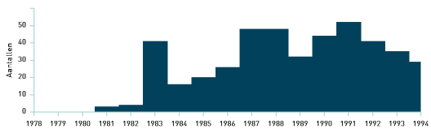
Figure 1: The availability of newspaper articles containing the term ‘science park‘
The rise of science parks is closely tied to the need to apply scientific knowledge in practical applications. In the Netherlands, however, this concept only began to take concrete shape from the 1980s onwards, partly under the influence of various policy developments. The first signs of such developments date back to the early 1950s in the United States. The impetus for these Dutch developments arose in the 1970s, when the Netherlands began to emphasise the valorisation of knowledge. The idea was that universities and research institutes should play a more decisive role in supporting industry. This vision was formally laid down in the 1979 Innovation Memorandum of the Van Agt government, which introduced new policies to encourage technological innovation and boost the stagnating economy. A key priority was promoting cooperation between universities and industry. Although science parks were not explicitly mentioned, the memorandum laid the groundwork for their development by stressing that universities should direct their research more toward industry and facilitate knowledge transfer. In the 1980s, this process was further accelerated by cuts in government funding for universities. They were expected to offset these cuts by financing research from what is known as the third funding stream[2], thereby strengthening cooperation between universities and industry and occasionally prompting explorations of what a science park might contribute in this context.
The first plans
The University of Groningen was the first to propose concrete plans for a science park. In 1981, the university intended to develop a park in the Paddepoel district. Professor Witholt, from the biochemistry laboratory and the project’s initiator, cited successful American examples in Boston and San Francisco. He also pointed to the success of the Technische Hogeschool Twente (Twente University of Technology), where 50 former staff members had founded 43 companies employing 141 people (Nieuwsblad van het Noorden, 21 May 1981).
The Groningen initiative took a more concrete form in 1983 with the establishment of the Science Park Groningen Foundation. The Ministry of Economic Affairs supported the initiative with a subsidy of 7.8 million guilders (now € 9 million; De Volkskrant, 12 September 1983). The availability of financial resources, owing to the economic disadvantage of the Northern Netherlands, was crucial to the Groningen venture. The ‘Integraal Structuurplan Noorden des Lands’ (Integral Structural Plan for the Northern Regions) provided funding opportunities, and the University of Groningen also set aside resources. One early success story involved two astronomers who, with the foundation’s support, developed an innovative method for computer animation. They received start-up capital of 100,000 guilders (now about €115,000), with the agreement that it would be repaid later (Algemeen Dagblad, 10 August 1984). However, at that time, there was no sign of any buildings, let alone a physical park.
Meanwhile, interest in a comparable initiative arose in the southern Netherlands. In 1983, rector magnificus Hemker of Maastricht University introduced ‘Wetenschaps Industrie Limburg‘ (WIL, or Science Industry Limburg), which sought to commercialise academic research. Hemker’s motto, “Where there is a WIL, there is a way,” underscored his view that universities have a central role in regional economic development (Limburgsch Dagblad, 15 January 1983). The university established an office for contract research and consultancy in biotechnology. Hemker even envisaged a science park where small and medium-sized businesses would be offered space within the university walls to launch new enterprises in collaboration with university staff. However, there was no sign of concrete physical development here either.
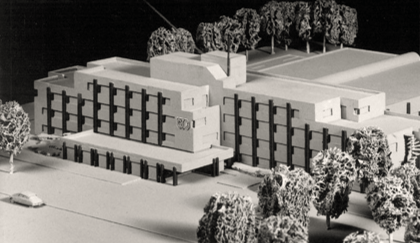
Figure 2: IAA Architects designed the BTC building
At that time, things were different in Twente. In 1980, plans were drawn up for a Bedrijfstechnologisch Centrum (BTC; Business and Technology Centre; Figure 2). The idea originated in the United States, where Business and Technology Centres had already demonstrated their value. BTC Twente aimed to help fledgling microelectronics companies increase their chances of success. The idea appeared at an opportune moment. Twente was then facing a decline in the textile sector, while microelectronics was on the rise.
In January 1981, the BTC Twente plan was approved, and by 1984, the building was completed. In 1985, 53 small businesses in the BTC collectively employed 230 people. NRC Handelsblad (14 November 1985) referred to it as the most successful Dutch science park, although it explicitly did not wish to be called that. Rightly so, because the BTC was no more than a single multi-tenant building. Director Van Driem downplayed its significance even further: “Many of our businesses are not science-oriented. We deliberately omitted the word ‘science’ from our name. We are a multi-tenant building for Twente businesses.” Nonetheless, the NRC noted that BTC continued to work closely with the Technische Hogeschool Twente. Recent graduates from this technical university could quickly get started in the BTC through a so-called TOP scheme (Tijdelijke OndernemingsPlaatsen, or Temporary Entrepreneurship Placements), which allowed graduates to spend half a year setting up a business based at the university. In fact, the BTC building can also be seen as the impetus for the Business and Science Park Twente that was realised in the adjacent area in 1989 and whose contours had already been outlined in 1984 in a memorandum by Vander Meer & Van Tilburg for the municipality of Enschede, at that time under the name Technopolis Twente.
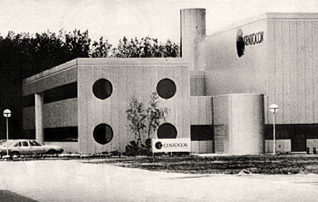
Figure 3: The Centocor building at the Bio Science Park in Leiden (1988)
A notable development in 1984 was the interest of the first private developer. The construction and project development company Wilma presented plans for a ‘Centre for Industrial Research and Development‘ (Ciro) in Capelle aan den IJssel, which would be located on a 100-hectare site adjacent to Erasmus University Rotterdam. This centre, intended as a Dutch variant of a science park, would collaborate with Erasmus University, Delft University of Technology, and TNO (Algemeen Dagblad, 20 March 1984). This project later evolved into Brainpark Rotterdam, though it ultimately took a different direction and became a business park, which will be discussed later.
Leiden University also took significant steps during this period. In January 1984, the American firm Promega-Biotec established a sales office in the Gollaeus Laboratory, brought in by professor De Waard’s Enzymology Department (NRC Handelsblad, 21-01-1984). A year later, another American biotechnology firm, Molecular Genetics Inc. (MGI), announced that it would establish its first European branch in the planned Bio Science Park. At the same time, Mogen BV was founded with a two-million-dollar investment by the Maatschappij voor Industriële Projecten (Society for Industrial Projects; De Volkskrant, 7 February 1985). Leiden deliberately chose biotechnology as a focal point for job creation and the attraction of high-value industries. In an unusual decision, the plan to build 1,900 houses was replaced by offering space on that site for biotechnological companies (De Telegraaf, 24 August 1985). The park drew not only American firms, such as Centocor (Figure 9.3), Promega, and Mogen, but also Dutch enterprises, including Holland Bio Tech.
The second half of the 1980s
The previously mentioned Bedrijfs Technologisch Centrum (BTC) in Twente served as the precursor to a more ambitious project: the Business & Science Park Twente, which was developed to the south of the Technische Hogeschool (later the University of Twente). In 1986, according to Mayor Wierenga, the park accommodated approximately 60 companies (Nederlands Dagblad, 25 January 1986), most of which were likely located within the BTC itself. Development of the park proper did not proceed smoothly at that time. This is evident, for example, from the sale of a 3,300-square-metre plot to Wellinga Kantoormeubelen, a company with no university ties unless one counts the supply of office furniture (NRC Handelsblad, 23 December 1988). The broad term ‘business & science‘ apparently permitted a more flexible admissions policy than initially intended.
In Leiden, meanwhile, progress was faster. In 1985, State Secretary Van Zeil drove in the first pile for the Academisch Bedrijven Centrum (Academic Business Centre, ABC; De Volkskrant, 9 February 1985). This centre focused explicitly on start-up biotechnology firms. High demand for space soon led, according to ABC Chairman Keijser, to plans for expansion. The success of the Bio Science Park was primarily attributed to intensive collaboration between Leiden University and the pharmaceutical industry. However, as De Volkskrant reported, this cooperation also presented challenges, particularly regarding patents and the freedom to publish.
That same year, NRC Handelsblad (14 November 1985) noted a growing number of plans for science parks in the Netherlands, with initiatives in Nijmegen, Delft, Rotterdam, and Eindhoven. In early 1986, the Catholic University of Nijmegen, in collaboration with Stichting Gelder-Kennis (Gelder Knowledge Foundation), the Actieprogramma Regionale Economie Nijmegen (Nijmegen Regional Economy Action Programme), and the Province of Gelderland, initiated a feasibility study (Algemeen Dagblad, 1 March 1986).
Simultaneously, Eindhoven unveiled a plan for Science Park Eindhoven on the Ekkersrijt industrial estate (Algemeen Dagblad, 6 February 1986). They even contemplated building a ‘teleboard‘, a cluster of advanced communication technologies that would enable companies and institutions to confer with one another and with the rest of the world at lightning speed via computers and other means. Although Queen’s Commissioner Van Agt predicted a high-tech future for the Province of Brabant at the official opening in 1987 (NRC Handelsblad, 24 January 1987), a year later, only one technology company (Positronika BV) was operating on the 15-hectare site (NRC Handelsblad, 23 December 1988). Ultimately, Science Park Eindhoven evolved into a business park. This loss was later more than offset by projects such as the High Tech Campus, the Automotive Campus, the ASML Campus, and the Brainport Industries Campus, so Van Agt’s prophecy of a high-tech future for Brabant was ultimately fulfilled.
Although Utrecht was not yet mentioned in the list above, it too had concrete plans (Trouw, 22 January 1986). In October 1987, the university’s executive board presented a plan to collaborate more closely with industry, thereby establishing a science park surrounding the university buildings in De Uithof. The report ‘Een bedrijvige universiteit‘ (‘An enterprising university‘) envisaged De Uithof as a knowledge centre, with the university at its core and institutes such as TNO and KNMI around it. At the time, university-based contract research accounted for 10 per cent of turnover but was expected to grow to 20-25 per cent without upsetting the balance with basic research. The goal was to establish a large-scale science park that offered small-scale partnerships between the university and private enterprises (De Volkskrant, 4 December 1987).
In Groningen, where the first science park initiative began, physical development proceeded differently from that in Leiden. Whereas the Leiden Bio Science Park already had tangible tenants, Groningen’s initial focus under the Zernike Science Park Foundation was on forming partnerships. It was not until March 1986 that the first plans for a modest 1,000 m² business centre were announced, intended for six high-tech companies, along with shared services and an exhibition space. That multi-tenant building was fully occupied at the official opening on 28 October 1988.
In 1987, plans also emerged for an Agri-Bio Science Park in Lelystad, envisioned as a hub for scientific institutes and businesses in the agricultural sector (Leeuwarder Courant, 22 July 1987). However, these plans seemed more driven by Lelystad’s economic disadvantage than by its strong local knowledge base. As a result, the project never got off the ground.
A similar fate befell the biological science centre ‘Biologica’ in South Limburg. Funding became available in that region for the expansion of Science Park Maastricht, which aimed to identify, select, and develop commercial projects in medical technology and telematics (Limburgsch Dagblad, 23 November 1987). The term ‘science park‘ was somewhat grandiose for a development that, in reality, involved only two buildings. In 1988, the university unveiled plans for a new building in Maastricht’s Randwyck, intended for businesses that had outgrown their start-up phase (Limburgsch Dagblad, 21 September 1988).
Gaining momentum
In 1988, science park development in the Netherlands received renewed impetus, including plans in Amsterdam. The University of Amsterdam and the municipality began the construction of a science park in the Watergraafsmeer district, situated on the site of the University of Amsterdam and the Netherlands Organisation for Scientific Research (NWO). It was intended for commercial enterprises conducting scientific research or wishing to benefit from proximity to research institutes. The plans included a multi-tenant building for young entrepreneurs, and a joint development company was established with the municipality, the university, and the Chamber of Commerce as partners (Het Parool, 10 February 1988).
A similar, albeit less publicised, development was underway in Wageningen. The Agro-Bedrijfstechnologisch Centrum (Agro-BTC), established in 1983, had made a shaky start with low occupancy rates and financial difficulties. After refocusing on the agricultural sector and reopening in 1986, it had housed 21 tenants by May 1988, including major corporations such as Philips, IBM, and Digital, as well as 12 start-ups (De Volkskrant, 20 May 1988). The centre would later evolve into the Agro Business Park, which, despite its modest size, served as a precursor to the later Wageningen Campus.
Universities’ enthusiasm for establishing science parks was partly fuelled by the need to generate additional income through the third funding stream, a consequence of cuts in government grants. Although collaboration with the private sector was promising, the government raised concerns in 1988 about how these additional revenues were spent, which apparently did not fully align with its intentions. Some revenue was placed in separate foundations or used for salary increases. The University of Twente, for example, was particularly successful at attracting contracts from private enterprises and government agencies. Its over six hundred contracts accounted for one-sixth of the university’s total revenue (Algemeen Dagblad, 21 April 1990). It is therefore hardly surprising that the newspaper characterised the University of Twente as an ‘enterprising university‘. With the addition of a business administration discipline, it became even more closely linked with private enterprises such as DSM and Shell.
As more science parks got underway, the British then-chairman of the International Association of Science Parks (IASP), Ryan, warned in an NRC article dated 23 December 1988 of a potential proliferation of science parks. Municipalities sometimes labelled ordinary industrial estates as ‘science parks‘ even though they lacked the necessary close ties with universities or technological institutes. He was not entirely wrong. A telling example is Brainpark in Rotterdam, established in 1987, where cooperation with Erasmus University never materialised. Accountants, property developers, and an oil company were soon admitted, so that only the name ‘Brainpark’ still recalls its original plan. By contrast, the director of the Zernike Development Company in Groningen emphasised that they did apply strict selection criteria. In those early years, Dutch science parks were not always overly selective. A 2010 sample of eight Dutch science parks revealed that only 25 per cent of the companies present were genuinely knowledge-oriented (knowledge-seekers), while 43 per cent were primarily there for the image (Van Dinteren, 2012). There were, however, considerable differences between science parks in this regard. Some evidence suggests that admission criteria are now applied far more rigorously, though no solid data confirms this.
In 1989, newspaper archives again reported on the plan for a science park in Nijmegen (later known as the Mercator Science Park). The establishment of the Universitair Bedrijven Centrum (University Business Centre; UBC) laid the foundations for this. The centre provided start-ups with support services, including reception, meeting rooms, and guidance on management, legal, and fiscal matters. By 1987, more than 70 commercial projects had already been launched, leading to plans for additional workspace (NRC Handelsblad, 22 August 1989).
Meanwhile, plans for the Amsterdam Science Park took a more concrete shape (Figure 4). The Municipality of Amsterdam, the Netherlands Organisation for Scientific Research (NWO), the University of Amsterdam, and Rabobank have signed an agreement to establish the Amsterdam Science Park at the Wetenschappelijk Centrum Watergraafsmeer (Scientific Centre Watergraafsmeer, WCW). Initially, the park was to include a 3,000 m² multi-tenant building with offices, laboratories, and workshops. Companies in sectors such as software, biotechnology, environmental research, and electronics were especially expected. The municipality allocated 1.5 million guilders (approximately €1.6 million) in subsidies to enable start-ups to pay lower rents during their first three years (NRC Handelsblad, 12 December 1989).
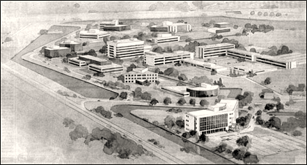
Figure 4: Artist’s impression of the Amsterdam Science Park (1991)
By now, the Zernike Science Park in Groningen was attracting more attention. By 1990, it housed about 15 companies, and the expectation was that this would rise to 35 or 40 by 1991. Plans for research centres, including one for a Japanese dairy corporation and an American laboratory, were also under discussion. However, infrastructure was lacking because the phased construction of roads was expensive. Up to that point, the park had created 175 high-quality jobs by transforming academic ideas into products and services. Director Lex de Lange stated that the first 10 hectares would be fully developed by 1995. The park had maintained a waiting list for some time, which De Lange was keen to keep to ensure selective admission (Nieuwsblad van het Noorden, 8 August 1991). However, pressure was rising. When the Science Park was launched in 1983, the Ministry of Economic Affairs provided approximately 8 million guilders (approximately €9 million) in subsidies over five years. In 1989, it was decided to extend this subsidy period until 1992. From that year onwards, the University of Groningen also withdrew its financial support for the Science Park (Nieuwsblad van het Noorden, 8 October 1990).
In Amsterdam, matters progressed more smoothly. In early 1992, the first building, the Matrix, was completed and let almost entirely immediately. This prompted a discussion of whether to add a new wing or to construct a second multi-tenant building elsewhere on the site as a more suitable option. For 2000, expectations were for 3,000 to 4,000 jobs, excluding the 1,000 employees already working at the existing institutes.
A year later, a new initiative was introduced in Groningen alongside the Zernike Science Park. In October 1994, construction began on Medipark, a 4,000 m² biomedical science park with offices, laboratories, and business units on the grounds of the University Hospital Groningen (AZG). This incubator was designed for companies seeking to leverage the hospital’s proximity and the expertise of the University of Groningen’s medical faculty. It resembled the Zernike Science Park setup: start-ups would receive support and facilities and later operate independently. Subsidies were obtained from the Integraal Structuurplan Noorden des Lands and European funds to keep rents low. Additionally, the municipality and AZG planned further business premises and housing in the area (Nieuwsblad van het Noorden, 24 September 1993). Some twenty years later, the Zernike Science Park and Medipark (later known as the Healthy Ageing Campus) were combined under the name ‘Campus Groningen‘.
A first evaluation
In 1993, Bartels and Wolff published an article examining the Dutch science parks of the time, with a primary focus on whether the companies established there maintained knowledge-intensive relationships with universities. Their analysis shows that by 1993, almost every university town in the Netherlands had a science park, except Tilburg and Utrecht. According to the two researchers, however, the success of these parks varied considerably.
Most science parks focused primarily on spin-offs from universities and knowledge institutions: more than half of the businesses located there fell into that category, while regional firms, spin-offs from large corporations, and international companies were less common. Most university spin-offs offered business services, including consultancy, engineering, software development, and other professional services. Only a small proportion focused on industrial innovation. Consequently, there was a greater need for small-scale office space than for laboratories or production facilities.
Bartels and Wolff also found that companies in science parks often had close ties with universities, utilising university facilities, collaborating on research projects, and employing graduates. According to the researchers, the proximity of a university not only provided access to knowledge and expertise but also boosted the prestige of particularly young enterprises.
Table 9.1: The development of science parks established by 1993
| Establish-ments 1993 | Establish-ments 2024 | People employed 1993 | People employed 2024 | |
| Wageningen Campus 1 | 39 | 215 | 400 | 3,910 |
| Amsterdam Science Park | 20 | 195 | 150 | 3,132 |
| Bio Science Park Leiden | 25 | 430 | 640 | 11,747 |
| Kennispark Twente | 106 | 180 | 1,115 | 4,050 |
| Campus Groningen 2 | 51 | 271 | 460 | 3,700 |
| TU Delft Campus | 15 | 323 | 27 | 5,634 |
| Mercator Science Park Nijmegen | 25 | 100 | ? | ? |
- Extended from Science & Business Park Wageningen to Wageningen Campus.
- In 1993, Zernike Science Park. Later, the Healthy Ageing Campus was established.
- As far as companies are concerned.
Sources: Bartels and Wolff (1993) and Buck Consultants (2024).
They suggested that the future of Dutch science parks should lie mainly in thematic specialisation, for example, biotechnology in Leiden, agribusiness in Wageningen, and medical technology in Groningen. Given the relatively small pool of potential entrepreneurs and companies with strong knowledge connections, they regarded science parks as a valuable infrastructure for knowledge transfer and innovation, with a modest impact on the international stage and economic growth. In retrospect, Dutch science parks grew faster and further than Bartels and Wolff anticipated. The parks they listed experienced considerable expansion (Table 9.1). Where they counted seven science parks in 1993, Buck Consultants identified thirteen ‘mature’ science parks and seven still in a growth phase in 2024.
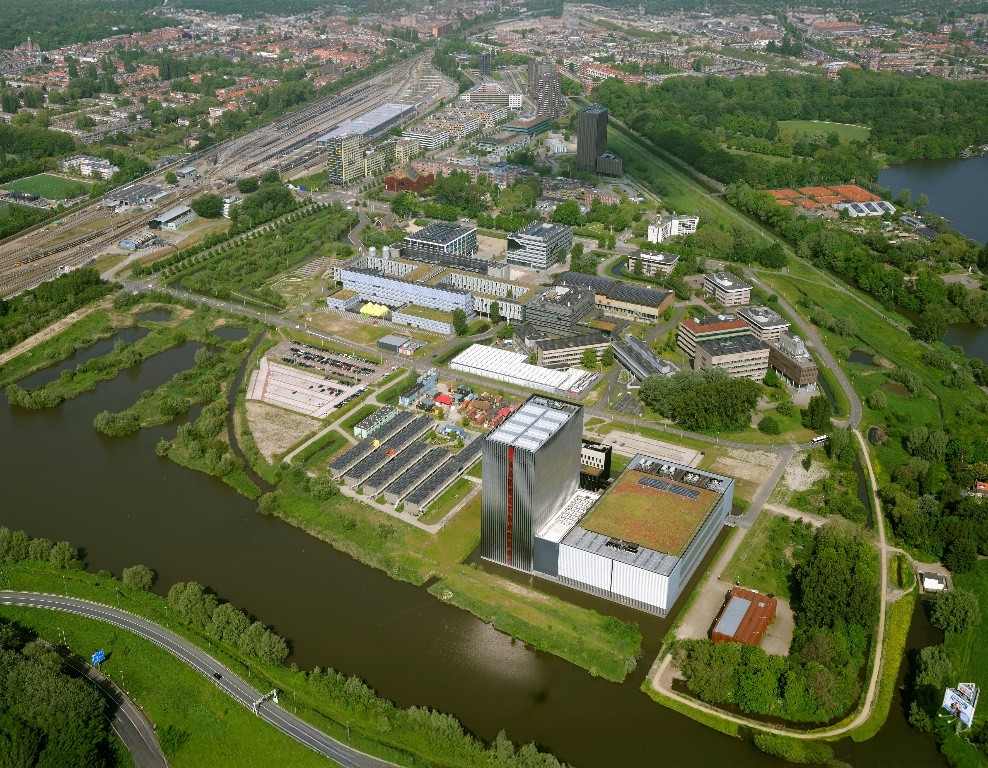
Figure 5: the Amsterdam Science Park today
Conclusion
The development of science parks in the Netherlands during the 1980s and 1990s reveals several key patterns. The first initiatives emerged in the early 1980s, partly in response to anticipated government funding cuts, which encouraged universities to seek private financing. In response to economic challenges and policies promoting knowledge valorisation, universities adopted a more entrepreneurial approach. The University of Groningen launched its first science park initiative in 1981, although development took several years. By contrast, Leiden Bio Science Park benefited from more favourable conditions and became one of the earliest success stories, focusing strategically on biotechnology.
Implementing science parks proved difficult. Many sites grew slowly and had low occupancy, as managers tried to balance strict tenant selection with the need to fill space. Results were mixed: some initiatives shifted into conventional business parks (e.g., Science Park Eindhoven and Brainpark Rotterdam), while others, such as the Agri-Bio Science Park in Lelystad, never materialised. Several conditions repeatedly underpinned success: strong university involvement, a clear sectoral focus, and start-up support programmes. Proximity to knowledge institutions helped attract firms and talent, while local governments supplied enabling infrastructure, spatial planning, and financial incentives that allowed parks to scale.
National and provincial policies promoted knowledge-intensive entrepreneurship, but municipalities delivered the tangible, place-based support required for growth. Their investments in infrastructure, planning decisions, and incentive packages have been central to the innovation ecosystems seen today.
These early efforts laid the foundation for today’s Dutch innovation landscape and its wider set of organised innovation spaces. In the early 1990s, a study identified only six science parks in the Netherlands. A recent report (Buck, 2024) shows marked expansion: thirteen sites are now considered fully ‘mature’, and seven more are steadily moving towards maturity. Many have become internationally recognised hubs where researchers, start-ups, and established companies collaborate closely, including the High Tech Campus (Eindhoven), the TU Delft Campus, the Noviotech Campus (Nijmegen), and the Brightlands Chemelot Campus (Sittard-Geleen).
Against this backdrop, science parks have become vital to the Dutch knowledge economy. They significantly contribute to the country’s research capacity and foster innovative entrepreneurship. The wide range of specialised focus areas highlights the remarkable progress made since the modest beginnings of the 1980s.
References
- Bartels, C.P.A. and J.W.A. Wolff (1993). Science parks in the Nederland. In: Economisch Statistische Berichten, pp. 1038 -1041.
- Buck Consultants (2024). Inventarisatie en meerwaarde van campussen in Nederland. Nijmegen.
- Dinteren, Jacques van (2012). Science parks in the Netherlands. Stimulating innovation or just iconic for firms? 41st Annual Conference of the Regional Science Association International, British and Irish Section, Galway, Ireland, August 2012.
[1] From the outset, the English term is used in the Netherlands, while in Belgium, these developments are referred to as ‘wetenschapspark’ (the Dutch translation of ‘science park’). Nonetheless, 119 newspaper articles can still be found in which the word ‘science park’ appears, but this appears to refer mainly to a permanent technology exhibition that was supposed to have been located somewhere in the Netherlands in the 1980s.
[2] In Dutch higher education funding, the ‘first funding stream‘ refers to the core state subsidy, the ‘second funding stream‘ comprises competitive national grants, and the ‘third funding stream‘ encompasses contract research and funds from industry or other external sources.

