
Science parks: from the region to the buildings [1]
Jacques van Dinteren, IADP / Zjak Consult
Summary
This article examines science parks at three levels: the regional, park, and building levels. At the regional level, the park is an instrument within an innovation ecosystem; without strong knowledge institutions, entrepreneurship, finance, a labour market and network structures, it quickly degenerates into real estate with a label. At the park level, the focus is on organising innovation: park management connects, stimulates interaction and programmes encounters, while selection, services and a mix of sufficient relatedness and variety determine whether knowledge circulates. The proximity paradox also plays a role: local ‘buzz’ helps, but strategic knowledge flows remain international. At the building level, spatial choices act as behavioural steering: flexibility for growth, shared places for chance encounters and a hospitality-like approach make community building tangible. Finally, trends indicate a shift toward more multifunctional, thematically driven science parks.
This article is published as a chapter in the book by Jacques van Dinteren and Paul Jansen (eds,) ‘Organised Innovation Spaces’. Nijmegen: Innovation Area Development Partnership (2026). The book will be digitally available in autumn 2026.
Science parks are a type within the taxonomy of organised innovation spaces: formally organised, professionally managed, physically bounded and offering services ranging from incubation and business development to test facilities and network activities (see Chapter 2). They are fixed building blocks in regional and national innovation strategies and function within dynamic innovation ecosystems. Analysis should therefore focus less on real estate, delineation and branding, and more on the conditions under which interaction, knowledge exchange and entrepreneurship emerge. Expectations are high (faster start-up and scale-up growth, greater valorisation, high-quality employment and regional competitiveness), but performance varies widely. In practice, science parks primarily reinforce existing dynamics, provided they are embedded in knowledge, talent, and finance networks and serve as professional intermediaries between universities, businesses, and governments. The core question is therefore not ‘does the park have an effect?’, but ‘under what conditions’ does it stimulate collaboration, valorisation and better growth/survival of innovative companies and knowledge institutions? This chapter zooms in on the main, critical conditions for science parks in relation to:
- the regional context and the innovation ecosystem;
- park-specific choices regarding design, programme and governance;
- the role of buildings as carriers of interaction, identity and flexibility.
The regional perspective
A science park can function organisationally as an ‘independent’ unit, but its added value depends above all on regional embedding. Crucial connections (collaboration, the labour market, finance and knowledge networks) run both within and beyond the park boundaries. Anyone seeking to understand the conditions for success should start with the innovative region, not the building. In policy terms, science parks are instruments within regional innovation and (smart) specialisation strategies, not stand-alone projects. Research shows that disappointing performance often stems from underestimating external conditions. Those regional requirements are concrete. Essential conditions include, among others:
- the presence of knowledge institutions (universities, universities of applied sciences, research institutes) that provide talent, research capacity and specialised equipment;
- access to the latest knowledge;
- a base of innovative and R&D-intensive companies, not as a few isolated ‘stars’ but as a fabric of collaboration;
- an entrepreneurial culture that supports experimentation and risk, with public and private stakeholders jointly investing in research, entrepreneurship and knowledge transfer;
- access to finance and supporting services, such as venture capital, regional development funds, business angels and innovation funds;
- a labour market with highly educated knowledge workers who genuinely want to live and work in the region. This is also directly linked to housing, culture, schools and mobility: often
called ‘soft’, but in practice, ‘hard’ in their impact on talent mobility.
| Box 1: Brainport Eindhoven Brainport Eindhoven (the Netherlands) shows how good regional organisation can translate innovation capacity into economic performance. The Eindhoven region has a strong industrial base in high-tech manufacturing and engineering, with internationally competitive companies and specialised suppliers. This provides technology and production expertise, as well as talent flows and learning pathways that accelerate iteration and scaling. Organisation is crucial: companies, Eindhoven University of Technology, applied research institutes, and governments collaborate in structural platforms where priorities are aligned, infrastructure is co-invested in, and coordination costs are reduced. This governance enables knowledge to circulate quickly, allowing innovation to flow from research to application and industrial roll-out. There is also conscious alignment among the present innovation spaces. The region speaks with one voice about core strengths (high-tech systems, photonics, semiconductors, mechatronics and smart manufacturing) and steers investments, talent development and international positioning accordingly. The organised innovation spaces are visible nodes where networks, shared facilities, and proximity accelerate collaboration, thereby expressing a coordinated ecosystem. |
Alignment
An additional reason to take a regional perspective is that science parks increasingly operate alongside other organised innovation spaces: inner-city innovation districts, living labs in existing neighbourhoods and industrial innovation campuses around large companies. This offers opportunities for complementarity, but also carries risks of overlap and competition. A clear division of roles is therefore essential. The taxonomy of innovation spaces shows that the distinct concepts differ in scale, governance, and target groups and services. Successful regions deploy them in a complementary way. For example, a science park may focus on capital-intensive R&D infrastructure and highly regulated test environments. At the same time, the inner-city innovation district serves as a proving ground for real-world applications.
Brainport Eindhoven and the Lund–Copenhagen region (Boxes 1 and 2) show how a regional approach can strengthen innovation. Lund–Copenhagen also shows that regional strength extends beyond national borders. For science parks, this means governance and positioning are not exclusively local: effective parks operate as nodes in regional and international networks and translate external impulses into local projects.
In short, the strength of a science park derives to a significant extent from the region. The starting question for a new development is therefore: how robust is the regional ecosystem and what role is envisaged for the intended science park within it?
The distance factor
The Lund–Copenhagen region illustrates that distances between collaborating companies and institutions can be substantial, yet proximity is often regarded as crucial. In early innovation phases, when knowledge is still only limitedly codified, physical proximity is a precondition for informal contacts, chance encounters and rapid knowledge exchange. A science park within walking distance
| Box 2: Cross-border dynamics – Lund–Copenhagen The Lund–Copenhagen region is a cross-border innovation hotspot around the Medicon Valley cluster. It is less one ‘campus’ than a network of specialised nodes. On the Swedish side, Lund University, research facilities and science parks supply fundamental research capacity and talent, notably in discovery and instrumentation. On the Danish side, Copenhagen’s universities, major hospitals and life science firms add clinical scale, market proximity and routes to commercialisation, including validation and regulatory expertise. The Øresund link underpins a cross-border labour market and day-to-day collaboration. Medicon Valley operates as a neutral platform that convenes academia, healthcare, start-ups, investors and corporates, and uses shared testbeds for real-world trials of therapies, diagnostics and digital health. Dense knowledge assets, strong incubators, global firms and experienced investors, plus spillovers from AI, cleantech and advanced materials, help drive breakthroughs such as AI drug discovery, smart devices and sustainable biomanufacturing. |
of universities and research institutes, thus increasing the likelihood of frequent interaction among researchers, entrepreneurs, students, and investors.
At the same time, there is a well-known tension, a kind of proximity paradox. On the one hand, the benefits of co-location are emphasised: geographical proximity, at the local or regional level, creates dynamic clusters that accelerate economic growth and enhance international competitiveness through knowledge exchange and technology transfer. On the other hand, when strategic information is sufficiently valuable, scientists and managers will deliberately travel internationally to obtain it. The fact remains that in such interactions, the spontaneity, informality and chance encounters characteristic of local exchange are absent.
The question is therefore not whether distance matters, but when and which form of physical proximity is relevant. It could be argued that in a science park and perhaps also in the region, the chance and spontaneity of informal encounters play an essential role. In contrast, supra-regional interaction will primarily involve targeted searches for information and the contacts that result from them. Strategic information (think, for example, of new technology, investments and intellectual property) is so valuable to researchers and entrepreneurs that geographical distance then counts for less, or even becomes irrelevant.
For a science park to function well, strong mutual contacts are needed, as well as regional, national, and international connections that bring in new ideas and technologies. These networks form the ‘main transport infrastructure’ of knowledge. The challenge is to translate the resulting information and knowledge into local projects. This combines intensive local interaction (‘local buzz’) with deliberately built external channels (‘global pipelines’) (Boschma, 2005; Bathelt, Malmberg & Maskell, 2004).
So far, proximity has mainly been discussed in geographical terms. However, in this context, it should be understood as multidimensional: in addition to geographical proximity, it encompasses cognitive, organisational, social, and institutional dimensions. Geographical proximity facilitates chance encounters, but without cognitive alignment (a shared knowledge base; see also Chapter 7), collaboration remains superficial. Without organisational and institutional proximity (agreements, governance, rules around IP/data and facility standards), co-creation stalls. Conversely, excessive cognitive proximity can lead to lock-in and groupthink, with reduced inflow of new ideas (Boschma, 2005; Bathelt, Malmberg & Maskell, 2004).
This means park management must actively manage multiple dimensions of proximity, rather than relying solely on physical co-location. In practice, this implies:
- a substantive profile that makes cognitive ‘alignment’ between actors likely (the collective knowledge base). This also raises the question: which companies and institutions do you admit (see also Chapters 6 and 7)?
- organisational arrangements (programmes, governance, agreements) that promote and enable collaboration;
- spatial and social configurations that stimulate informal encounters.
Park-specific choices
The core task of science parks is therefore to stimulate interaction among established organisations. For park management, the central question is: how should that interaction be organised? Network development and community building are central (and take shape through the service offering and programmes); physical infrastructure is supportive. Urban design (and also building design; see below) can support and reinforce interaction. Because spatial interventions are only partially flexible once completed, it is advisable to proceed carefully from the outset.
Services and programmes
The added value of science parks lies partly in the services and programmes that support entrepreneurship and collaboration, including technology transfer, IP management, financing support, network building, onboarding of organisations, and community activities (including informal events).
Research shows that the perceived added value of services and management support primarily lies in access to high-quality facilities, proximity to universities, better knowledge transfer and more intensive collaboration with other companies. This partly explains why some science parks are more attractive than others and function better (Vásquez-Urriago et al., 2014; Diez-Vial & Fernández-Olmos, 2017; Clemente-Císcar et al., 2022; Hrebennyk, 2024).
Shared facilities are also important, including laboratories, testing facilities, and other infrastructure and services. In relation to the latter, account should also be taken of a company’s life stage. This can lead to different service packages by phase in the life cycle:
- pre-seed/seed: incubation, IP/TTO linkage, investor readiness, access to prototyping/labs and coaching on regulatory basics;
- scale-up: pilot and test facilities, scaling partners, talent acquisition, international market access and quality/compliance support;
- corporate R&D: open innovation programmes, corporate–start-up matchmaking and consortium formation with knowledge institutions (Phan et al., 2005; Albahari et al., 2019; Ng, 2020; Albahari et al., 2023).
In all of this, the emphasis lies on established organisations, with a business-oriented approach. When it became clear at the beginning of this century that demographic and economic developments were creating a ‘war for talent’, park management increasingly focused on the employee as well. How do you attract talent and (certainly also)
| Box 3: Designing interaction: High Tech Campus Eindhoven High Tech Campus Eindhoven shows how spatial planning rules can be used to stimulate everyday interaction on a science park. Rather than allowing each building to operate as a self-contained enclave, key amenities are concentrated in shared hubs. Catering services, amenities, and informal meeting places are located to provide researchers, entrepreneurs, and visitors with practical reasons to move across the campus during the day. Strict development controls support this. Companies may not include their own restaurants or extensive conference facilities within private buildings, thereby preventing the campus from fragmenting into isolated micro-destinations. By limiting ‘all-in-one’ provision, the design nudges people towards common spaces where chance encounters and networks can develop naturally. Mobility rules reinforce this approach. Car parking is placed at the edges, reducing traffic and prioritising pedestrians and cyclists in central areas. The campus, therefore, functions as a connected public realm, where walking routes and transitions between buildings become social opportunities. Together, these measures sustain pedestrian flows and a collaborative atmosphere that supports innovation beyond formal meetings. |
how do you retain it? Against that background of the struggle to attracting talent, providing an attractive work environment, and gaining increasing weight. A working environment with a social side (meetings, relaxation, celebrations and events), but also a physical side (green surroundings, attractive buildings, and so on).
Urban design
‘Design’ encompasses more than urban planning, landscape, and architecture: it concerns the spaces and experiences that support the ecosystem. Concretely: quality infrastructure, robust digital networks, strong public space and a mix of formal and informal meeting places (indoors and outdoors). Through routes, nodes, and thoughtful building placement, an urban plan can steer pedestrian flows and thereby promote interaction.
Urban planning, landscape and mobility are components of the innovation strategy. Alongside eliciting and stimulating interaction, it is also about experience. Research shows that landscape architecture can improve employees’ mood. Semi-natural, less formal designs are often most valued by employees. This can be combined with informal meeting spaces and fitness areas, thereby simultaneously contributing to achieving sustainable development goals (Kaplan, 2007).
| Box 4: the ‘Enjoy Work’ concept Chiswick Park in London, however, a business park rather than a science park, shows, in extreme form, how an appealing work environment can be decisive in attracting and retaining talent. The ‘Enjoy Work’ concept goes beyond facilities and services and is reinforced through deliberate urban design. A highly attractive, largely traffic-free central area has been created, with buildings oriented towards landscaped surroundings, including a large pond and an events square. Vehicle traffic is kept to the perimeter, improving safety, reducing noise and air pollution, and encouraging people to spend time outdoors and walk between buildings. This spatial layout strengthens the park’s social dimension. A year-round events programme increases opportunities for chance encounters, while sports facilities, wellbeing initiatives, services and courses support healthier routines and ongoing development. Management is also distinctive: the leadership team primarily comes from hospitality, reflecting a service-led philosophy in which tenants and employees are treated as customers, and the workplace experience is actively curated. In a competitive labour market, this mix of placemaking, convenience and community can enhance employer attractiveness, satisfaction and retention. |
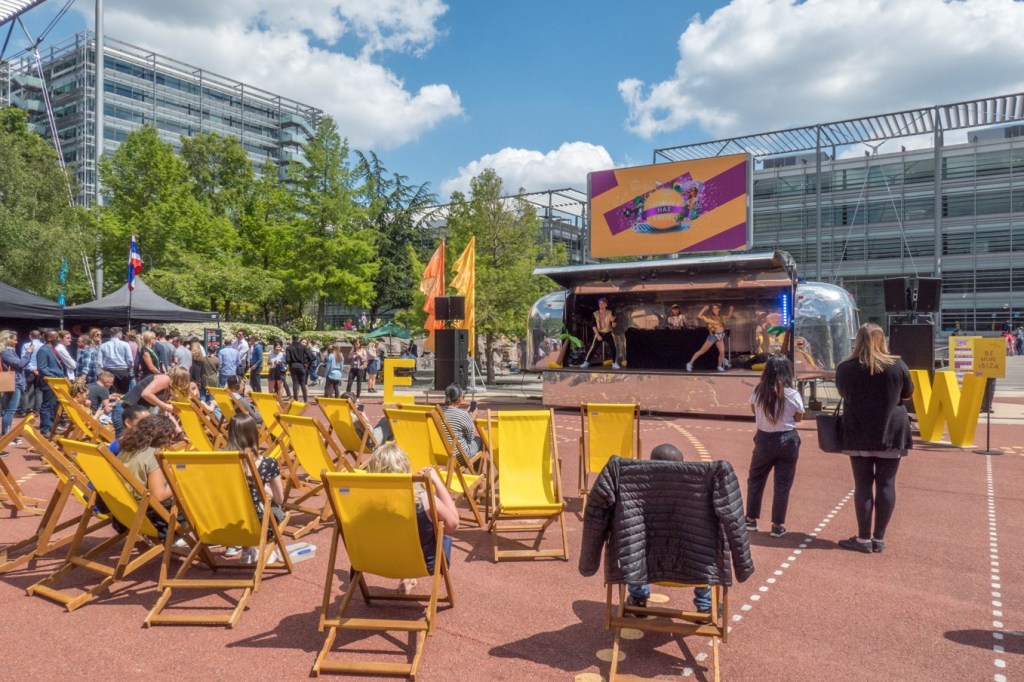
Figure 1: Lunchtime at Chiswick Park (photo credit: Jacques van Dinteren)
Boxes 3 and 4 illustrate two recurring mechanisms: (i) interaction requires spatial steering (routes, nodes, concentration of amenities) and (ii) programmatic steering (events, community management, hospitality logic).
Park management
Regarding park-specific factors, park management warrants mention, as noted several times above. Park management works best when approached as a ‘director’ with a mandate, resources and clear interfaces with owners, tenants and government. It is typically a small organisation that safeguards the place’s quality daily and actively works on experiences and collaboration. This calls for a manager with the mandate to make practical decisions, and a board that represents the key parties: landowners, major tenants, knowledge institutions, and the municipality. Not to determine everything centrally, but to make agreements about direction, investments and rules of the game, so that the park remains a coherent whole.
Financing is typically secured through a joint contribution from established companies and institutions to manage outdoor spaces, security, mobility, and shared amenities. Additional income (lettings, events, sponsorship, subsidies) is welcome, but the base must be stable so that maintenance and programmes do not depend on incidental windfalls. Transparency helps: an annual plan, a clear budget and insight into what contributors receive in return.
In practice, it pays to combine ‘hard’ and ‘soft’ tasks: the same team that keeps the park clean, safe, and pleasant also programmes meetings, introduces new companies into the network, and helps parties find one another. Important: measure whether it works. Do companies stay longer, do walking and meeting flows increase, and does satisfaction rise?
Buildings
In a science park, a building is more than a workplace: it facilitates contact, knowledge sharing, and experimentation, or, in the case of poor design, impedes them. For example, if all employees drive into underground car parks, immediately take the lift to their own floor and rarely or never pass through shared spaces, the desired dynamics will not emerge. In that respect, the idea of not having a lift stop on every floor, but every three floors (which is also health-promoting), is interesting.
Quality matters, but priority lies with functionality and flexibility, not with an iconic statement; a striking façade says little about daily performance. The building must be able to serve different users and growth phases, and change without destroying capital. Therefore, robust logistics, safety, and technical systems, and the ability to easily add or convert functions (e.g., additional laboratory space or team rooms) are more relevant to innovation than mere appearance.
Enabling growth
The first design principle is the provision of space for growth. In practice, growth often becomes constrained by fixed square metres and fixed agreements: start-ups and scale-ups grow in leaps or must scale back quickly. A building with rigid units and long leases does not fit. A good building, therefore, requires flexibility at three levels. First, in the floor plan: spaces must be divisible and combinable without major renovations. Think of movable walls, logical grids and floors that can accommodate different layouts. Second, in building services, the required equipment often changes quickly in innovative companies. If air, power, cooling and data are precisely tailored to one lab set-up, every change becomes expensive. It is smart to design in reserve capacity and adaptability, so that, for example, a lab can grow with the organisation. Third: dynamic contracts and relocation options allow moving within the same park. Science parks with a single owner or a single clear director often have an advantage here, as they can better organise throughput.
Such flexibility is also a form of quality. A building that can be adapted smoothly remains usable longer and supports companies at multiple stages of their development. It prevents organisations from leaving the park because, elsewhere, they can expand, and perhaps precisely when they become interesting to the community.
Encounter is a design choice
The second design principle is that the building must stimulate interaction. Here, routing is crucial (Pype et al., 2021; Chapter 22). If routes are spacious, pleasant and logical, they naturally become places where you pause. People primarily meet along the routes they walk most often: from the entrance to the workplace, from the workplace to the coffee machine, and from the lab to the meeting room. If the best meeting place is only the coffee machine in the corridor, the design is poor. Distance and visibility also significantly affect opportunities to make contact: when teams are too far apart, spontaneous consultation declines sharply. Moreover, if people see one another, the likelihood of contacting one another increases. On the other hand, the building need not promote dynamism everywhere. A good building, therefore, distinguishes lively zones (encounter) and quiet zones (concentration).
| Box 5: design principles in a new project: Plus Ultra Ghent Plus Ultra Ghent is a new multi-tenant building at Tech Lane Ghent Science Park (Zwijnaarde, Belgium), developed by Kadans Science Partner together with PMV and designed by Proof of the Sum (with SVR Architects). Approximately 20,000 m², with an ‘Accelerator’ (c. 15,000 m² of lab and office space) and a separate ‘Research Facility’ (c. 5,000 m²) for advanced research and (pilot) production. Space to grow is the starting point. The Accelerator has a balanced lab/office mix and high flexibility, so companies can scale up or work more compactly without relocating. Kadans positions the building for start-ups and scale-ups (with reserved space), as well as for established companies needing additional capacity or specialist facilities. Interaction is ‘built in’ via a large atrium that connects floors. Central meeting rooms and a shared lunch zone are located around the atrium (not at the edges), so that daily routes cross and informal encounters arise naturally. Creativity is supported by open sightlines, shared places and a programmatic mix of labs and offices: you see activity, pass it and step in more easily. Kadans and partners position this as an environment that stimulates collaboration and creativity, and serves as a meeting place for the Tech Lane cluster through community activities and networking events. Plus Ultra Ghent is thus not only accommodation but also a community hub for the Tech Lane cluster. |
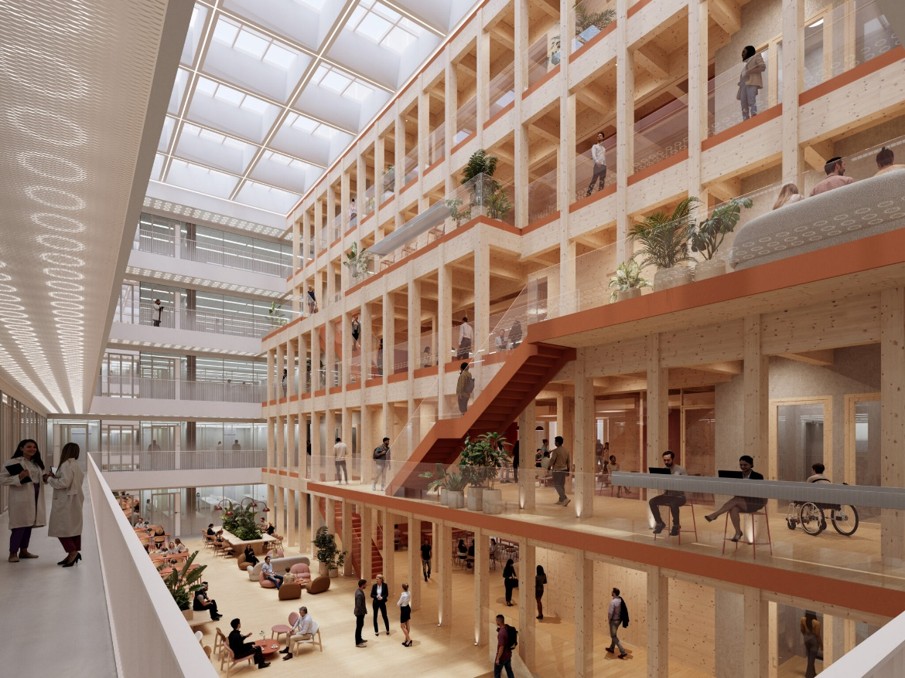
Figure 2: Plus Ultra Ghent (credits visual: Renderji)
All of this indicates that there must be deliberate design to increase the likelihood of encounters. A central staircase that is more attractive than the lift helps, because people see one another there and speak briefly. An atrium or void can enhance interaction among employees across floors, particularly when activity on the stairs or in the gallery is visible. The positioning of entrances and shared functions also matters. If building entrances face one another and you naturally pass through a central area, more cross-traffic arises, increasing the chance of a chance encounter.
Supporting creativity: comfort, variety and calm
The third design principle is that the building supports creativity. Creative and technical work requires an environment where you can think clearly, collaborate, and switch quickly. That starts with comfort: daylight, ventilation, temperature, and, especially, acoustics. In many innovative organisations, people alternate among conversations, calls, writing, testing, and analysis. If everything echoes through the space, stress and loss of focus arise. That is why quiet workplaces, phone booths and small focus rooms should be as self-evident as open work areas. The essence: calm where it must be, openness where it can be.
Alongside comfort, the variety of spaces is important: small and large meeting areas, project rooms, informal seating, quiet zones, and spaces for presenting or demonstrating.
The building as a community hub
If growth, interaction, and creativity are well-designed, the building can also function as a community hub. This often starts at ground level: a good café, a hospitable reception, and flexible spaces make the activity visible, naturally lead people past one another, and provide a natural place to meet.
A mix of private and shared facilities is essential. Some amenities are too expensive or used too infrequently to be borne individually. Think of shared labs, makerspaces, meeting rooms and event spaces. Such spaces reduce costs and increase the chances of encounters. Practical services also belong. Childcare, cycling facilities, showers, fitness and good lunch facilities may seem secondary, but they make daily life easier. As a result, people increasingly choose the park as a workplace; presence and attachment increase, and the likelihood of collaboration rises.
Trends and a response
The context in which science parks operate is changing rapidly. Various trends have implications for the redevelopment of existing parks. First, the traditional peripheral model is under pressure. Many science parks are located on the city edge, are strongly oriented toward car access, and often have a somewhat mono-functional layout with few recreational amenities and other personal services. At the same time, a strong movement toward urban, multifunctional innovation districts is evident: areas in which work, living, meeting, and leisure are integrated. This has stimulated the rise of innovation districts. If science parks are to retain and strengthen their position, working on multifunctionality is a precondition, not a ‘nice to have’.
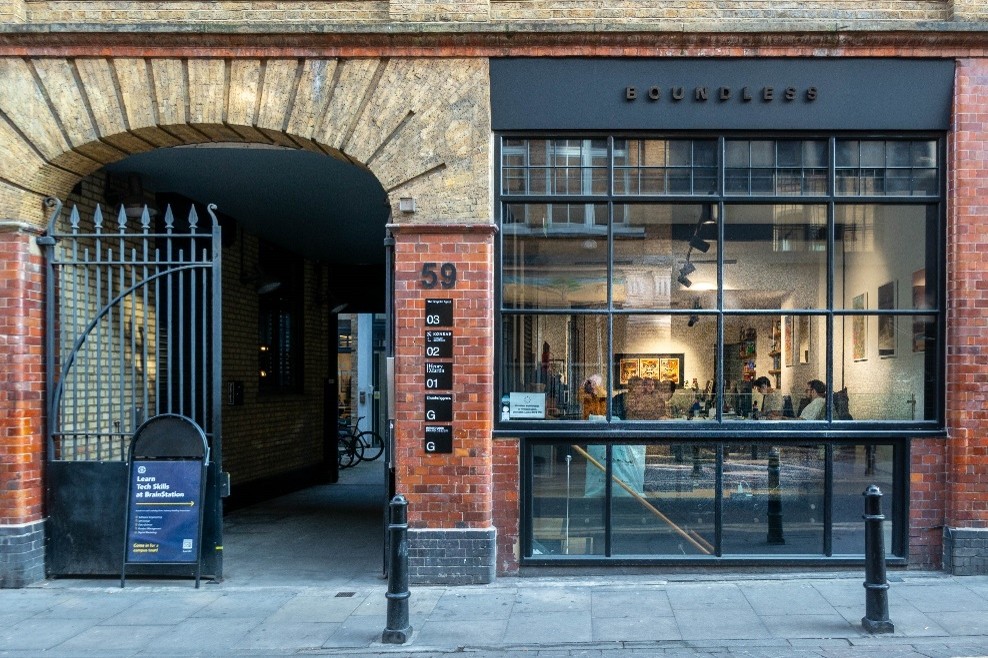
Figure 3: SHED / Tech City innovation district (Shoreditch & Old Street, London) (photo credit: Jacques van Dinteren)
Second, the focus is shifting from sectors to themes and missions: from generic ‘high tech’ to specific societal challenges such as the energy transition, life sciences, healthy ageing and the circular economy (see Chapter 7). This, too, is something to take into account, although you do not change something like that on a science park from one day to the next. Third, we observe that attention to employees and the work climate noted above will continue to increase. Finally, we see that the park’s perspective as an isolated campus has clearly shifted in recent years toward viewing it as a node in regional and urban innovation networks.
The following strategic considerations are conceivable in response to these developments:
- Multimodal accessibility. The park must be accessible to all modes of transport, not only cars, to enhance its attractiveness and sustainability.
- Urban integration. Where possible, remove fences and open the park to adjacent neighbourhoods. Ensure strong connections with city centres and universities, and operate as a node within broader urban innovation networks.
- Dedicated housing where possible. Housing for students, researchers, and expatriate professionals can support services and create vibrancy in and around the park, provided there is sufficient space and that this does not come at the expense of space for innovative organisations.
- Choose thematic organisation over a pure sector focus. Organising around broader themes (for example, health, the energy transition) can facilitate cross-overs, but (as noted) this takes time.
- More attention to the employee community. Amenities, attractive public spaces, and regular events are needed to build a community; the park must be a place people want to be, not only a place they have to work.
- Living labs and testbed functions. Parks can serve as real-world testbeds where organisations experiment on-site, learn and scale innovations.
- Sustainability, circularity and climate adaptation. Developments must be future-proof: reduce emissions, facilitate reuse, and design buildings, infrastructure, and landscapes to be climate-adaptive.
All of this calls for a reorientation, not cosmetic improvements.
Conclusion
Science parks can be a powerful engine for regional innovation and economic development, but only under specific conditions. They are no ‘silver bullet’: effectiveness depends on design, organisation and above all, connection with the regional context. Well-designed and well-connected parks can contribute to innovation, employment and the transition to a knowledge-intensive economy.
The key conclusions can be formulated as follows:
- Start with the region. Without a robust regional innovation ecosystem, developing a science park is risky; the park is only as strong as its region.
- Position the park within the innovative region. Divide roles with other innovation spaces and make their complementarity explicit.
- Make interaction and connection the primary task. Design, services and programming must facilitate encounter and trust.
- Be selective and coherent. Admitting organisations depends on ecosystem contribution and knowledge relatedness.
- Invest in services and shared facilities. Facility sharing and demand-driven services increase perceived added value.
- Treat buildings as adaptive instruments. Flexibility, shared spaces and hospitality logic are more important than iconic architecture (which is not to say that beautiful buildings should not be allowed!).
- When science parks are designed and governed along these lines, they can remain relevant in the coming decade as well. Not as isolated areas, but as adaptive nodes within regional, national and international innovation ecosystems.
References
- Albahari, A.; M. Klofsten & J. C. Rubio-Romero (2019). Science and Technology Parks: A study of value creation for park tenants. In: The Journal of Technology Transfer, 44 (4), pp. 1256–1272.
- Albahari, A.; A. Barge-Gil; S. Pérez-Canto & P. Landoni (2023). The effect of science and technology parks on tenant firms: a literature review. In: The Journal of Technology Transfer, 48, pp. 1489–1531.
- Bathelt, H.; A. Malmberg & P. Maskell (2004). Clusters and knowledge: Local buzz, global pipelines and the process of knowledge creation. In: Progress in Human Geography, 28 (1), pp. 31–56. doi:10.1191/0309132504ph469oa
- Boschma, R. A. (2005). Proximity and innovation: A critical assessment. In: Regional Studies, 39 (1), pp. 61–74.
- Clemente-Císcar, V.; R.M. Yagüe-Perales & I. March-Chordà (2022). A New Perspective on the Perceived Benefits of a Science Park Location: Results From an fsQCA Analysis. In: Journal of Small Business Strategy, 32 (1), pp. 58–75.
- Diez-Vial, I., & M. Fernández-Olmos (2017). The effect of science and technology parks on a firm’s performance: A dynamic approach over time. In: Journal of Evolutionary Economics, 27 (3), pp. 413–434.
- Hrebennyk, N. (2024). Reviewing the development of science parks and their impact on the economy in the context of globalisation. In: Access to Science, Business, Innovation in Digital Economy, 5 (3), pp. 526–550.
- Kaplan, R. (2007). Employees’ reactions to nearby nature at their workplace: the wild and the tame. In: Landscape and Urban Planning, 82, pp. 17–24.
- Ng, W. K. B. (2020). Demand-driven science parks: The perceived benefits and trade-offs of tenant firms with regard to science park attributes. PhD thesis, Eindhoven University of Technology.
- Phan, P. H.; D. S. Siegel & M. Wright (2005). Science parks and incubators: Observations, synthesis and future research. In: Journal of Business Venturing, 20 (2), pp. 165–182.
- Pype, Roy; Eva Logonder; Annemieke van den Brink; Alvaro Saéz O’Farrel; Krzysztof Zinger (2021). Designing for knowledge sharing. Amsterdam: Proof of the sum.
- Vásquez-Urriago, Ángela; Andrés Barge-Gil; Aurelia Rico; Evita Paraskevopoulou (2014). The impact of science and technology parks on firms’ product innovation: empirical evidence from Spain. In: Journal of Evolutionary Economics, 24 (4), pp. 835-873.
[1] This chapter is based on a lecture given at the HealthTech Investor Summit, 9 December 2025, Utrecht, the Netherlands.

