
Profiles for innovation spaces
Jacques van Dinteren, IADP / Zjak Consult
This article is published as a chapter in the book by Jacques van Dinteren and Paul Jansen (eds,) ‘Organised Innovation Spaces’. Nijmegen: Innovation Area Development Partnership (2026). The book will be digitally available in autumn 2026.
Organised innovation spaces are increasingly important as breeding grounds for economic growth and societal renewal. Their success depends heavily on how they position themselves: how they present themselves to businesses, talent, knowledge institutions and government authorities. This article distinguishes three main strategies for profiling: sector-based, thematic, and focused on companies’ growth phases. In practice, successful innovation spaces often adopt a hybrid approach, combining different strategies to suit the specific context. Therefore, there is no universal ideal model; what works depends on scale, ambition, target audience and context.
Effective profiling requires more than communication alone. Governance, naming, spatial design, substantive programming and monitoring are structural building blocks of the profile. They make visible and measurable what an area stands for. Finally, profiling is not a one-off action but a continuous process of making choices, coordinating, and adjusting together with all stakeholders. Only in this way does an innovation space remain distinctive, attractive and future-proof.
An effective and organised innovation space functions as an ecosystem where businesses, research institutions, and government agencies work together to foster new ideas. In this environment, management needs a clear vision of the types of companies and institutions they aim to attract. Success relies on striking a balance between segmentation, determining whom to serve and whom to exclude, and profiling: how to strategically position and showcase the area. This article explores how profiling can help draw the right partners, discussing the pros and cons of various approaches and the tools that can assist in shaping an appealing and inclusive environment.
Segmentation and profiling
When an innovation space aims to attract businesses and institutions, the idea of segmentation naturally comes into play. While related, profiling is a different approach—both complement each other but serve distinct purposes. Segmentation involves analysing market research and data to identify target groups, helping to determine which types of businesses are suited for the space. Profiling takes this a step further by focusing on strategic positioning and making the space visible to attract the right parties. Unlike segmentation, which acts as a filter by excluding certain organisations, profiling acts like a magnet, drawing in the desired groups. An effective innovation space uses both: first, targeted segmentation to identify the ideal audience, then strategic profiling to appeal directly to them. Profiling is about creating an appealing image and a clear position, helping the space stand out from others and become attractive to specific groups. Some benefits of good profiling include:
- Greater visibility and a stronger reputation amongst the intended target group.
- Targeted influx of talent and businesses that align well with the objectives of the area.
- A competitive advantage thanks to a clear, distinctive profile.
Segmentation discussions are typically limited, but profiling prompts more questions. Sometimes, profiling is seen as projecting a particular image, such as highlighting a theme or the types of businesses one aims to attract. However, this is only part of the story. If park management genuinely wants to persuade businesses, it must do more. This involves investing in facilities like laboratories, incubators, catering services, and co-working spaces. Collaborations with universities and knowledge institutions are also important, as are networking events, hackathons, and mentoring programmes. Therefore, profiling covers all aspects that underline an area’s innovative and vibrant character.
The way in which an innovation space profiles itself determines not only which businesses wish to locate there, but also which forms of collaboration can be established. This directly influences the area’s innovation capacity and economic performance.
In practice, three main strategies for profiling can be distinguished:
- Profiling based on a specific business sector.
- Profiling around a clearly defined theme.
- Profiling aimed at a balanced growth ecosystem.
The first approach generally has a narrower focus than the second, although the distinction is not always strict. The third approach focuses on creating an ecosystem in which businesses, from start-ups to multinationals, collaborate in a balanced manner. Consider a healthy mix of young innovative enterprises, medium-sized companies and established players, supported by strong knowledge institutions.
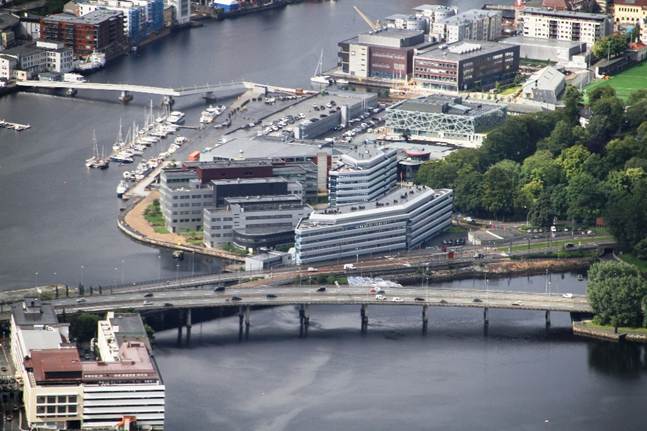
Figure 1: Marineholmen forskningspark, Bergen, Norway (photo credit: Erlend Bjørtvedt, CC BY-SA 4.0, via Wikimedia Commons)
Profiling based on a specific business sector
The focus here is on businesses active within the same or related (sub)sectors. This creates a recognisable profile and makes the area attractive to like-minded companies and institutions. Porter (1990) argues that such sectoral clustering strengthens regional competitiveness by enabling businesses to benefit from one another’s proximity and collaboration. This could equally apply to areas of innovation.
Innovation spaces with a specific (usually narrow) focus on a particular economic sector include Pivot Park (Oss, the Netherlands), specialising in pharmaceutical development, Oncopole (Toulouse, France), focused on cancer research and associated therapies, the maritime research cluster Marineholmen (Bergen, Norway, Figure 1), which focuses on maritime resources and aquaculture, and the Space Campus in Noordwijk (the Netherlands), which focuses on space technology. Science parks focusing on chemistry (the Chemelot Campus, Netherlands), semiconductors (Hsinchu Science Park, Taiwan) or life sciences (Leiden Bio Science Park, Netherlands) also fall into this category. Three related two-digit SIC codes predominate and often fall under a single industrial sector. For example, codes 26, 27 and 28 for Hsinchu or 21 and 72 for Pivot Park. The delineation by business sectors must not become too ‘narrow’, as this would make activities too similar and severely hamper the exchange of information and collaboration, as was the case with the media incubator in Halle (Schwartz et al., 2008).
Advantages of a sector-based profile are:
- Specialisation can increase attractiveness for businesses within the same sector, leading to clustering and synergy. It also increases the appeal of the innovation space to specialised investors and talent.
- Focusing on a particular sector makes it easier to develop targeted infrastructure and supporting services.
- It creates a cluster of businesses with similar needs, which promotes collaboration and knowledge exchange (but it must not become too ‘narrow’).
- Park management can build in-depth sector knowledge and offer more relevant guidance and advice.
Disadvantages:
- The risk of economic dependence on a specific sector makes an innovation space vulnerable to sector-based decline.
- The risk of limited innovation potential due to less diversity in business activities, which hampers diversity and cross-pollination.
These limitations may justify a more thematic approach.
Profiling based on themes
Another approach to profiling is to select a particular theme, such as sustainability, artificial intelligence, or green energy. Bigliardi et al. (2006) argue that the breadth of the earliest science parks’ knowledge base was a prerequisite for successful innovation. They give examples of what they call “classical technological cross-overs between old and new”: emerging technologies (microprocessors, ICT, biotech, lasers) that help renew old technologies (mechatronics, modern pharma, new materials).
Profiling based on a theme enables organised innovation spaces to attract businesses working on solutions within a broader range of sectors, but united by a common goal or focus. Since we are dealing with innovation here, important societal themes often suggest themselves (e.g., mission-driven), but they can also be specific application areas, such as medical technology (medtech). The keyword is cross-sectoral collaboration. This refers to collaboration between businesses and institutions from different sectors to promote innovation and create new market opportunities. Becker et al. (2018) argue that the significant societal challenges (climate, poverty, education, health; see also the RIS-3 strategies of the European Commission) are too complex to be addressed by any single organisation, sector, or policy. Instead of separate, independent initiatives, the authors advocate cross-sectoral collaborations among government, business, and non-profit organisations, with managers and key figures who consciously leverage differences and design solutions in collaboration with the relevant communities. Examples include cross-overs between biological sciences and technology for medical innovations, between construction and energy for green urban development, and between agri-food and high-tech for sustainable agriculture. Cultural differences, dependence on partners, and data confidentiality can present challenges. It also requires effective park management (selecting appropriate businesses) and clear communication regarding the chosen theme.
An example is the Automotive Campus (Helmond, the Netherlands), with the theme ‘Mobility of the Future’ (creating safer, smarter and cleaner transport solutions). Under the umbrella of ‘Designing Green Cities & Smart Urban Solutions’, businesses and institutions at EUREF Campus (Berlin, Germany; Figure 2) collaborate on sustainable energy, smart mobility, and digitalisation to build future-proof urban environments. Another example is Agro Food Park in Aarhus (Denmark). Businesses and institutions here work together on the ‘Agriculture of the Future’ (biotechnology, AI-driven crop analysis, robotics, alternative proteins). A more regionally oriented example (innovation area) is the Oulu Health Ecosystem (Oulu, Finland), focused on ‘Future Healthcare & Wellbeing’, which unites med-tech start-ups, electronics manufacturers, software developers, tele-medicine providers and hospital networks.
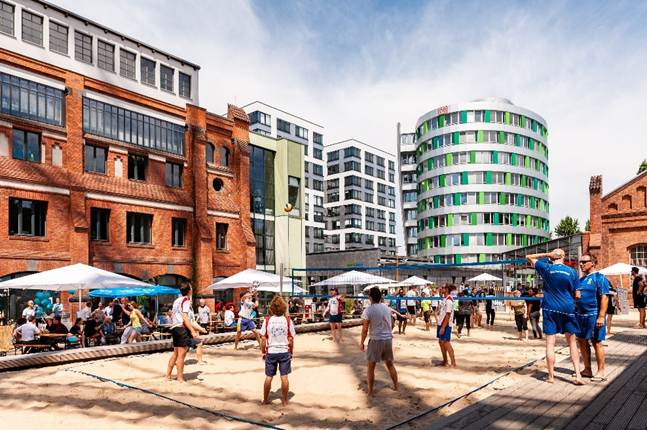
Figure 2: EUREF Campus, Berlin (photo credit: Andreas Schwarz / EUREF AG)
Advantages of theme-based innovation spaces are:
- They stimulate interdisciplinary collaboration, which can lead to innovative breakthroughs. Because businesses tackle shared challenges, this can lead to faster results.
- It can lead to more efficient access to knowledge and facilities, such as R&D labs, test locations and the sharing of expertise. This also reduces costs.
- Through a particular spread across business sectors, such an ecosystem is often better able to absorb shocks in the economy (preservation of employment).
- A clear profile attracts international businesses, investors and talent.
- A collective, clearly defined theme makes it easier to attract subsidies, investment funds and other funding sources, especially when it concerns central societal themes.
Disadvantages:
- Establishing clear selection criteria for businesses and institutions can be challenging due to the broader focus.
- If the theme is too broad, this can make positioning of the innovation space more difficult. It can also be more difficult to offer specific infrastructure and facilities.
- Some themes may depend on (government) subsidies. If these are discontinued, the consequences for the businesses involved could be significant.
It is worth pausing briefly at this point to consider the concept of related variety in regional economics. We roughly translate this concept from the regional level to the innovation space scale, assuming sufficient similarity to make this possible. The idea is that, in a region (or, indeed, an innovation area), innovation is stimulated when businesses and institutions share an underlying knowledge base. This concerns firms that are active in different fields (variety) but that interact with respect to knowledge and technology (related). There is then sufficient difference between these organisations to enter into new collaborations, whilst there are also sufficient similarities to understand one another (Frenken et al., 2007).
Nooteboom et al. (2007) speak in this context of the appropriate cognitive distance between organisations: they are not too closely aligned (which generally yields little new). However, they are not too distant either (making it impossible for them to understand each other’s activities). However, research also shows that occasionally introducing unrelated variety (businesses or technologies from a clearly different domain) can stimulate radical innovation (Boschma & Frenken, 2011; Nooteboom et al., 2007). The challenge, then, is to allow just enough unrelated variety without diluting the common knowledge base in the innovation domain. The strong core of related businesses must be maintained, and unrelated businesses that show the potential to contribute new perspectives must be admitted very selectively.
Profiling based on a balanced growth ecosystem
The business’s life-cycle phase can also profile innovation spaces. A conscious balance among start-ups, scale-ups, and established businesses is then pursued. In contrast to the two approaches described above, the management of an organised innovation space is unlikely to declare an exclusive focus on fast-growing businesses or start-ups. However, this is different for incubators and accelerators. Generally, the life cycle of businesses does not play a prominent role in the external profiling of organised innovation spaces. However, it plays a role in achieving the ideal mix of businesses that management seeks to achieve. For example, Utrecht Science Park (the Netherlands) aims to maintain a specific ratio of start-ups, scale-ups, and established businesses. However, the question is: what should this ratio be, and does an ideal ratio exist at all? This prompted research (Van Dinteren et al., 2024) involving several science parks. The conclusion was that no single fixed ratio exists due to the heterogeneity of science parks. In short, striving for a balanced growth ecosystem is not typically used as a basis for external profiling; however, a good mix is considered an important prerequisite for a well-functioning organised innovation space (it is an implicit part of the profile and the way the area is managed). The precise mix depends on the nature and objectives of management in the relevant innovation space.
Among the advantages of this approach, we can mention:
- Start-ups bring fresh ideas; established businesses offer expertise, networks and possibly financial support.
- Collaboration between innovative start-ups and established enterprises offers joint R&D and acquisition opportunities.
- The innovation space is less dependent on one type of business; a variety of business models increases resilience in turbulent times.
There are also disadvantages:
- There may be conflicting interests or differences in pace. Start-ups and scale-ups require rapid decision-making and capital, whereas established businesses operate more formally and more slowly.
- Too many or too few businesses of a particular type can weaken the ecosystem. This can lead to unbalanced growth.
- Complex selection and evaluation mechanisms are needed to maintain the desired balance.
Various studies confirm that a well-managed mix of start-ups, scale-ups and established businesses (each supported with tailored infrastructure and programmes) helps maintain both innovation and economic resilience (Autio et al., 2014). Regular analysis of portfolio composition, combined with interventions when one group becomes underrepresented, is necessary to maintain the intended diversity. The crucial question, then, is naturally how to steer this. One could consider an exit strategy for certain businesses. However, if there are multiple owners of real estate in an innovation space, park management has few steering instruments available.
Is there an ideal model?
The answer to the above question is simply “no”. Choosing between these three options is not an either-or decision. Perhaps, in the case of a limited available surface area, it is more obvious to choose a specific business sector, whilst a large available area invites a theme-oriented approach. However, a division into sub-areas with a specific focus is also possible.
In daily practice, many successful innovation spaces employ a hybrid approach that combines these strategies. For example, an innovation space may focus on sustainable energy (theme-based) whilst simultaneously striving for a healthy balance among start-ups, scale-ups, and established businesses (balanced growth ecosystem). To better reflect this reality, the question should not be which strategy is best, but rather how different strategies can be deployed in complementary ways to build a resilient and innovative ecosystem. Moreover, there are organised innovation spaces that do not directly determine the desired types of businesses or a particular theme and primarily aim to provide space and facilities. In research by IASP (2024), these innovation spaces are termed generalists: “These innovation areas admit businesses and activities from any sector (provided they meet the standards and requirements).” Of all innovation spaces studied by IASP, 31% can be classified as generalist.
Recent research moreover suggests that the management of an innovation space must not only implement a hybrid approach, but must also maintain a clear identity through continuous investments in thematic anchoring. This can take shape through strategic partnerships, visible infrastructure and targeted events. At the same time, start-ups, scale-ups and established businesses can be offered support in different ways. This combination increases both resilience and distinctive capacity.
Steering
The profiling of innovation space does not begin with a logo or a brochure, but with sharp substantive choices. Scientific literature on smart specialisation, innovation ecosystems, and innovation districts shows that successful areas build their profile on a strategic focus, strong organisation and governance, and good external visibility. We have already addressed the first point above. Let us finally examine the other two aspects (which in turn break down into sub-aspects).
In their comparison of place-based innovation ecosystems, Rissola and Haberleithner (2020) show that thriving ecosystems always have one or several clear ‘orchestrators’. This could, for example, be a campus organisation, a city development corporation or a triple-helix foundation. Such an organisation safeguards the strategic line, brings partners together and functions as the first point of contact for the outside world. The mode of operation partly determines the profiling of the innovation space (Lund et al., 2020):
- A strong area organisation radiates stability and professionalism;
- The chosen governance (e.g. emphasis on public interest versus property exploitation) says much about the character of the area;
- The way in which residents and societal organisations are embedded shows whether the area is inclusive or exclusive.
Management bears all or a significant part of the responsibility for external projection. Others, such as the municipality and the established organisations, can also play a role here. In this context, do not underestimate the impact of one or more anchor tenants: well-known businesses and institutions that lead in their field and specialisation. Furthermore, activities and programmes contribute to the profile of an innovation space. Examples include conferences, hackathons and living labs.
Organised innovation spaces can also be characterised by spatial factors, including accessibility, location, and architecture. These spatial qualities can be deployed for profiling. Employees of innovative businesses, and certainly the younger ones amongst them, attach great value to the quality of the working environment. Original approaches can also be devised, such as a virtual tour of the site with information on established businesses, past labs, and testbed locations. Thus, the spatial structure itself becomes a communication tool: whoever visits the area experiences the profile.
The choice of the area’s name also explicitly contributes to profiling. Research into the naming of innovation districts shows that a name is much more than a marketing detail. Hirtenkauf et al. (2022) argue that this is more complex for innovation districts than for a single business because these organisations have multiple stakeholders with different objectives. All studied innovation districts use more than one type of name classification. They combine, for example, geographical elements (such as Barcelona or Ann Arbor) with creative or descriptive components. According to this research, important lessons for the profiling of organised innovation spaces are:
- The name shows whether the area primarily wants to be recognisable or precisely innovative and distinctive.
- The branding must be consistent with the actual profile: if the name suggests ‘smart & green district’, this must also be visible in programming, partners and physical design.
- A tagline or subtitle can be used temporarily to explain the substantive focus and then gradually disappear once the brand is established.
- Tagline and key messages can be adapted to different target groups (investors, businesses, residents). This means profiling can be layered as long as the core message remains the same.
Finally, it can be stated that profiling and monitoring are closely linked. It is also striking, in this sense, that in recent years, organised innovation spaces have sought to demonstrate their success through impact reports, in which indicators can range from the number of cups of coffee donated to the number of patents approved. For example, an open dashboard with key indicators (start-ups, talent, social effects, collaboration projects, investments) can be published on the innovation space’s website. Linking case studies and user stories (businesses, researchers) to the figures ensures that the whole does not become overly statistical. The outside world thus receives not only a good story but also evidence that the profile is solid and that the area delivers on its promises.
In conclusion
Profiling of organised innovation spaces does not begin with marketing, but with sharp substantive choices about what one wants to be, for whom the area is intended and which societal and economic challenges management wishes to address. There is no ideal, universal model: sector profiles, thematic profiling and the pursuit of a balanced growth ecosystem each offer recognisable advantages and apparent limitations. In practice, a resilient innovation space will therefore always work with a considered hybrid strategy, in which a clear substantive focus is combined with a consciously composed mix of businesses, knowledge institutions and partners.
Governance, naming, spatial quality, programming, and transparent monitoring of impact are not preconditions here; rather, they are essential components of the profile itself: they make visible and verifiable what the area stands for and to what extent it delivers on its promises. Profiling is therefore not a one-off choice but a continuous process of directing, arranging, and adjusting in close consultation with the parties involved, so that the innovation space remains sustainably distinctive, attractive, and adaptive.
References
- Autio, E., Kenney, M., Mustar, P., Siegel, D., & Wright, M. (2014). Entrepreneurial innovation: the importance of context. In: Research Policy, 43 (7), pp. 1097–1108.
- Becker, J. & David B. Smith (2018). The need for cross-sector collaboration. In: Stanford Social Innovation Review. https://ssir.org/articles/entry/the_need_for_cross_sector_collaboration
- Bigliardi, B., Alberto Ivo Dormio, A. N., Giorgio Petroni (2006). Assessing science parks’ performances: directions from selected Italian case studies. In: Technovation 26, pp. 489–505.
- R.A. Boschma & K. Frenken (2011). Technological relatedness, related variety and economic geography. In: P. Cooke, B. Asheim, R. Boschma, R. Martin, D. Schwartz, F. Todtling (eds.), The Handbook of Regional Innovation and Growth. Cheltenham, Edward Elgar Publishing, pp. 187 – 197.
- Frenken, K., Frank Van Oort, Thijs Verburg (2007). Related variety, unrelated variety and regional economic growth, Regional Studies, 41:5, pp. 685-697.
- Hirtenkauf, A. G. G., Thomas, L. D. W., & Gurses, K. (2022). On the naming of innovation districts. In: Journal of Evolutionary Studies in Business, 7 (2), 268–297.
- IASP (2024), IASP global survey. Malaga: International Association of Science Parks and Areas of Innovation (IASP).
- Lund, E., F. Addarii, H. Schmitz, P. Kokorotsikos & R. Bush (2020). Public–Private Partnerships for Science and Technology Parks. Utilising PPPs and Related Models for the Development and Operation of STPs and Innovation Districts (EUR 30439 EN). Publications Office of the European Union.
- Nooteboom, B., Van Haverbeke, W., Duysters, G., Gilsing, V., & van den Oord, A. (2007). Optimal cognitive distance and absorptive capacity. Research Policy, 36(7), 1016–1034.
- Porter, M. (1990). The competitive advantage of nations. Free Press, New York.
- Rissola, G., & J. Haberleithner (2020). Place-Based Innovation Ecosystems: A Case-Study Comparative Analysis (EUR 30231 EN). Publications Office of the European Union.
- Schwartz, M. & Christoph Hornych (2008). Specialization as strategy for business incubators: An assessment of the Central German Multimedia Center. In: Technovation 28, pp. 436–449.
- Van Dinteren, Jacques, Paul Jansen and Mieke de Bruin (2024). Is there such a thing as an ideal mix of companies at a science park? Paper for the 41st IASP World Conference on Science Parks and Areas of Innovation. Nairobi (Kenya), 24-27 September 2024.

