
Kennispark Twente: from multi-tenant building to a thriving innovation ecosystem
Marieke Vizee, Kennispark Twente
Summary
Kennispark Twente has evolved from the Business and Technology Centre (one of Europe’s first incubators) into a mature innovation campus where entrepreneurship, research, and technology intersect. Driven by the University of Twente’s entrepreneurial culture and supported by organisations such as Novel-T, it has fostered an ecosystem that has produced over 1,400 start-ups.
Two prominent regional clusters have emerged: MedTech Twente and ChipTech Twente. MedTech Twente leverages the expertise and facilities of the TechMed Centre to stimulate collaboration, visibility and new business development; FlowBeams illustrates how start-ups can scale through this network. ChipTech Twente focuses on chip design, photonics, and nanotechnology, aligning with the European Chips Act and strengthening Twente’s position as a hub for advanced chip technology.
A key milestone is New Origin, a silicon nitride photonic chip factory at Kennispark, which will enhance European chip autonomy, create jobs, and accelerate innovation, with first production targeted for 2027. Alongside technology, Kennispark invests in liveability, sustainability and talent, aiming to be the region’s central innovation hub by 2035.
This blog is published as a chapter in the book by Jacques van Dinteren and Paul Jansen (eds.) ‘Organised Innovation Spaces’. Nijmegen: Innovation Area Development Partnership (2026). The book will be digitally available in autumn 2026.
The Business and Technology Centre Twente was one of the first business incubators in the Netherlands and, together with the University of Twente, laid an essential foundation for the top working location that Kennispark now is for entrepreneurial talent and innovation. The University of Twente distinguished itself early on by integrating technology with social sciences. The university also distinguished itself as a unique campus university, where the original Twente DNA has always remained: living, working, studying, playing sports and living on campus, with a dose of entrepreneurship and student self-governance. In 1984, under the leadership of Vice-Chancellor Harry van den Kroonenberg, the University of Twente was rebranded as an entrepreneurial university. In the same year, this claim was sealed with the opening of the Business and Technology Centre (BTC) to help young microelectronics companies to ‘increase their chances of success’.
The idea for a Business and Technology Centre in Twente came at just the right time. At that time, Twente was facing a decline in the textile sector, while microelectronics was rapidly emerging. BTC Twente officially became Europe’s first incubator building with space for twenty start-ups. Since its inception, more than 700 companies have laid a solid foundation for their growth at BTC Twente. Many of these companies eventually grew to occupy their own premises near the BTC, now located at Kennispark Twente.
Today, Kennispark is a dynamic ecosystem where more than 1,400 start-ups have been established since 1984 and where Novel-T, the University of Twente, the municipality of Enschede, the entrepreneurs at Kennispark and the MedTech Twente and ChipTech Twente clusters together strengthen the innovative power of the eastern Netherlands. Kennispark is the breeding ground for businesses and the region’s economic engine. From the outset, BTC Twente will give tech start-ups complete freedom and all the resources they need to realise their ambitions. This is not only due to the presence of knowledge institutions and good facilities, but also to organisations that facilitate the entrepreneurial process, such as the University of Twente, where the Knowledge Transfer Office (KTO) and a team of lawyers take care of several essential matters for entrepreneurs, such as contracts, patents and copyrights.
Novel-T also helps entrepreneurs with innovative ideas to start, innovate and grow. From the ambition to start a start-up to attracting investors, they offer the support, programmes and workshops needed to lay the foundation for a business with impact. Their programmes help entrepreneurs move forward, whether they are at the beginning of their start-up journey or want to take the next step in their growth. At Novel-T, they offer tools and support in their programmes so that entrepreneurs can continue to make an impact.
Researchers as entrepreneurs
One example of how researchers at Kennispark are guided in their steps towards successful entrepreneurship is the Entrepreneurial Research Programme (ERP), an initiative of the University of Twente and Novel-T. This programme supports researchers at various stages with questions such as: how do you convert research into a business plan, and how do you successfully bring technology to market? Researchers leave the programme with a fresh mindset and learn to translate their technical ideas into understandable, practical concepts, which is crucial for successful entrepreneurship.
To transform Kennispark from a business park into an organised innovation space, an active search was conducted for companies that contribute to existing and emerging knowledge clusters at Kennispark. To this end, a cluster approach was used, with a strong focus on the profiles in which the region, and specifically the companies at Kennispark, excel: medical and chip technology.
MedTech Twente
The MedTech Twente cluster was established as a partnership among companies, knowledge institutions, and healthcare organisations, with the Kennispark area organisation as the initiator and coordinator. The University of Twente, with its TechMed Centre, provided the substantive driving force: research, education and clinical simulation came together here. Kennispark Twente recognised the need to position medical technology as a spearhead, given the strong regional knowledge base and the social urgency of affordable, manageable healthcare.
In 2022, the MedTech Twente 2030 programme was launched. This plan focuses on community building: knowledge sharing and collaboration within the region, international collaboration: connecting with other European clusters, profiling: positioning Twente as a top region for medical technology, and spin-offs and companies: every year, new companies and successful spin-offs emerge from the ecosystem, which are supported in their growth at Kennispark by Novel-T, among others, such as FlowBeams.
The MedTech Twente cluster has been essential for the start and growth of FlowBeams: it provided facilities, a network, profiling and access to financing. This enabled a UT research idea to grow into a promising start-up with international ambitions. Flowbeams (Figure 1) has developed a technology that shoots liquid through the skin without holes or pain. This breakthrough is not only the result of their own expertise, but also of the support of Novel-T and the University of Twente, among others. Flowbeams is an excellent example of how a research idea can grow into a high-tech company. Their laser device painlessly delivers fluids through the skin, without needles or holes. The applications are wide-ranging: from medical injections to cosmetics and even tattoos. FlowBeams’ goal is to become a medtech company that has a global impact on human well-being. It takes a lot of patience. You really have to believe in it and also gain recognition from the market. Novel-T played a vital role in this and helped Flowbeams with international missions, trade fairs and customer contacts. Novel-T arranged meetings and made sure they were in the right place at the right time. Being relieved of these concerns is very valuable for start-ups and enables further growth.
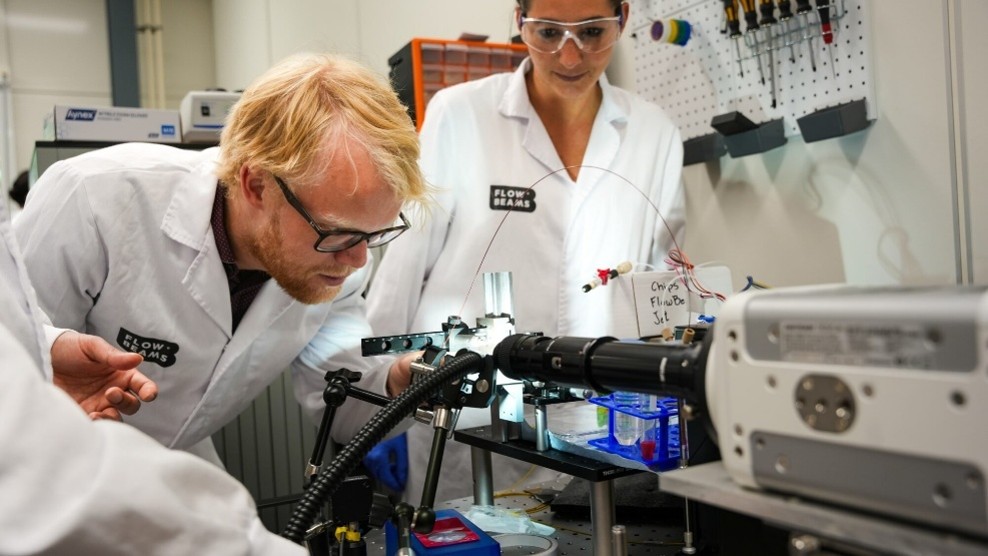
Figure 1: FlowBeams (photo credit: FlowBeams)
With its technology, FlowBeams fits perfectly into the medtech profile of the Twente region, which was developed through intensive collaboration among medtech companies at Kennispark, organised in the MedTech Twente cluster. At Kennispark, you have everything in one place: the University of Twente, lawyers, Novel-T and their programmes, as well as plenty of business opportunities for start-ups with growth ambitions. If you settle here as a researcher or start-up, you will find yourself in a place where you have direct access to workspaces, accommodation and even lab spaces for rent. Combine that with a strong network of professionals who will help you get your plans off the ground, and you have an environment at Kennispark where your business will have every opportunity to flourish.
ChipTech Twente
Chip technology has also been identified as one of the most promising areas for international excellence. The ChipTech Twente cluster builds on decades of investment in science and industry across chip design, photonics, equipment, microfluidics, and nanotechnology. This knowledge base was already firmly established in Twente, with the MESA+ Institute and Professor Bram Nauta’s department, among others. The Kennispark Twente regional organisation was closely involved in formulating an ambition plan that was presented to MEP Bart Groothuis in 2022. This plan showed how Twente could contribute to the European Chips Act and reduce dependence on Asia and the US. Kennispark positioned ChipTech Twente as a hotspot for heterogeneous chips and innovative chip designs, in line with the European strategy.
The regional organisation facilitated cooperation between knowledge institutions, companies and national partners. This led to an acceleration towards a national strategy for semiconductors, photonics and quantum technology. In 2023, the cluster entered its next phase, with the Kennispark regional organisation once again involved in adapting the team and placing emphasis on international cooperation and upscaling. The cluster now contributes to the economic and technological profile of Twente as a high-tech region and strengthens the region’s role in European innovation programmes. Kennispark Twente acts as an ecosystem director, not only enabling the establishment but also continuing to stimulate further development towards international strategies and collaborations. The innovation district identified the opportunities, brought parties together, developed the positioning and is now guiding the cluster in its transition to an international role within the European Chips Act.
Photonic chip factory at Kennispark
With the ever-growing demand for photonic chips and geopolitical tensions, Europe must have sufficient facilities to produce them itself. That ambition is clear: the European Union aims to have a fifth of all chips manufactured in Europe by 2030. Twan Korthorst, CEO of New Origin, is contributing to that mission by constructing a factory for photonic chips at Kennispark. New Origin will establish itself as an independent pure-play foundry, revolutionising the industry by producing cutting-edge silicon nitride photonic chips. Twente has a long history of photonics research and the development of these types of chips. The NanoLab at the MESA+ Institute at the University of Twente is used for this purpose. In addition, companies such as LioniX International develop prototypes and help customers worldwide create photonic-chip modules. Twente therefore has all the necessary knowledge and expertise.
With the arrival of the factory, the University of Twente, MESA+ Nanolab and photonics companies are building on what already exists at Kennispark in close collaboration. This will have a significant impact. First of all, it will naturally affect employment, not only for people with theoretical training, but also for those with practical talents. In a factory like this, you need people with all levels of education. The factory will also create new jobs in the surrounding area. You often see all kinds of new start-ups emerging or other photonics companies establishing themselves around initiatives like this. It spreads like wildfire. Now is the right time to scale up silicon nitride photonic chip production. At present, this concerns a few chips produced in a research environment, but if a large number of chips need to be manufactured at low cost, then those facilities are also necessary. That is why the starting point is undisputed quality and industry-leading turnaround times at the right price. Moreover, when those chips are so much easier to obtain, creative new solutions to all kinds of problems will emerge. The factory, therefore, stimulates innovation and employment. This strengthens Twente’s and Europe’s position on the world stage.
New Origin’s advanced manufacturing process for silicon nitride photonic chips is based on more than thirty years of experience in developing and optimising integrated photonics with nitride-based waveguides. The development from early silicon oxide-nitride (SiON) chips to today’s most advanced SiN photonic integrated circuits (PICs) has resulted in a vibrant academic, research and commercial ecosystem in Twente (the Netherlands), with solid and close ties to other Dutch and European regions. New Origin strives for undisputed quality, leading short lead times at the correct cost for a global customer base.
The factory, which will be built shortly, will establish New Origin as an independent pure-play factory, producing chips that push the boundaries of what is possible and revolutionise the industry through advanced silicon nitride photonic chips.
Universiteit Twente Holding (UTH), which actively promotes knowledge valorisation on behalf of the University of Twente and has been the driving force behind this initiative since its inception, worked closely with regional partners such as Oost NL and companies such as Bronkhorst High-Tech, Demcon, LioniX International and Micronit in 2024 to shape the business plan. PhotonDelta, the National Growth Fund’s driver for photonic chip technology, is also closely involved and has financed six million euros in New Origin. The funding is part of the Overijssel province’s contribution to PhotonDelta for the national photonics programme. In addition, a total of €380 million in public investment has been made available by Europe and eleven participating countries through their participation in the Chips Joint Undertaking. Twente will receive a significant share for the realisation of New Origin: of the 380 million, 133 million euros is expected to be invested in the Netherlands. Eindhoven and Kennispark are the intended locations for the construction of this pilot factory. Thanks to this funding and the accession of regional development company Oost NL as a shareholder, New Origin has taken the next step from planning to construction of the factory.
The challenge for 2026 is to mobilise everyone to actually realise the factory. This involves securing funding, securing a definitive location at Kennispark, identifying partners, and securing initial customers. The next step is to begin the process of obtaining permits, purchasing equipment, building, validating, and manufacturing. New Origin’s ambition is to cut the ribbon in 2027, produce the first photonic chips, and lay the foundation for applications in ultra-fast communication for AI, consumer products, medical devices, and quantum technology.
Initially, the factory will produce 25,000 wafers (the discs on which chips are made) per year, which can be scaled up. Furthermore, they are already looking further ahead. The semiconductor industry is evolving towards ‘systems of chips’, combining state-of-the-art electronic and photonic chips using advanced packaging and heterogeneous integration techniques. The facilities enable companies to scale up production and introduce new technologies to meet their customers’ needs. The aim is to add capacity for the manufacture of heterogeneous chips and ‘systems-on-chip’ to reach large-scale production. In ten years, a successful manufacturing process should be in place, and dozens of customers should have been served to their satisfaction. The photonic chips should have reached our daily lives, for example, by being incorporated into your telephone. Ultimately, these chips should improve our lives. If New Origin is successful, it will prove that the technology has truly broken through. However, first, we must work together to ensure the factory is actually built.
A modern and inspiring place to live, work and study
As founding partners of the Kennispark Twente area organisation, the Municipality of Enschede, the University of Twente, and Kennispark Entrepreneurs are jointly committed to attracting and retaining talent, acquiring companies, and supporting established companies in growing. This is achieved, among other things, by ensuring that Kennispark is the ideal place to work, relax and play sports.
First BREEAM-certified innovation space
One initiative to make working and living on the innovation campus more attractive is a focus on BREEAM certification. Kennispark Twente is the first science park in the Netherlands to obtain a BREEAM NL Area Certificate. The 2-star certificate is tangible proof of the various sustainability initiatives at Kennispark, in which the municipality, the University of Twente, the area organisation and Kennispark Entrepreneurs work closely together.
By obtaining the 2-star BREEAM-NL Area Certificate, Kennispark has demonstrated that the (re)development process has been organised in a socially responsible manner and that as many sustainability measures as possible have been implemented in collaboration with stakeholders. Kennispark is a safe, attractive, socially cohesive, healthy and future-proof physical living environment for the established companies and their employees.
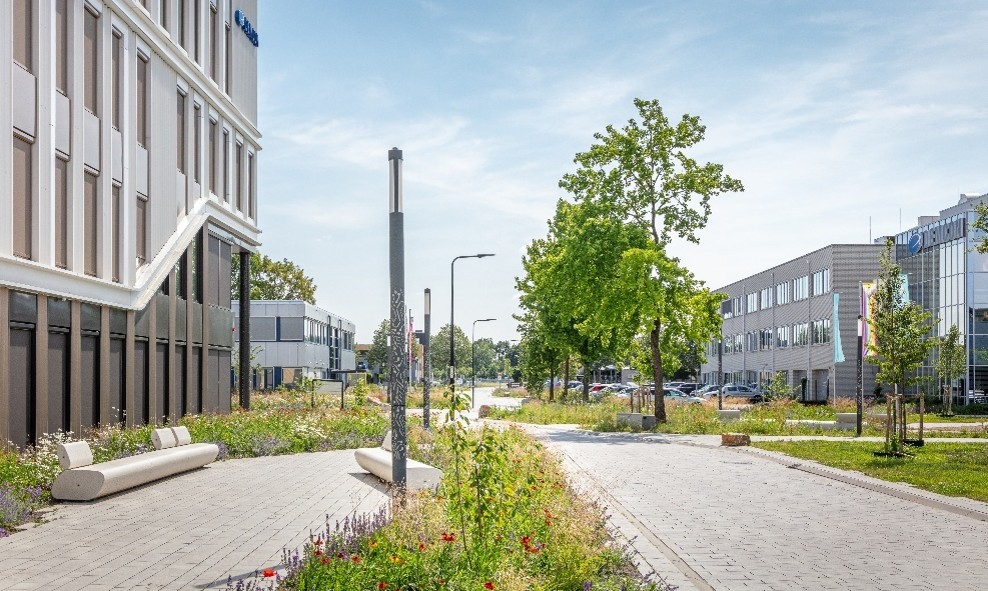
Figure 2: Kennispark Twente (photo credit: Laurens Kuipers)
First eight-storey fully wooden residential complex in the Netherlands
The innovative Bundle residential concept adds a new form of living to Kennispark, in addition to the 3,000 student rooms already available on the UT campus (Figure 3). Bundle@Kennispark offers young, ambitious people an inspiring living environment where living, working, and meeting are central, and strengthens Kennispark as a leading innovation area. Bundle@Kennispark will have a modern, wooden appearance and is unique thanks to its modules, which are made entirely of solid wood and span eight storeys. A milestone for the city, Kennispark, and the biobased movement in Twente. It shows how you can make concrete progress towards a sustainable, circular construction economy: from raw material to building, from land to property.
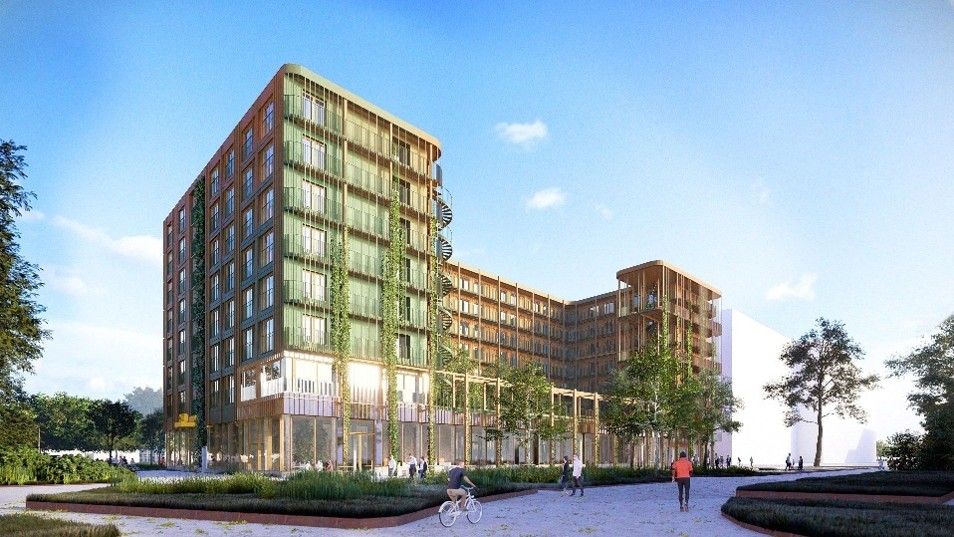
Figure 3: Bundle@Kennispark (artist impression by SeARCH)
Kennispark in 2035
In 2035, Kennispark will be the physical location where the regional innovation ecosystem comes together to conduct research, innovate and valorise, and will serve as a regional incubator for new businesses and initiatives. Collaboration between companies, knowledge institutions, and educational institutions takes place at Knowledge Park, and, with its knowledge positions, it serves as the clubhouse and incubator of the regional ecosystem. This creates economic and social impact through technological developments at the knowledge frontier. Knowledge Park provides companies with the space to grow and retain talent by creating the right preconditions.
To strengthen innovation capacity, the spatial assets promote interaction and maximise the chances of chance encounters. The quality of public and private buildings, homes, public spaces, and facilities is therefore essential. The campus’s spatial assets determine its attractiveness to talent and businesses. By 2035, Kennispark Twente will be an integral part of the broader area development of the Hengelo-Enschede railway zone. It will be a single recognisable area with sufficient high-quality real estate and public space, good multimodal accessibility, strong links to the surrounding area, and a location for the continued growth of innovative companies in the city and region. Kennispark will thus create an attractive (international) business climate in which the knowledge and jobs of tomorrow will be made accessible.
In 2035, companies and institutions at Kennispark will fully benefit from their proximity, forming networks and exchanging ideas. This involves a diversity of networks, including both informal friendships and formal business relationships. By interacting within and between networks, people share their knowledge. However, this does not happen automatically, which is why it is actively programmed here at Kennispark. This can take the form of a wide range of activities, from purely social to more serious. By 2035, there will be a single Kennispark Twente community in which a wide range of (professional and social) activities will be organised on a structural basis, so that employees of companies and institutions at Kennispark also feel that they belong to the Kennispark community.
Conclusion
A new generation of qualified employees is entering the labour market with different expectations than before. They seek an inspiring environment that seamlessly integrates work, living, leisure, and social engagement. Innovative companies and knowledge institutions are also seeing their needs change. The increasing complexity of social issues, rapid technological developments, and the need for sustainable growth call for an environment that fosters collaboration, flexibility, and social engagement. Open innovation and interdisciplinary collaboration are becoming increasingly important. Whereas science parks are often located on clearly demarcated sites and focus primarily on valorisation, technological development and research, an innovation district offers a vibrant urban environment where diverse disciplines come together.
To remain relevant, Kennispark will continue adapting and learning from successful examples. By partnering with diverse stakeholders and creating an inspiring, flexible, and sustainable environment, Kennispark can secure its position as a breeding ground for progressive ideas and talent whilst contributing to today’s and tomorrow’s social challenges. As one of the largest science parks, Kennispark is already a job engine for the region, partly due to the success of the ChipTech and MedTech clusters, and will develop into an actual innovation campus in the coming years. The further expansion of these clusters, adding accommodation for young professionals through Bundle@Kennispark and achieving BREEAM area certification, provides significant impetus and sets the tone for what Kennispark should be in 2035: a modern and inspiring place to live, work or study, where work and leisure are in balance.

