
The characteristics of an industrial innovation campus
Brecht Lootens, ORG / With Purpose Ecosystem Studio
Summary
Industrial innovation campuses are emerging as a distinct form of organised innovation spaces, transforming legacy industrial sites into curated environments that foster collaboration, knowledge sharing and co-innovation. Unlike university-driven science parks or urban innovation districts, Industrial innovation campuses originate in a dominant industrial actor seeking to accelerate innovation by strategically opening its R&D and production ecosystem to external partners. Their defining characteristics lie in their peri-urban or industrial spatial setting, their clearly delineated campus boundaries and their deep technical infrastructure. Equally distinctive are their curated user base focused on value-chain complementarity, and a governance model in which the corporate anchor firm plays a pivotal role as ecosystem orchestrator.
Drawing on academic literature and four case studies in the Netherlands and Belgium, this chapter outlines the essential characteristics of an industrial innovation campus. It proposes a value framework based on investment value, market value and ecosystem value. It argues that these campuses are evolving into an emerging asset class at the intersection of corporate and commercial real estate and industrial and innovation infrastructure.
This blog is published as a chapter in the book by Jacques van Dinteren and Paul Jansen (eds.) ‘Organised Innovation Spaces’. Nijmegen: Innovation Area Development Partnership (2026). The book will be digitally available in autumn 2026.
Organised innovation spaces have become central instruments for structuring collaboration and enabling innovation-driven growth (Sanz et al., 2023). Science parks, innovation districts, incubators, and living labs all offer different ways to bring firms, researchers, and entrepreneurs together in environments where knowledge can circulate effectively.
Against this background, the industrial innovation campus represents a new and increasingly relevant category. It does not arise from a municipality, a university or a developer, but from the strategic corporate real estate and innovation agenda of a large industrial firm that chooses to open up its existing site to selected external partners. It is this act of opening (inviting external innovators into a formerly closed environment) that gives the industrial innovation campus its distinctive profile.
The industrial innovation campus combines the depth of industrial infrastructure, the intentionality of a curated innovation ecosystem, and the strategic logic of corporate real estate management (Appel-Meulenbroek & Nardelli, 2017; Geltner et al., 2007). As such, it is both a physical environment and an organisational model. In what follows, this chapter introduces the origins of this typology, describes its defining spatial, organisational, and strategic characteristics, and also outlines its risks and challenges. We will examine four illustrative cases and conclude with a value framework that explains how these campuses evolve from internal corporate assets to multi-actor innovation platforms with regional relevance.
Origins and definition of the industrial innovation campus
The emergence of industrial innovation campuses can be interpreted as a response to the limitations of traditional corporate R&D models. By the 1990s and 2000s, many large companies were experiencing increasing organisational inertia: internal R&D processes became slower, more risk-averse and less connected to fast-moving technological and market developments (Capgemini Consulting & Altimeter, 2015). To counter this, firms established corporate innovation centres located in major global hubs. These centres served as interfaces with external ecosystems, enabling access to talent, ideas and start-ups.
Research has consistently shown that physical co-location remains a powerful driver of knowledge exchange and innovation. Steiber (2020) demonstrated that co-locating start-ups and corporate teams increases informal encounters, accelerates learning cycles and creates mutual benefits in terms of speed, creativity and scale.
Building on these insights, some companies went a step further and opened their own industrial sites to external partners. Instead of moving innovators out into the world, they invited the world into their most strategic R&D and production environments. This shift marks the transition from corporate innovation centres to multi-actor, place-based innovation ecosystems anchored in industrial settings (Capgemini Consulting & Altimeter, 2015; Steiber, 2020).
Definition
An industrial innovation campus is a corporate-initiated campus located on a delineated industrial site, where co-location and co-innovation are intentionally organised through curated user selection, specialised infrastructure, and active ecosystem governance.
The initiating anchor firm is the organising principle: an industrial innovation campus originates from a dominant industrial actor. Unlike science parks (university-led) or innovation districts (city-led or developer-led), the initial logic is corporate initiation (Sanz et al., 2023). The anchor firm owns or controls the land, defines the strategic direction, curates the user mix, provides specialised infrastructure and initiates the governance structure.
‘Curated user selection’ is another key element of the definition. In an industrial innovation campus, access is not primarily determined by market demand for space, but by deliberate governance choices aimed at shaping a coherent and strategically aligned innovation ecosystem. Criteria for analysing the market are primarily driven by strategic and technological considerations, including alignment with the anchor firm’s value and mission, the innovation agenda, technological proximity and complementarity within the value chain. At the same time, potential risks related to intellectual property, confidentiality and competitive overlap are explicitly considered. In the early development phase of an industrial innovation campus, this typically leads to a selective, risk-averse intake policy. As the campus matures and governance structures professionalise, selection criteria may broaden, enabling a more diverse ecosystem and reflecting a shifting balance between control and openness.
According to this definition, we can also situate the industrial innovation campus within the broader body of regional innovation and cluster theory, particularly Markusen’s (1996) ‘hub-and-spoke’ model. He builds on Michael Porter’s (1990, 1998) traditional cluster theory, which emphasised the importance of geographically concentrated clusters in strengthening regional economic performance through competition, specialisation, and value-chain linkages. However, whereas Porter framed clusters as environments where firms benefit from co-location because proximity facilitates talent attraction, supplier relationships, spillovers, and innovation, Markusen’s work extends this argument by showing that not all clusters operate through dispersed, competitive networks. Some are organised around a dominant firm whose strategic position shapes the entire ecosystem. It has become a standard reference for understanding how powerful anchor firms influence regional development trajectories, as Nokia did in Finland in the early 2000s. Industrial innovation campuses exemplify this logic: they are not only spatial concentrations of activity but strategically organised ecosystems in which the anchor firm provides direction, legitimacy, resources and infrastructure.
Industrial innovation campuses can thus be understood as contemporary manifestations of hub-driven cluster formation: purposefully curated environments where place, strategy and innovation mutually reinforce one another.
Following the organised innovation spaces taxonomy by Sanz et al. (2023), campuses can be characterised along three dimensions: spatial characteristics, user profiles and services, and organisation and governance. The specific way these dimensions are combined distinguishes industrial innovation campuses from other familiar types such as science parks, incubators and urban innovation districts.
Spatial characteristics
The spatial environment of an industrial innovation campus is foundational to its functioning. Three features stand out: the peri-urban or industrial location, the clearly delineated boundaries and the presence of deep technical infrastructure. Each of these characteristics brings both strengths and weaknesses.
Peri-urban or industrial locations
Industrial innovation campuses are typically located in peri-urban industrial zones, often on legacy R&D or production sites. This location offers significant advantages, including large land parcels, industrial zoning, and existing utilities and logistics infrastructure. It enables activities that would be difficult to accommodate in dense urban settings, including pilot plants, heavy testing facilities and high-risk experiments.
However, these locations can also make it more challenging to attract young talent, students, and start-ups who value urban vibrancy, cultural amenities, and proximity to universities, which are critical to creative industries and startups (Florida, 2002; Florida et al., 2017). The relative distance from city centres may limit informal contact with broader communities and weaken the campus’s visibility in the wider urban fabric. The peri-urban context, therefore, requires deliberate efforts in branding, mobility and partnerships with universities to ensure that talent, partners and visitors feel connected to the campus.
Clearly delineated campus boundaries
A defining feature of industrial innovation campuses is their clear physical delineation, often even with gated access. This ensures safety, protects intellectual property and allows governance structures to manage the internal environment effectively. A clearly defined perimeter also strengthens the sense of belonging among the resident community: entering the campus feels like entering a specific world of research, technology, and industrial activity.
At the same time, strong delineation can reduce openness and limit informal interaction with broader innovation communities (Van Dinteren et al., 2017). Unlike urban innovation districts with porous edges and mixed-use surroundings, Industrial innovation campuses risk becoming self-contained environments. To avoid inward-looking dynamics, campus organisations must actively create bridges to external networks, for instance, through events, open days, joint programmes with universities and partnerships with public authorities.
Specialised infrastructure and technical depth
Industrial innovation campuses typically have deep industrial and technological infrastructure, including high-capacity utilities, pilot plants, advanced laboratories, and robust logistics capabilities. These assets are invaluable for advanced industries such as materials, chemistry, energy systems and high-tech manufacturing. They enable experimentation and scale-up that would be impossible or prohibitively expensive in standard office or lab environments (Cooke et al., 2004).
However, this same technical depth introduces constraints. High fixed costs, complex safety requirements and rigid layouts can reduce flexibility for small firms and early-stage start-ups. The industrial character may also limit the integration of other urban functions, making it harder to create the 24/7 environments often associated with innovation districts. Governance has to balance the advantages of industrial infrastructure with the need to host a dynamic, diverse innovation ecosystem.
Users and services: a curated innovation community
An industrial innovation campus is not defined by size or sheer diversity, but by the strategic selectivity of its user base. The anchor firm typically prioritises users that complement its own activities: specialised suppliers, technology partners, research institutes, universities, and start-ups operating in related technological domains (Porter, 1998; Boschma, 2005).
At the operational level, curated user selection often leads to a staged engagement model rather than immediate, whole-tenancy engagement. Potential users may initially enter the campus through pilot collaborations, shared projects or temporary access to specific facilities before becoming permanent residents. This approach allows both the anchor firm and the campus organisation to assess strategic fit, collaboration potential and risk exposure over time. Curated user selection at an industrial innovation campus can be supported by explicit ecosystem frameworks that structure user attraction beyond purely spatial or real estate logic. At the Laborelec Innovation Campus, for example, a layered ecosystem model was applied. It distinguishes the ‘ecosystem fit’ across purpose and value, community and governance, digital and data layers, and services, on top of the physical or infrastructural layer. Such frameworks provide a practical lens to assess complementarity and help translate innovation ambitions into concrete decisions about which actors to attract and how to position them within the campus ecosystem.
The value-chain orientation results in an ecosystem in which collaboration is not incidental but structurally embedded in the strategies of both the initiating firm and the tenants. Shared labs and pilot facilities enable joint development projects. Connector programmes and thematic events bring together diverse actors around common challenges. Community-building activities such as informal meet-ups, innovation challenges and campus-wide events strengthen social cohesion and trust (Granovetter, 1973; Appel-Meulenbroek & Nardelli, 2017).
Rather than offering generic services, the campus organisation tailors its offer to the anchor firm’s specific technological domain and its innovation challenges. This includes specialised safety and compliance support, sector-specific business development and targeted matchmaking with investors or international partners.
Organisation and governance: corporate-led ecosystem management
The governance structure of an industrial innovation campus is typically initiated, shaped and governed by the anchor firm. In the early stages, governance is strongly corporate: the campus is managed as an extension of internal R&D and production facilities, with strict admission criteria and a focus on strategic fit. This is clearly different from university-led science parks and city-led innovation districts, where steering logic is more public or academic (Sanz et al., 2023; Van Dinteren et al., 2017).
While this offers clear advantages in terms of market access, corporate networks, and knowledge, the model also entails specific risks and limitations. The strong dependence on a single anchor firm may expose the ecosystem to strategic shifts at the corporate level, such as reorganisations or changes in R&D focus. The proximity between corporate and smaller innovation actors can create tensions around intellectual property, confidentiality and competitive positioning. For start-ups and scale-ups in particular, this may create dependencies on access to facilities, data, or collaboration opportunities. These risks underscore the importance of governance structures that evolve alongside the campus, ensuring openness and collaboration are balanced with trust, legitimacy, and long-term ecosystem stability. Also, tailored ecosystem models can help control and calibrate openness and control across governance, services, and spatial layers.
Over time, governance models often become hybrid. As external users increase and public interest in the campus grows, new arrangements may be introduced, such as public–private partnerships, joint ventures, independent campus management entities, or foundations. Public authorities may invest in infrastructure or facilities, while universities formalise their involvement through research programmes, joint labs or education activities (Etzkowitz & Leydesdorff, 2000).
Donahue et al. (2018) describe this evolution in cluster initiatives as a shift towards models that are ‘industry-driven, university-fuelled and government-funded’. Industrial innovation campuses often follow a similar trajectory, with the anchor firm maintaining a central role but sharing governance responsibilities with other stakeholders as the campus matures.
Industrial innovation campuses in practice: four case studies
The characteristics discussed above become clearer when viewed through concrete examples. Four cases from the Netherlands and Belgium illustrate the diversity of industrial innovation campuses and their shared evolutionary dynamics.
High Tech Campus Eindhoven (HTCE)
High Tech Campus Eindhoven is widely regarded as the archetype of the industrial innovation campus. Originating as a closed R&D complex for Philips, the site was transformed in the early 2000s through a strategic consolidation of the company’s research activities. Philips then made the pivotal decision to open the site to external partners, creating a curated ecosystem around deep tech domains (Romme, 2017).
The campus’s evolution demonstrates how a corporate infrastructure can grow into a full-fledged real estate business model. After years of campus development and professionalisation, Philips sold the high tech campus to a private investor, showing that the campus had achieved substantial market value and had become a self-standing, investable asset (Computable, 2021). The campus is now managed by a dedicated organisation that combines real estate expertise with ecosystem curation, positioning the campus as Europe’s ‘smartest square kilometre’ and a reference case for industrial innovation campuses worldwide.
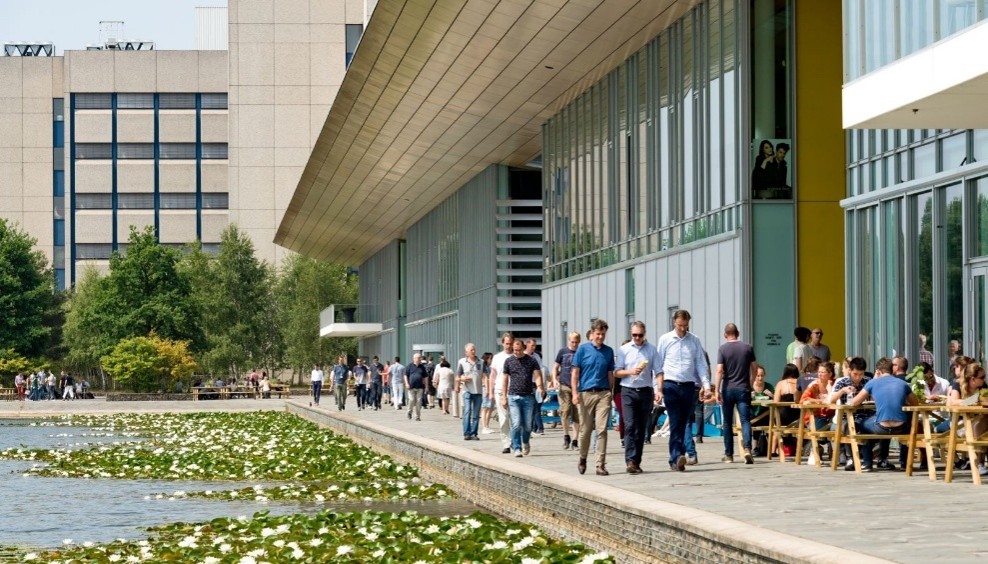
Figure 1: the central campus building ‘The Strip’ on the High Tech Campus Eindhoven (photo credit: High Tech Campus)
Brightlands Chemelot Campus (BCC), Geleen
Brightlands Chemelot Campus began as part of DSM’s long-standing R&D infrastructure. As DSM shifted its strategic focus from traditional chemistry to high-value applications in health and nutrition, significant research facilities became available for new uses. This catalysed the transformation of the site into an open campus embedded within the larger Chemelot industrial complex (Brightlands Chemelot Campus, 2022).
Crucially, BCC evolved through a public–private partnership involving DSM and the Province of Limburg. This structure enabled the diversification of users, the development of new facilities and the establishment of a professional campus organisation. The campus is now a recognised ecosystem for materials, chemistry and biotechnology, and a key component of the Brightlands brand. It demonstrates how public actors can amplify the potential of an Industrial Innovation Campus and support the transition from corporate asset to regional innovation platform.
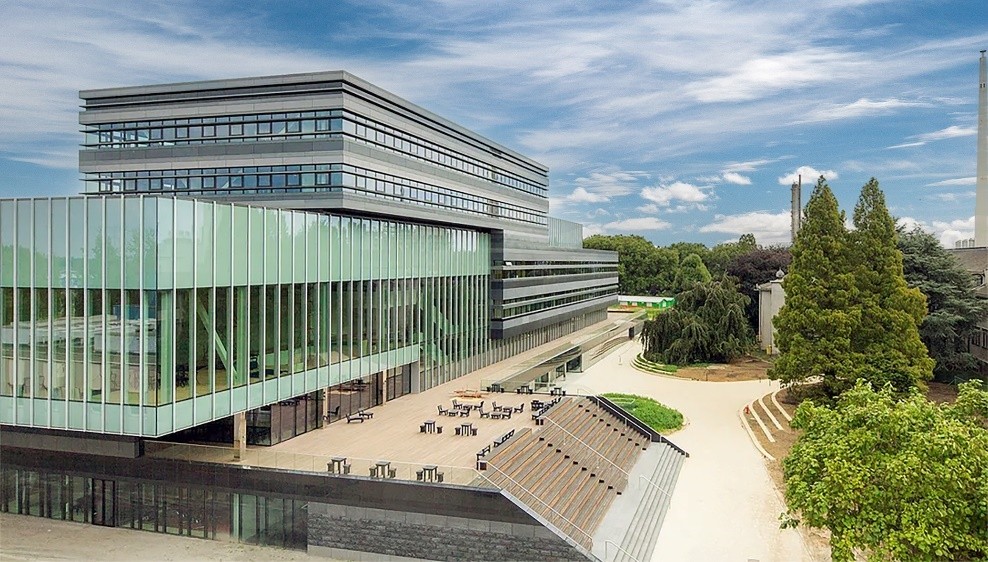
Figure 2: the Centre Court of the Brightlands Chemelot Campus (photo credit: Dols Fotografie)
Solvay Campus Neder-Over-Heembeek (Brussels)
Solvay’s site in Brussels illustrates a different kind of evolution. Historically a corporate R&D campus, it is now being redeveloped by Revive, a specialist in large-scale brownfield regeneration, with the aim of further opening it to external partners. The project sits at the boundary between an industrial setting and a metropolitan area, creating both opportunities and uncertainties (MS-A, 2017; Solvay, 2018).
On the one hand, the campus has the technical depth and industrial identity typical of an industrial innovation campus. On the other hand, its proximity to both Brussels Airport and the city centre increases pressure to integrate more urban logics: greater openness, mixed-use possibilities, and a broader range of users. The site’s final trajectory remains to be fully defined, making it a compelling example of a campus in transition that could evolve into a hybrid innovation district, depending on governance choices, user mix, and the ambition of the redevelopment partners (De Tijd, 2023).
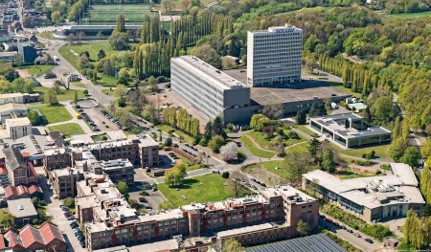
Figure 3: the Solvay campus in Neder-Over-Heembeek, Belgium (photo credit: Revive)
Laborelec Campus Linkebeek
Engie Laborelec’s research site in Linkebeek offers a more compact example of an industrial innovation campus. Initially designed for internal research on energy systems, it is now being opened up to selected partners in the energy transition (ENGIE, 2022; ORG, 2025). While the campus is smaller than the High Tech Campus or the Brightlands Chemelot Campus, it follows the same evolutionary trajectory: moving from a closed, corporate-only environment to a curated ecosystem of specialised partners.
Given that Laborelec is presented as a separate case study elsewhere in this publication, this chapter highlights only the essentials: a technically sophisticated site, a clear industrial focus on energy systems, and a strategic ambition to evolve towards a more open, collaborative model.
Synthesis
While all four cases align with the core characteristics of the industrial innovation campus, they differ in how spatial configuration, ecosystem composition and governance arrangements are combined and balanced in practice.It also becomes clear that early-stage campuses differ from more mature ones, and that the governance model aligns with the real estate and ownership strategies. Understanding the value dynamics behind these strategies is indispensable for this type of innovation space.
| Campus | Spatial characteristics | Users & services | Organisation & governance |
| High Tech Campus Eind-hoven | Large, clearly delineated peri-urban campus; high-end R&D and prototyping infrastructure; strong internal spatial cohesion | Broad but curated mix of corporates, scale-ups, start-ups and research institutes; strong focus on deep-tech collaboration and shared facilities | Professional, independent campus organisation; private ownership; strong but indirect role of original anchor firm |
| Bright-lands Chemelot Campus | Industrial campus embedded within a larger chemical cluster; access to specialised chemical and process infrastructure | Focus on materials, chemistry and biotech; a combination of corporate, research and start-up users; shared labs and pilot facilities | Public–private partnership; shared strategic steering between corporate and regional actors |
| Solvay Campus Neder-Over-Heem-beek | Historically, an industrial R&D site in a metropolitan context, spatial transformation underway, less clearly delineated | User profile still evolving; ambition to attract external innovation actors alongside corporate R&D | Governance model in transition; uncertainty regarding long-term anchor role and degree of openness |
| Laborelec Campus Linkebeek | Compact, specialised research site; strong technical infrastructure related to energy systems | Selective set of partners linked to energy transition; service offering to be grown from project-based to ecosystem-based | Corporate-led governance; early-stage opening towards external collaboration |
Understanding value in industrial innovation campuses
A defining contribution of industrial innovation campuses lies precisely in how they generate value, economically, strategically and societally. Traditional real estate models focus on market value. Corporate real estate management adds investment value as a concept (Appel-Meulenbroek & Nardelli, 2017; Geltner et al., 2007; Glatte, 2021). In addition, a third dimension can be introduced to fully understand the dynamics of organised innovation systems: ecosystem value. Together, these value models form a comprehensive framework for analysing the dynamics of industrial innovation campuses.
Investment value
Investment value is the value of an asset to a specific owner, based on its internal utility. In corporate real estate, this includes strategic control, R&D synergies, proximity benefits, security and risk reduction (Geltner et al., 2007). For anchor firms, a campus may be more valuable than the market would recognise, especially in early development phases. In industrial innovation campuses, investment value dominates the initial stage, as the campus is designed to support internal innovation and strategic positioning.
Market value
Market value reflects what external investors are willing to pay for a company. It becomes relevant once the campus attracts external users, diversifies revenue streams, professionalises its management and gains visibility in the investment market (Brounen & Eichholtz, 2005; Li et al., 2023). This mirrors the evolution of science parks over the past decades, many of which have become investable real estate assets. For industrial innovation campuses, market value emerges as the campus transitions from a closed corporate asset to an open, multi-tenant environment.
Ecosystem value
Ecosystem value is not a traditional real estate concept. It was introduced to capture the value arising from collaboration, knowledge exchange and societal contributions. This includes the quality of partnerships, innovation output, talent attraction and contributions to regional development (Etzkowitz & Leydesdorff, 2000; Sölvell et al., 2003). As the campus matures, ecosystem value becomes a significant driver, influencing both investment and market value and positioning the industrial innovation campus as a strategic asset for companies and regions alike.
The evolution of ownership strategies in industrial innovation campuses
The interplay between investment value, market value, and ecosystem value explains how ownership strategies evolve through three broad stages, consistent with insights from corporate real estate research on sale-and-leaseback, outsourcing, and hybrid ownership structures (Devaney & Lizieri, 2004; Nappi-Choulet, 2002).
Stage 1: closed corporate asset
At the outset, the campus is fully corporate-controlled. Investment value far exceeds market value, and governance is internal. The campus is treated primarily as an operational asset supporting core business activities. Examples include the early stages of the High Tech Campus, the Brightlands Chemelot Campus, Solvay, and Laborelec, when external users were absent or marginal, and the sites functioned as classic R&D or production facilities.
Stage 2: hybrid governance and emerging market value
As the campus opens to external users, market value emerges. The anchor firm often retains ownership, but governance becomes more complex. New structures, such as joint ventures, lease arrangements, or public–private partnerships, are introduced to support growth and share risk (Brounen et al., 2008; Donahue et al., 2018). Ecosystem value begins to shape the strategic trajectory, as collaboration and regional impact become explicit goals. The Brightlands Chemelot Campus and the evolving Solvay campus are examples of this stage.
Stage 3: professionalised, investable campus
In the advanced stage, the campus operates as an investable asset. Ownership may shift through sale-and-leaseback, sale to institutional investors or the creation of independent campus management entities (Louko, 2005; Currie & Scott, 1991). Market value becomes increasingly important, while ecosystem value stabilises as a key differentiator. The High Tech Campus exemplifies this stage, having transitioned from an internal Philips asset to a fully investable campus with strong market positioning and a dedicated management organisation. This model underscores how the industrial innovation campus evolves simultaneously as corporate assets, real estate products and innovation ecosystems: a unique combination in the landscape of organised innovation spaces.
Conclusion
Industrial innovation campuses are emerging as influential typologies within organised innovation spaces. Their distinctiveness lies in their industrial origins, specialised infrastructure, and curated innovation ecosystems. They are neither science parks nor innovation districts, but hybrid environments that combine industrial depth with collaborative openness (Sanz et al., 2023; Van Dinteren et al., 2017).
By tracing the spatial, organisational, and strategic characteristics of industrial innovation campuses and examining concrete examples in Belgium and the Netherlands, this chapter has shown how industrial innovation campuses evolve from closed corporate assets into dynamic, investable ecosystems that contribute to regional development. The value framework, based on investment value, market value, and ecosystem value, provides a lens for understanding this evolution and for designing more robust ownership and governance strategies.
As industrial companies and policymakers seek new ways to revitalise legacy sites, strengthen innovation capacity, and accelerate transitions in energy, materials, and manufacturing, the industrial innovation campus offers a compelling model: one that connects corporate strategy with spatial development and innovation with long-term societal value.
References
- Appel-Meulenbroek, R., & Nardelli, G. (2017). A holistic model for measuring the impact of CREM on organisational performance. In: Jensen et al. (eds.), Facilities Management and Corporate Real Estate Management as Value Drivers. Abingdon: Routledge.
- Boschma, R. (2005). Proximity and innovation: A critical assessment. Regional Studies, 39(1), 61–74.
- Brightlands Chemelot Campus (2022). 20220415 presentatie Brightlands Chemelot Campus.
- Brounen, D., & Eichholtz, P. (2005). Corporate real estate ownership implications: International performance evidence. The Journal of Real Estate Finance and Economics, 30(4), 429–445.
- Brounen, D., van Dijk, M., & Eichholtz, P. (2008). Corporate real estate and corporate takeovers: International evidence. Journal of Real Estate Research, 30(3), 293–311.
- Capgemini Consulting, & Altimeter. (2015). The innovation game: Why and how businesses are investing in innovation centres.
- Cooke, P., Heidenreich, M., & Braczyk, H.-J. (2004). Regional innovation systems: The role of governance in a globalised world. London/New York: Routledge.
- Computable (2021). Singapore blijkt grote belegger in High Tech Campus.
- Currie, D., & Scott, A. (1991). The place of commercial property in the UK economy. London Business School.
- De Tijd (2023). Splitsing chemieconcern Solvay: 7 vragen over de scheiding van het jaar.
- Devaney, S. P., & Lizieri, C. M. (2004). Sale and leaseback, asset outsourcing and capital market impacts. Journal of Corporate Real Estate, 6(2), 118–132.
- Donahue, R., Parilla, J., & McDearman, B. (2018). Rethinking cluster initiatives. Washington: Brookings Institution.
- ENGIE (2022). ENGIE Laborelec viert 60ste verjaardag: Van op en top Belgisch laboratorium tot toonaangevend internationaal onderzoekscentrum.
- Etzkowitz, H., & Leydesdorff, L. (2000). The dynamics of innovation: From national systems and ‘Mode 2’ to a triple helix of university–industry–government relations. Research Policy, 29(2), 109–123.
- Florida, R. (2002). The rise of the creative class. New York: Basic Books.
- Florida, R., Adler, P., & Mellander, C. (2017). The city as innovation machine. Regional Studies, 51(1), 86–96.
- Geltner, D., Miller, N. G., Clayton, J., & Eichholtz, P. (2007). Commercial real estate analysis and investments (2nd ed.). Mason, OH: Cengage Learning.
- Glatte, T. (2021). Corporate Real Estate Management. Wiesbaden: Springer Vieweg.
- Granovetter, M. (1973). The strength of weak ties. American Journal of Sociology, 78(6), 1360–1380.
- Li, Q., Ling, D. C., & Yin, Q. E. (2023). Corporate real estate usage and firm valuation. The Journal of Real Estate Finance and Economics (advance online publication).
- Louko, A. (2005). Corporate real estate ownership and the market for sale and leasebacks in Finland. Nordic Journal of Surveying and Real Estate Research, 2(1), 58–75.
- Markusen, A. (1996). Sticky places in slippery space: A typology of industrial districts. Economic Geography, 72(3), 293–313.
- MS-A (2017). Productive City / Masterplan Solvay Campus Neder-Over-Heembeek.
- Nappi-Choulet, I. (2002). Corporate property outsourcing in Europe: Present trends and new approach for real estate economics. Paper presented at IPD European Property Strategies Conference, Wiesbaden.
- ORG (2025). Laborelec Energy Ecosystem – Onepager (interne samenvatting, 6 mei 2025).
- Porter, M. E. (1998). Clusters and the new economics of competition. Harvard Business Review, 76(6), 77–90.
- Romme, A. G. L. (2017). The management of high-tech campus ecosystems. Journal of Strategy and Management, 10(1), 79–94.
- Sanz, L., Klofsten, M., Van Dinteren, J., & Jansen, P. (2023). A taxonomy of organised innovation spaces. Luxembourg: Publications Office of the European Union.
- Sölvell, Ö., Lindqvist, G., & Ketels, C. (2003). The Cluster Initiative Greenbook. Stockholm: Ivory Tower.
- Solvay (2018). Solvay Campus – Creative Connections. Persdossier campusontwerp.
- Steiber, A. (2020). Technology management: Corporate–startup co-location and how to measure the effects. Journal of Technology Management & Innovation, 15(2), 15–26.
- Van Dinteren, J., Jansen, P., & Lettink, N. (2017). Ruimte voor kennisontwikkeling. Van science park tot innovatiedistrict. Management & Organisatie, 3–4, 65–82.

