
Innovation in motion: a reflection on Dutch science parks
Benny Ng and Martin Kraaij (ASR Dutch Science Park Fund)
This article is published as a chapter in the book by Jacques van Dinteren and Paul Jansen (eds,) ‘Organised Innovation Spaces’. Nijmegen: Innovation Area Development Partnership (2026). The book will be digitally available in autumn 2026.
Science parks are districts in which universities, research institutes, and technology firms co-locate, forming innovation ecosystems rather than standard office properties. They also support knowledge creation, talent retention and regional renewal. The ASR Dutch Science Park Fund (ASR DSPF) invests in Dutch R&D facilities to reinforce these ecosystems, holding twelve assets across the TU Delft Campus, Kennispark Twente, Leiden Bio Science Park, and Biotech Campus Delft (€273m AUM). The Fund ‘builds ecosystems, not buildings’ by providing shared amenities, flexible multi-tenant space, bespoke single-tenant facilities and long-term partnerships. A life-cycle strategy enables firms to progress from start-up labs to scale-up space and mature R&D facilities without leaving the park. Relocation analysis of 6,953 companies (2014–2024) shows high churn and termination among start-ups, lower failure and moderate mobility among scale-ups, and strong ‘lock-in’ for mature firms. These patterns underline the value of a balanced tenant mix and support science parks as a resilient, impact-oriented asset class tied to innovation-led growth.
Science parks contribute to societal goals, including knowledge development, talent retention, and regional rejuvenation. Science parks are clearly defined geographic areas and professionally managed developments where technology-based companies, research institutions, and universities co-locate (Ng, 2020). They differ from traditional real estate sectors due to their strong connection to technology, innovation, and knowledge transfer. Science parks combine strategic locations, close ties to knowledge institutions, and a dynamic mix of early-stage and established technology-based companies. Rather than relying solely on mature tenants, the strength of science parks lies in their potential to be leading hubs for specific sectors and in their ability to attract and retain technology-based companies at various stages of growth. This balance creates a distinctive risk-return profile for investors.
For institutional investors, the real estate dynamics of science parks offer an opportunity to invest in a resilient asset class structurally linked to innovation. The ASR Dutch Science Park Fund (hereafter: ASR DSPF/the Fund) invests in Research & Development (R&D) facilities for technology-based companies, thereby strengthening science park ecosystems that foster innovation across multiple technology sectors.
ASR DSPF’s investment strategy: building ecosystems
ASR DSPF aims to contribute to the knowledge-based economy by accommodating technology-based companies on Dutch science parks. Currently, the Fund has twelve assets in the Netherlands, located on the Biotech Campus Delft, Kennispark Twente, Leiden Bio Science Park, and the TU Delft Campus, with assets under management of €273 million. The Fund invests in these science parks to develop local ecosystems. This means prioritising:
- proximity to research institutions and innovative corporates
- shared infrastructure. DSPF provides for and exploits the required campus amenities
- multi-tenant flexibility and dedicated single-tenant propositions
- long-term partnerships with local stakeholders
Overall, where logical, this includes coordinated planning of new buildings, the renovation of existing assets, campus facilities, and public spaces that can contribute to the campus’s innovation climate. ASR DSPF currently has three exclusive long-term partnerships: TU Delft Campus, Kennispark Twente, and the Biotech Campus Delft (dsm firmenich). These partnerships represent a pipeline of various projects and enable the coordinated development of new buildings, the renovation of existing assets, and the realisation of essential shared infrastructure. Together, they are key to ASR DSPF’s strategy of investing in science parks as functioning innovation ecosystems rather than isolated real estate assets.
ASR DSPF life cycle approach
The Fund deliberately invests across the entire company lifecycle, ensuring that companies can grow without leaving the ecosystem. Naturally, this requires a tailored approach that reflects both the current context and each science park location’s future vision. This total‑life‑cycle approach is supported by the Fund’s exclusive partnerships, which enable coordinated development rather than one-off acquisitions. In turn, this benefits all parties involved by ensuring alignment with ecosystem needs and reducing the risk of vacancy.
Table 1 lists some of the Fund’s buildings. The characteristics of some of these buildings are discussed below the table.
Table 1: examples of ASR DSPF buildings
| Business development phase | ASR DSPF example | Real estate requirements |
| Start‑ups | Van Iterson House | Low‑cost, turn-key labs, flexible conditions |
| Scale‑ups | NEXT Delft, Beijerinck Center, The Gallery | Modular labs, expansion capacity |
| Mature | Oldelft Ultrasound, Van Marken Food Innovation Center, Avery Dennison | Specialised, long-term R&D facilities |
Oldelft Ultrasound – Single‑tenant R&D Facility
ASR DSPF’s investment in the Oldelft Ultrasound building demonstrates the Fund’s ability to support mature and specialised R&D companies. The company collaborates closely with researchers at TU Delft on innovation and product development, and the combination of proximity to academic partners and access to specialised facilities makes this location particularly attractive for Oldelft Ultrasound. The facility combines office space, production areas, and dedicated R&D laboratories; an infrastructure mix that aligns with Oldelft’s current business development phase.
Importantly, the building has been designed with circular and demountable principles, and provisions have been made to allow a future expansion of up to 50%. This flexibility enables Oldelft to remain a long-term part of the ecosystem while accommodating growth at its current location.
NEXT Delft – Makerspaces and scale-up facilities
NEXT Delft (Figure 1) is a flagship example of ASR DSPF’s investment in flexible, high-quality R&D space. The building provides modular makerspaces, prototyping labs, and scale-up units tailored for companies at various stages of growth and maturity. NEXT Delft serves as a strategic bridge for start-ups transitioning beyond the YES!Delft incubator next door, offering these businesses to sustain momentum and accelerate their next stage of development. Before the arrival of NEXT Delft, the YES!Delft’s incubator faced capacity constraints, and growing start-ups often left the ecosystem to relocate to cities with more accessible real estate markets, such as The Hague and Rotterdam. The introduction of NEXT Delft has relieved this pressure, creating space for new start-ups at YES!Delft, while retaining scale-ups that would otherwise have departed, is strengthening the ecosystem’s continuity. Tenants benefit from proximity to TU Delft faculties, shared labs, and a like-minded community of technology-based companies. In the Campus Zuid area, NEXT Delft offers campus-wide facilities, including a large restaurant area, event spaces, meeting rooms, and an auditorium.
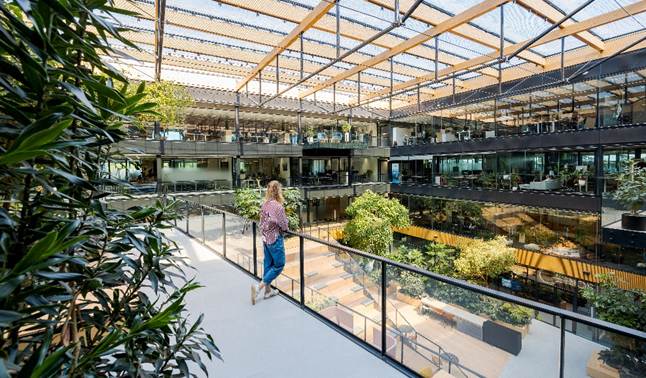
Figure 1: NEXT Delft, TU Delft Campus (photo credit: Joni Israeli)
TNO Bouwinnovatielab – Applied research infrastructure
The TNO Bouwinnovatielab is another example of a single‑tenant and custom asset. Developed in close collaboration with TNO, the building is built-to-suit to meet the tenant’s specific requirements. This approach reflects the Fund’s willingness to deliver bespoke facilities with a long-term vision aligned to the campus strategy. The arrival of both the building and the tenant strengthens the ecosystem while demonstrating ASR DSPF’s ability to provide customised solutions for strategic partners. TNO is the Netherlands’ leading independent research institute, creating impactful innovation for wellbeing and society. The facility supports research in construction technology, materials science, and sustainability. Its presence strengthens the campus’s research profile and attracts complementary companies that benefit from proximity to TNO’s expertise and testing infrastructure.
The Gallery – Kennispark Twente
At Kennispark Twente, ASR DSPF acquired The Gallery, a multi-tenant building that provides flexible laboratory and office space for start-ups and scale-ups. The building’s modular layout allows companies to expand without relocating off‑campus, supporting business continuity and growth. Additionally, it provides for shared facilities, such as a restaurant, meeting facilities and an auditorium. Recently, The Gallery was expanded in response to the continued demand for office and laboratory space. One of the new tenants is Nobian, a company active in salt and essential chemistry, aiming to grow more sustainably and become one of the most sustainable chemical companies in Europe. Nobian’s presence strengthens the link between Kennispark Twente and the University of Twente, reflecting the park’s role as a bridge between academic research and industrial innovation.
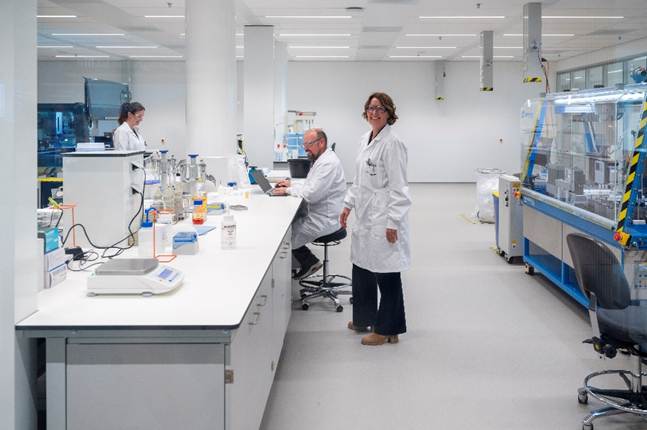
Figure 2: Van Marken Food Innovation Centre, Biotech Campus Delft (photo credit: Sicco van Grieken)
Van Iterson House, Beijerinck Center & Van Marken Food Innovation Center – Biotech Campus Delft
ASR DSPF’s partnership with dsm-firmenich and Planet B.io enables a complete business development cycle in industrial biotechnology on the Biotech Campus Delft, with a focus on sustainable food and materials. Van Iterson House provides a home for early‑stage biotech start‑ups, offering accessible laboratory and office space tailored to young companies entering the ecosystem. As these firms grow, they can transition into the Beijerinck Center, which accommodates scale‑ups that require specialised fermentation facilities, laboratories, and access to shared campus infrastructure. At the more advanced end of the spectrum, the Van Marken Food Innovation Center (Figure 2) serves as a dedicated single‑tenant facility for dsm-firmenich’s food innovation research. Together, these buildings demonstrate how ASR DSPF invests across the entire business development cycle, from incubator‑level facilities to fully equipped corporate R&D centres, ensuring that companies can develop, scale, and remain anchored within the same innovation ecosystem.
ASR DSPF’s exclusive partnerships exemplify how coordinated development strengthens these lock-in dynamics. Lock-in effects, where science parks provide essential facilities, specialised infrastructure, and proximity to research partners, reinforce their relevance for long-term real estate strategies. For example, at TU Delft Campus, the combination of the existing incubator YES!Delft, the Fund’s multi-tenant proposition NEXT Delft, and several single-tenant buildings create a growth pathway for technology-based companies. Relocation data reveals where ecosystems are resilient, where companies scale up, and where real estate adapts to changing space requirements.
Research into relocation data
Tenant mobility reflects growth potential, tenant loyalty, and science parks’ ability to retain companies as they grow. The analysis of relocation data (proprietary dataset compiled from the Dutch Chamber of Commerce) covered 37 science parks in the Netherlands and tracked 6,953 companies between 2014 and 2024. The population consisted of 39% start‑ups, 21% scale‑ups, and 40% mature companies.
Regarding relocation data, 36% of companies relocated at least once during the study period. About half of the start-ups relocated at least once during the study period, compared to roughly one-third of scale-ups and just over one-quarter of mature companies.
Business continuity and relocation behaviour also vary by business development phase. Among companies, start-ups had the highest business-termination rate (29%), followed by scale-ups (19%) and mature companies (15%). At the same time, mature companies were the least mobile, with 72% not relocating during the research period. This indicates strong local ties, though not necessarily higher survival rates. Scale-ups combined relatively low business termination rates with moderate mobility, positioning them as a remarkably resilient group.
For the Fund, these patterns underscore the importance of tenant mix: start-ups bring buzz and often introduce new initiatives, but with higher risk; scale-ups combine moderate mobility with lower business-termination rates; and mature companies provide stability. The Fund’s tenant portfolio, therefore, emphasises a balanced mix across growth phases to ensure ecosystem resilience and an attractive risk-return profile. About 60% of the Fund’s tenants have fewer than 10 employees, and they account for about 10% of total passing rent. In contrast, around 5% of the Fund’s tenants are large, mature companies, which account for 60% of the total passing rent. This concentration underscores the importance of maintaining a diverse tenant profile to mitigate risk and sustain long-term stability.
Relocation behaviour segmented by science park type
On university-based science parks, mobility was slightly higher (38%) than on corporate science parks (33%). In university-based science parks, relocated firms were more likely to remain within the same science park (35%) or move to a different building. Compared to their corporate counterparts, tenants on university-based science parks moved more frequently to other science parks. Unlike corporate science parks, university-based parks do not prioritise commercial real estate development; they often prioritise academic and research facilities over commercial opportunities. Corporate-based science parks showed more merger and acquisition activities (12% vs. 3%).
The Fund recognises that anchor institutions shape ecosystem behaviour. University-based science parks foster cross-pollination and knowledge spillovers, while corporate science parks often drive commercialisation and consolidation. The Fund invests across both types of science parks, tailoring its strategy to the strengths of each anchor institution type.
Relocation direction and retention by growth phase
A further breakdown provides deeper insight into the relocation patterns of different company types. Looking at the nineteen more developed science parks, it is clear that as companies progress through their development phase, the likelihood of remaining in the same park increases.
Among all relocation movements, 51% were done by start-ups, 19% by scale-ups, and 30% by mature companies (Figure 3). This trend indicates increasing lock-in within the broader ecosystem as companies mature. Young firms are more likely to exit or cease operations, while growing enterprises deliberately continue to expand within the science park. This behaviour may indicate local anchoring by, amongst others, the local workforce, access to human talent, the search for more specialised facilities, scaling up, or strategic proximity to other knowledge partners.
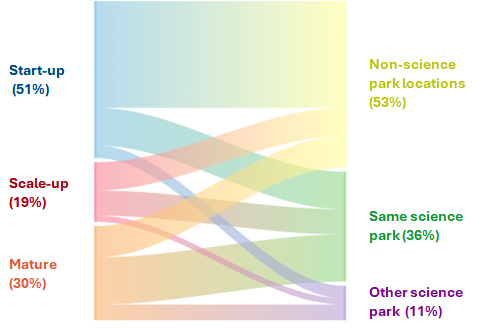
Figure 3: relocation movements segmented by business development phase and destination on Dutch science parks (2014 – 2024)
For the Fund, these patterns confirm that science parks can evolve into innovation ecosystems over time. Start-ups bring vitality but often churn, while scale-ups demonstrate loyalty and growth potential by remaining embedded within the park. Mature companies, with their higher retention rates, reinforce the ecosystem’s stability while still seeking opportunities for expansion or collaboration. The Fund interprets this as evidence that science parks are not static real estate assets but dynamic environments where tenant behaviour reflects the health of the knowledge economy. By investing in such environments, the Fund ensures exposure to both the vitality of early-stage businesses and the resilience of established R&D corporates, creating long-term value for investors and society alike.
Science parks as a distinct asset class
Relocation data is more than an operational metric; it also reflects ecosystem health and resilience. Science parks stand out because they host both stable, capital‑intensive tenants, such as research institutions and established R&D firms, and growth potential in the form of early‑stage businesses. ASR DSPF’s portfolio reflects this duality: at TU Delft Campus, long‑term tenants like TNO and Oldelft Ultrasound coexist with fast‑growing ventures housed in NEXT Delft’s makerspaces. Similarly, the Biotech Campus Delft hosts both dsm-firmenich and start-ups and scale-ups across different buildings.
This combination of mobility, retention, and ecosystem‑driven growth positions science parks as a distinct real estate asset class with its own dynamics and risk‑return characteristics. Science park real estate caters to key innovation‑driven sectors. Importantly, science parks deliver societal impact alongside financial returns. They contribute to regional development, knowledge creation, and the acceleration of innovation. ASR DSPF’s long‑term partnerships with TU Delft Campus, Kennispark Twente, and the Biotech Campus Delft demonstrate how targeted real estate investment can strengthen local ecosystems, support job creation, and enable the growth of technology‑based companies across multiple stages of development.
Conclusion
Science parks are not a classical real estate product. They sit at the intersection of research, innovation, and business. Relocation analysis confirms that these ecosystems function as intended: start-ups churn, scale-ups grow, and mature companies remain locked‑in. Science parks, therefore, combine growth potential with long-term stability. ASR DSPF sees this dynamic across its portfolio, for example, in the steady expansion of scale-ups at the TU Delft Campus and in the long-term presence of established R&D tenants at the Biotech Campus Delft and the Leiden Bio Science Park.
Science parks are closely linked to technological and societal trends, including digitalisation, deep tech, medical technology, sustainable chemistry, climate adaptation, defence, security, and food security. As a result, science park real estate behaves differently from the more cyclical traditional office sector. ASR DSPF’s assets illustrate this sectoral diversity: from high-tech systems engineering at TU Delft Campus to food biotechnology at the Biotech Campus Delft, life sciences at the Leiden Bio Science Park and digital innovation at Kennispark Twente.
Investors who allocate to science parks position themselves for the long-term: benefiting from stable rental income, diversification, exposure to innovation, and a structural contribution to the knowledge economy. Science park real estate, and its focus on facilitating technology-based companies, embodies the philosophy articulated in the Draghi report and echoed by Peter Wennink: Europe must invest in strategic innovation ecosystems to secure prosperity and resilience. By investing in Dutch science parks, ASR DSPF contributes to this strategic renewal; anchoring innovation, strengthening regional economies, and building a knowledge-based future.
Reference
- Ng, W. K. B. (2020). Demand-driven science parks: the perceived benefits and trade-offs of tenant firms with regard to science park attributes. PhD thesis. Eindhoven University of Technology.
Mandatory disclaimer in line with Dutch regulatory requirements
This is a promotional communication for general information purposes aimed at ecosystem stakeholders within the Dutch science park network (e.g., policymakers, campus management, knowledge institutions and development partners). It is not intended as investment advice, a recommendation or an offer to buy or sell any financial instrument. Please note that investing involves risks. You can lose your money. When making investment decisions, all characteristics and objectives of the investment product, as described in the prospectus, should be considered. ASR Real Estate B.V. is a manager of investment funds and is registered with the AFM. More information about the services from a.s.r. real estate and further information about sustainability aspects can be found on the website of a.s.r. real estate. This promotional communication has been prepared with all reasonable care. Nevertheless, information in this promotional communication may not be complete or entirely correct. Liability resulting from this promotional communication is not accepted.

