
Future-proof accommodation solutions for the pharma sector
Wiebe Daalderop, Nicole Willemsen and Thomas-Luuk Borest (all VKZ)
This article is published as a chapter in the book by Jacques van Dinteren and Paul Jansen (eds,) ‘Organised Innovation Spaces’. Nijmegen: Innovation Area Development Partnership (2026). The book will be digitally available in autumn 2026.
The Dutch pharmaceutical and life sciences sector continues to grow and is increasingly important to the economy. Established companies and start-ups are creating a dynamic landscape driven by research, technology and regulation. This calls for safe, flexible accommodation that can adapt to changing needs. This article examines the market from three perspectives: campus management and the ecosystem, accommodation, and finance.
Campus management builds an innovative ecosystem that fosters collaboration, knowledge-sharing and the use of shared facilities. In terms of accommodation, sustainability, flexibility and compliance are central; buildings must meet strict requirements and be adaptable to future technologies and workflows. Financially, the focus extends beyond construction and capital expenditure to operations, management and innovative financing models that relieve users of non-core burdens.
The common thread is that campus management, buildings and finance together form the foundation for successful accommodation in pharma and life sciences. Investments in future-proof, sustainable and flexible innovation campuses strengthen the Dutch competitiveness, help the sector seize opportunities and address challenges, and create value for companies and researchers.
The Dutch pharmaceutical and life sciences sector is dynamic and fast-growing, playing an ever larger role in the national economy. Both established firms and innovative start-ups contribute to a landscape in constant motion, spurred by developments in research, technology and regulation. This dynamic requires accommodations that not only meet the highest safety standards but also respond to the evolving needs of companies and researchers. To understand the complexity and opportunities of this market, this article examines developments from three perspectives:
- Campus management & the ecosystem: the role of campus management, collaboration between companies, shared facilities and the creation of an innovative ecosystem that fosters knowledge-sharing and serendipity.
- Accommodation: requirements regarding sustainability, flexibility and compliance, and how these translate into the design, management and use of laboratories and office space.
- Finance: beyond construction and capital expenditure, long-term operations and building management, and the diverse financing models and integrated accommodation concepts that can fully relieve companies of non-core activities.
Campus management, buildings and finance form the common thread of this article (Figure 1). They provide insight into the challenges and opportunities of pharmaceutical accommodation and show how the Netherlands can strengthen its competitiveness by investing in future-proof, sustainable and flexible innovation campuses.
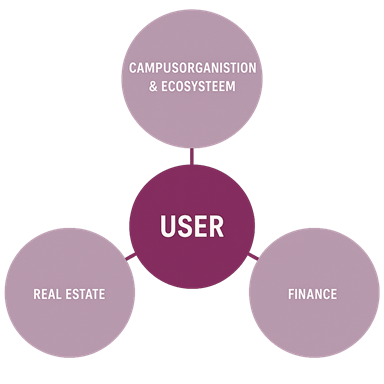
Figure 1
Market developments in the Netherlands
Before turning to the three core themes, this paragraph outlines the most important market developments. We analyse growth, dynamism and the sector’s international positioning, and show how these developments influence user requirements and expectations. This provides the foundation for the detailed exploration of the article’s core themes.
Growth and positioning of the Dutch pharmaceutical market
The Dutch pharmaceutical industry is among the most innovative sectors in Europe. It plays an important role in the development of personalised medicines and innovative therapies, as well as in drug research and production. The Netherlands hosts many international pharmaceutical companies and research institutes, as well as a rapidly growing number of biotech start-ups. Increasingly, international players choose to base their European headquarters or R&D in the Netherlands owing to its strategic location, strong infrastructure and favourable innovation climate, alongside an open economy and a highly educated workforce. Recent figures show that the sector generates billions of euros in annual turnover and employs tens of thousands of professionals.
Knowledge-driven innovation campuses such as Leiden Bio Science Park, Pivot Park in Oss and Amsterdam Science Park attract talent and investment. Proximity to major logistics hubs such as Schiphol and the Port of Rotterdam makes the Netherlands an attractive European distribution centre for pharmaceutical products. International pharmaceutical companies have expanded their Dutch sites in recent years, thanks to the favourable business climate and a well-developed network of service providers and suppliers.
Beyond strong growth and international positioning, the market’s size and investment capacity are also relevant. Institutional investors such as Kadans Science Partner and the ASR Dutch Science Park Fund have driven scale and professionalisation of science parks. These parties invest heavily in high-quality facilities and campus management, keeping the Netherlands attractive to international companies and talent. At the same time, competition with other European countries is intensifying, making the business climate and the availability of high-quality lab space ever more important.
Flexibility and internationalisation
In recent years, a clear trend has emerged towards flexibility in accommodation and processes. Pharmaceutical companies seek locations that meet current needs and can adapt to future requirements. Demand is rising for multi-tenant buildings where different companies are housed together and, alongside their own high-quality laboratory and office space, use shared amenities such as meeting rooms and coffee areas.
Companies in life sciences and pharma are susceptible to fluctuations in staff numbers. Success and new investment can trigger rapid growth, increasing the need for laboratories and office space; conversely, disappointing research results (e.g., clinical trial outcomes) can prompt contraction. Accommodation must therefore offer flexibility from the landlord.
Digitalisation of processes, such as e-health, artificial intelligence, laboratory automation, and bioinformatics, requires accommodation solutions and lab/office ratios that differ from those at traditional sites. These technologies drive demand for smarter buildings that prioritise connectivity, collaboration, data security, and flexible layouts. Work increasingly shifts from ‘wet labs’ to data workstations; more time is spent on data analysis at desks than on more automated work in labs.
Despite these trends, the market faces challenges: a scarcity of high-quality lab space, slow permitting, and complex regulations. Rapid technological advances increase the need for specialist knowledge and adaptable accommodation concepts. Institutional investors play a crucial role in providing flexible, all-in solutions, but mismatches between supply and demand persist. Geopolitical developments and stricter European regulation (such as MDR and GDPR) may further influence the market in the coming years.
Campus management and the ecosystem
Professional campus management is at the heart of a thriving life‑sciences ecosystem. It is responsible for creating the conditions in which companies, researchers, and start-ups can collaborate, innovate and grow. This entails more than providing physical accommodation: campus management delivers a comprehensive suite of services and facilities that support and streamline users’ core processes.
From shell to full-service development
Full-service provision is an increasingly important aspect of life sciences accommodation. Modern campus management no longer offers only shell buildings; it also delivers complete fit-outs, including laboratory furniture, permits, ICT infrastructure, and building management. Companies can thus focus on their core activities without worrying about accommodation or operational matters. At some locations, it is even possible to rent a single lab bench in a fully equipped laboratory, significantly lowering the barrier to entry for start-ups.
The service package is comprehensive, covering design and construction management, installation management, cleaning, security, catering, waste processing, technical support, and facilities services. Campus management is often also responsible for organising networking events, stimulating knowledge-sharing and facilitating collaboration between companies and knowledge institutions.
Modern campus management must meet high standards for safety, sustainability and compliance. Buildings and facilities must comply with strict laws and regulations (such as occupational health and environmental law) and enable work under GMP and GMO frameworks (GGO in Dutch). Sustainability certifications such as (at least) BREEAM Excellent and Paris Proof are increasingly becoming the baseline, required by tenants as well as owners and investors. By investing in high-quality amenities, a comprehensive services package, and an active ecosystem, campus management contributes to an attractive, future-proof, and competitive location for the pharmaceutical and life sciences sector.
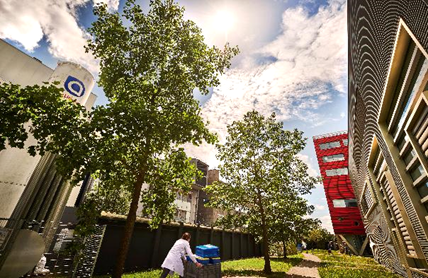
Figure 2: Campus environment (photo credit: Stefan Ammerlaan Photography)
The quality and success of campus management are determined by how well accommodation aligns with user needs and the broader ecosystem. Where campus management ensures an optimally functioning environment and full service, accommodation provides the physical foundation for collaboration, innovation and growth. A sense of community can be strengthened by sharing individual company successes via newsletters and narrowcasting. The next paragraph focuses on the requirements, ambitions, and solutions that enable future-proof accommodation in the pharmaceutical and life sciences landscape.
Ecosystem
Alongside appropriate accommodation, a strong ecosystem determines the quality of work on campus. Collaboration does not occur automatically: companies must know who has which expertise and facilities, and be able to access them easily.
R&D companies in life sciences need support from firms that have expertise they lack in-house. For a well-functioning ecosystem, campus management actively facilitates targeted matchmaking, thematic networking events, newsletters/narrowcasting, an up-to-date facilities register (e.g. shared core labs, equipment, clean rooms) and the attraction/retention of supporting companies. Residents then find each other more quickly for joint R&D, validation, or the sharing of specialist equipment.
Collaboration also requires clear rules: an IP and confidentiality framework (NDAs, data access, privacy) and practical agreements on physical access, workplace privacy, scheduling, safety/EHS and cost sharing. By organising this centrally and reflecting it in building design, trust is established, enabling people to work safely and efficiently in a multi-tenant environment.
A mature ecosystem also connects education and research (internships, PhD candidates, recruitment), capital (incubators and start-up programmes) and supporting services. The campus becomes a place where knowledge, talent, and finance converge, and successes (from publications to investment rounds) are shared. That fosters togetherness: people work toward a shared goal (e.g., better cancer treatment) within professional conditions that strengthen collaboration and competitiveness.
Real estate: anticipating and co-developing for the future
Real estate in the pharmaceutical and life sciences sector is essential to the optimal operation of organisations’ core processes. Well-designed and well-managed accommodation not only supports daily R&D activities, but also fosters collaboration, innovation and efficiency within the ecosystem.
To ensure future-proof accommodation, buildings must meet current demands and be flexible and adaptable to emerging technologies, workflows, and regulations. This calls for a vision in which owners, landlords and users think ahead together and respond to trends and changing needs. By choosing flexible, modular concepts, organisations maintain value-proof accommodation and can respond quickly to new developments.
This section outlines the key components for achieving high-quality, future-proof accommodation for companies in the pharma and life sciences sectors.
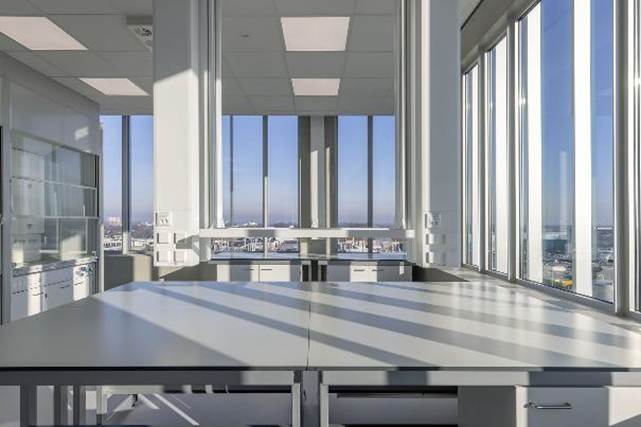
Figure 3: laboratory interior (photo credit: Marcel van der Burg)
Accommodation ambitions: shared vision and synergy
Realising future-proof accommodation starts with formulating shared ambitions. By involving stakeholders (tenants, landlords, developers and governments) early in the process, shared interests and objectives can be established. This leads to a shared vision of accommodation centred on synergy, collaboration and flexibility.
A joint approach, housing multiple tenants in the same building, enables economies of scale, for example, through collective procurement of energy, security, or cleaning services. Sharing specialist facilities (labs, equipment or technical installations) contributes to more efficient use of space and resources. An ecosystem emerges in which collaboration is stimulated, and companies reinforce one another.
Economies of scale do not arise on their own; they require active direction from the landlord, shared governance, and, at times, concessions from individual parties. Network effects become valuable only when there is a culture of open collaboration and knowledge sharing, supported by physical and digital infrastructure. In the Netherlands, this culture is growing but not yet taken for granted.
Flexible and multi-functional solutions
Flexibility is crucial in a sector characterised by rapid technological change and variable company sizes. With hybrid working, needs shift from fixed desks and owned lab benches to flexible workspaces, shared meeting/phone rooms and digital collaboration environments. This requires modular layouts for lab and office space, with plug-and-play utilities and a smart, centralised distribution system that integrates all critical building and lab services (HVAC, gases, vacuum, ICT, security, data). Logistics for goods, waste streams and access control must also be integrated and scalable.
A well-conceived concept enables scaling up and temporary contraction without major renovations. From turn-key fitted labs to shell space for bespoke fit-outs. Flexibility only works when technical and operational complexity is addressed upfront: a standardised lab grid, change protocols with short changeover times, shared facilities and a clear EHS framework.
For tenants, this means faster adoption of new techniques and growth, with collectively arranged facilities under strict safety requirements, allowing researchers to focus on their core tasks. Landlords attract a broader tenant profile (including start-ups), increase occupancy, and future-proof their portfolio.
Large institutional investors demand flexibility and sustainability (at least BREEAM Excellent and Paris Proof). This requires close collaboration among the landlord, tenants, and design/construction partners from the start.
Digitalisation and technological innovation
Accelerating digitalisation and AI are profoundly changing primary processes in life sciences and significantly impacting operations, thereby shaping the design and use of pharmaceutical accommodation. This includes:
- Bioinformatics and personalised therapies that generate large data streams and require significant computing power.
- Laboratory automation enabling complex studies to be executed without manual intervention.
A shift from ‘wet labs’ to ‘data labs’; robust IT infrastructures and redundant data networks will be increasingly required. All of this changes building layouts. Moreover, increasingly complex equipment raises electrical and cooling demands. Design and fit-out must therefore allow for higher power densities and heat recovery. Digitalisation increases energy dependence; smart energy hubs with battery storage can flatten peak loads and keep critical IT systems available. Design and operational choices must facilitate these requirements from day one.
Laws and regulations
Accommodation for pharmaceutical and life sciences companies is subject to exceptionally high requirements. Laboratories must be designed to be safe and efficient, with provisions far beyond those of standard office buildings. Users must be able to conduct complex work in environments that comply with a wide range of laws and standards, including building regulations, occupational health and safety laws, environmental laws, ISO 14644 (clean rooms), and Good Manufacturing Practice (GMP). Strict requirements also apply to safety, waste processing and climate control. Meeting these regulations demands specialist expertise in design, construction and management. Integrated risk management and continuous monitoring are, therefore, necessary to remain compliant. New European legislation, such as the Medical Device Regulation (MDR) and the General Data Protection Regulation (GDPR), further increases the pressure on real estate professionals and users. In practice, differences in interpretation and slow permitting regularly cause project delays.
Risk management and compliance
Pharma operates in a complex and tightly regulated field. Beyond general building and environmental law, there are many sector-specific rules, such as the Decree and Regulation on Genetically Modified Organisms, as well as guidelines for the safe storage of chemicals and medicines. Compliance requires specialised knowledge and a precise approach to help tenants meet stringent requirements.
Safety requirements in laboratories are more complex than in standard office buildings. By jointly organising company emergency response (BHV) at the campus level and tailoring training to laboratory hazards, a safe working environment can be created across the entire campus. Campus management is responsible for a safe working environment. By documenting procedures in an Environment, Health and Safety (EHS) handbook, compliance with applicable rules is assured. For example, how to dispose of waste safely with minimal environmental risk and what to do in the event of an incident. By establishing and enforcing these rules, the landlord ensures the campus is a safe workplace.
Failure to comply can lead to substantial fines, reputational damage and even closure. It is therefore essential to make compliance an integral part of development and management. This means continuous attention to regulation, safety, and risk management throughout the design, construction, and use of pharmaceutical accommodation.
Real estate professionals should work with specialist advisers and legal experts to test designs against safety requirements. Investments in staff training and awareness also contribute to safe operations for personnel and the wider environment. The landlord can play an important role by organising EHS, fire safety, and BHV training collectively across companies.
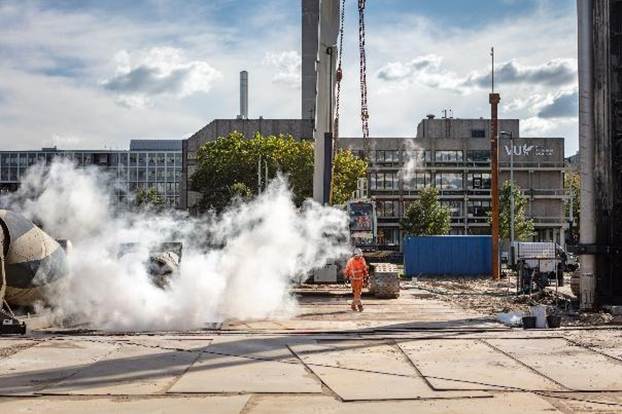
Figure 4: construction and commissioning (photo credit: Tim Eshuis)
Sustainable and circular buildings
Sustainability plays an ever more important role in pharmaceutical real estate. Major pharma tenants and institutional investors (as owners) set high requirements for energy efficiency, environmental performance and building sustainability certification. Sustainability goes beyond energy: it includes circularity, material reuse, demountable structures, and minimising the ecological footprint of offices and laboratories. Tenants and investors increasingly demand concrete KPIs such as BREEAM, WELL and LEED.
Solar panels, heat pumps, green roofs, smart climate-control systems, innovative construction methods and bio-based materials have become prerequisites. Grid congestion is spurring new solutions for sustainable, reliable power: local energy hubs, storage, and smart energy control are becoming critical to further sustainability.
Repurposing existing real estate is an effective way to invest sustainably. By converting old office or industrial buildings into modern laboratories or production facilities, asset life is extended and environmental impact reduced. There are various examples of outdated labs being refurbished and reused, for example, at Pivot Park in Oss, following MSD’s reorganisation.
Beyond structural sustainability, there are many innovations in energy use, climate control, and employee well-being (such as smart energy sensors, automated ventilation, and daylighting strategies for healthier workplaces). Well-being is increasingly integrated into building design through green roofs, shared gardens or sports facilities.
By investing in sustainable, innovative solutions, pharmaceutical companies strengthen competitiveness and enhance their image among (future) staff, investors and society.
Finance: from investment to operations
Construction costs
Construction costs for laboratory buildings are significantly higher than for standard commercial property, primarily due to a greater proportion of technical installations and high-quality finishes, as well as stringent sustainability and flexibility requirements. These quality investments increase construction budgets but are essential: without fully equipped laboratories, a building lacks utility and future value.
Given the sharp increase in construction costs, rigorous financial planning is necessary. Collaborative value engineering, in which developers, investors, and users seek optimisations during design (while saving costs without compromising essential functions or quality), is crucial.
Integrated operating model
After completion, decades of operations follow. Professional management and maintenance of laboratory buildings with complex systems are essential to meet sector requirements. This means regular technical maintenance, keeping documentation up to date, compliance with legislation and periodic (safety) inspections.
Operating costs are high in life sciences real estate. Service charges include intensive energy use (24/7 climate control for labs), maintenance of sensitive equipment and installations, validations and inspections, specialist cleaning and waste processing (chemical/medical waste). To keep this affordable for tenants, efficiency must be designed in from the outset: excellent insulation, heat recovery, and on-site renewable energy. Such investments reduce long-term operational costs.
A full-service accommodation model can make operations more predictable and affordable for tenants. A science park/campus can offer an ‘all-in’ lease: one rent that includes facilities services, maintenance, and utilities. This relieves users so they can focus on R&D and provides financial predictability. Central procurement and management of energy, security and maintenance can deliver price advantages for tenants. Expensive, specialised equipment or laboratories (essential but not intensively used) can be shared, lowering the cost per party. Such an integrated operating model fosters long-term relationships and satisfaction, translating into longer commitments and more stable returns for investors.
Financing models and investors
The financial feasibility of life sciences real estate is a challenging puzzle of high-quality requirements, complex technology, and long-term obligations. Given the capital-intensive nature, projects often require creative financing models and a mix of capital sources. Banks typically finance a portion of the purchase price (with the asset and a lease as collateral), but substantial equity or a co-investor is needed to share risk. Long-term leases with strong tenants are important to secure financing.
Attracted by long lease terms and the sector’s resilience, parties such as Kadans Science Partner (AXA IM) and the ASR Dutch Science Park Fund invest heavily in organised innovation spaces. They bring significant investment power and accept longer return horizons, while setting firm conditions: buildings must be future-proof, sustainable (at least BREEAM Excellent and Paris Proof) and lettable for the long term. They often participate via forward funding or joint ventures with developers.
For multi-tenant buildings, fund structures are sometimes set up with multiple investors to spread risk. Finally, subsidies (EU and national) for innovation, or, indirectly, venture capital (enabling start-ups to pay rent), can further improve financial feasibility.
Outlook
In the coming years, the future of the Dutch pharmaceutical and life sciences industry will increasingly be determined by the ability to connect ecosystems, secure accommodation and financing, and continue innovating. The sector faces a dual challenge: continuing compliance with increasingly strict (European) regulation and sustainability requirements, while responding swiftly to disruptive technologies such as AI, automation and personalised therapies. This demands an adaptive real estate strategy centred on flexibility, scalability and circularity. Innovative campus managers will evolve into orchestrators of open innovation ecosystems, facilitating collaboration among companies, knowledge institutions, and investors through high-quality, multifunctional, and sustainable accommodation. Financing for pharmaceutical real estate will increasingly be structured through hybrid models in which institutional investors, public entities, and venture capital collaborate to spread risk and accelerate innovation.
The availability of high-quality lab space and the ability to support start-ups with flexible accommodation and financing will be decisive in attracting international talent and investment. The Netherlands can only maintain its leading position by investing in future-proof innovation campuses where accommodation, ecosystem, and finance are treated as a single, integrated whole and continuously adapted to tomorrow’s demands.
Conclusion and recommendations
The Dutch pharmaceutical market and life sciences industry continue to grow and evolve, driving a growing need for suitable, flexible, and sustainable accommodation. By focusing on a shared vision, economies of scale, flexibility, full service, and sustainability, real estate professionals, pharma companies, and policymakers can address today’s challenges.
Success in pharmaceutical and life sciences real estate lies in anticipating technological developments, changing regulations and new collaboration models. Practice examples such as Leiden Bio Science Park and Pivot Park Oss show that an integrated, future-oriented approach pays off.
For a future-proof sector, it is vital to keep investing in innovation, sustainability and collaboration. By choosing flexible, sustainable and fully serviced accommodation solutions, companies and real estate professionals create a solid foundation for growth and success. Now and in the future.
Financial feasibility remains a challenging puzzle of high-quality demands, complex technology and long-term obligations. With thoughtful investment strategies and close collaboration, success is achievable. By investing in innovative financing structures, sustainable and flexible designs, collaboration, and a professional operating model, developers, users and investors can create life-sciences real estate that is not only technically advanced but also financially future-proof.
Challenges remain: scarcity of high-quality lab space, high investment costs and the need for specialist knowledge can impede growth. For start-ups, access to finance is often difficult. By learning from best practices, investing in facilities that enhance the user experience, and collaborating on innovative solutions, these challenges can be turned into opportunities for further development and collaboration within the ecosystem.

