

Em. prof. dr. Jacques van Dinteren, President Innovation Area Development Partnership
(Revised) paper for the 40th IASP World Conference on Science Parks and Areas of Innovation. Luxembourg, 12-15 September 2023
EXECUTIVE SUMMARY
Over the last decade, the innovation district concept has been greeted with growing enthusiasm. The question arises whether this has more to do with creating an engine for urban transformation or even just pure city marketing. So, when can one speak of the development of an innovation district? What conditions must be met? This paper explores those requirements. The focus is on the conditions when starting a development. Using the characteristics mentioned in this paper, it will become clear if an initiative can be taken seriously and has the potential to develop into an innovation district.
1. INTRODUCTION
The idea for innovation districts (also called innovation precinct, innovation milieu, knowledge precinct, high tech district, or innovation community) emerged in the 1990s but has only been in the spotlight for the past fifteen years. Innovation districts answer the current flaws of the science park concept: too monofunctional, introverted, no multimodal accessibility and no attractive, dynamic environment, to name a few (see Van Dinteren & Jansen, 2022). An innovation district seems better suited to the wishes of today’s young, highly educated generation, and companies like to establish where they can attract talent.
In The Netherlands, The Hague and Eindhoven, among others, are looking at the possibilities, and Amsterdam has developed a strategy to establish seven innovation districts. There are also smaller-scale developments, like the development near the railway station in Den Bosch. Moreover, two well-established science parks, Kennispark Twente and Leiden Bio Science Park, are looking at opportunities to develop into an innovation district.
So, we count several initiatives in The Netherlands, but an initiative is not yet concrete. The question is also whether these plans can now, or shortly, meet the conditions that make an area an innovation district. Amsterdam applies three pre-conditions:
- There is a knowledge carrier that attracts other companies and institutions.
- The possibility exists to develop the area according to the principles of an innovation district to develop the site.
- There is an ecosystem that wants to work on the innovation district jointly.
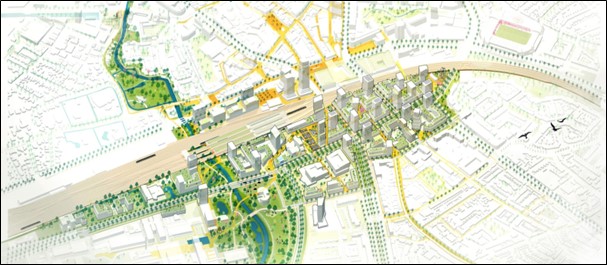
Image 1 – Eindhoven Central Innovation District, The Netherlands (design by KCAP)
Given the relatively large number of initiatives in the Netherlands, the question arises whether each of these intended developments can succeed. Especially in the case of diverse types of organised innovation spaces (such as science parks, industrial innovation parks, incubators, innovation districts and the like), it is not easy to demonstrate concrete feasibility. What can be done is to estimate the degree of probability as accurately as possible. Against that background, it is reasonable to know what characteristic features of an innovation district can be considered. Several definitions are available and give a first idea of those features. For example, Lawrence et al. (2019) define an innovation district as follows: “Dense, mixed-use (including retail, housing and business) spaces within cities that connect universities and established institutions with entrepreneurial entities such as start-ups and business accelerators. Innovation districts are well connected with transit and the internet. They are in a physical environment where creative people and organisations can collide in unpredictable ways that nurture new ideas and ways of working together.”
Can we use definitions and literature to paint a picture of the conditions that are necessary to start developing an innovation district? What characteristics and points of leverage should one be able to see in them to expect such a plan to succeed? This differs from evaluating an existing innovation district where much more (statistical) data will be available to assess success or failure. After diving into the literature about innovation districts, the essential conditions involve economics (including socioeconomic aspects such as the ability to attract talent), physical aspects (including mobility) and organisation/management. Social aspects could form a fourth group or dimension, but looking at descriptions of this group, this generally involves an intended effect of the development on residents in the district and surrounding neighbourhoods rather than a more or less absolute condition. A common argument is that developing an innovation district can significantly boost residents in the area and surrounding disadvantaged or outdated neighbourhoods. Good research on those effects is lacking. Would displacement effects in the housing market be more likely? What if congestion increases and degrades liveability? Do ever-rising rents drive away first-time buyers? After all, a booming innovation district can drive up housing prices; several innovation districts have demonstrated this. Does the innovation district suddenly provide more employment opportunities for the less educated? The positive socioeconomic changes often put forward may be more of an argument for pushing through the intended urban renewal or – in the favourable case – arguments for why the innovation district should be there.
2. ECONOMIC CONDITIONS
When talking about economic aspects, we should be able to detect at least four prerequisites in a plan for setting up an innovation district.
2.1 Ecosystem (critical mass) and what companies and institutions want
First of all, when the idea of an innovation district is launched, there must be a sound base: established innovation-oriented companies, start-ups, a knowledge institute or a large leading and innovative company. Not as separately functioning activities but as an ecosystem with an excellent foundation to develop into a robust ecosystem.
Does a municipality (because it is almost always the initiator) know what these companies and institutions want? Is there a sound basis for a cohesive ecosystem? Developing an innovation district from scratch, without economic activities present, without a foundation for an ecosystem, is doomed to fail. So, from the beginning, it must be clear that interactions between companies and their employees are the essence of achieving innovations that lead to new knowledge, products and services.
2.2 Economic objectives come first
Another condition can already be distilled from the above: economic objectives must come first in the development plan. It cannot be ruled out, however, that initiatives, first and foremost, involve the renewal or transformation of a city district topped with innovation sauce to match current trends. Such was the case, for example, with the South Boston Waterfront. The original 2008 master plan did not include the word innovation. Still, after the mayor proclaimed the plan for an innovation district in 2010, a subsequent master plan was full of rhetoric about the innovation district (Kayanan, 2021). Kayanan even suggests that the rise of innovation districts points to a new approach to governance that shifts the burden of urban revitalisation to entrepreneurs. She also argues that local governments sought to boost construction flow with such plans during the global financial crisis. These are interesting critical comments amid a host of publications applauding the concept.
The previous is not to say that spatial and economic objectives may not co-exist. However, the economic goals must come first. Nevertheless, spatial objectives cannot be ignored, for it is precisely that policy that can contribute significantly to the development possibilities of an innovation district by creating the right physical conditions. Such a policy can also strengthen the extrovert character of the district by establishing connections with the rest of the city.
2.3 A mix of economic activities
An innovation district usually has a mix of companies and institutions because it is generally an existing situation being further developed. The mixed character of an innovation district is often considered attractive because it offers opportunities for so-called crossovers: new ideas about products that come about through cooperation between two or more completely different economic or scientific activities. However, some innovation districts also clearly emphasise a particular sector, but this is much less common. Examples include the Ontario Media Innovation District and MediaCityUK in Manchester, UK. Alternatively, take 22@Barcelona, which has four different clusters of economic activity. So, where will the plan be? Is there a good perspective for the activities in focus?
The plan should accommodate not only businesses and institutions but also stores, cultural facilities, outdoor activities, and so on. These facilities are already present to a large extent; otherwise, sufficient space should be made for them in the plans.
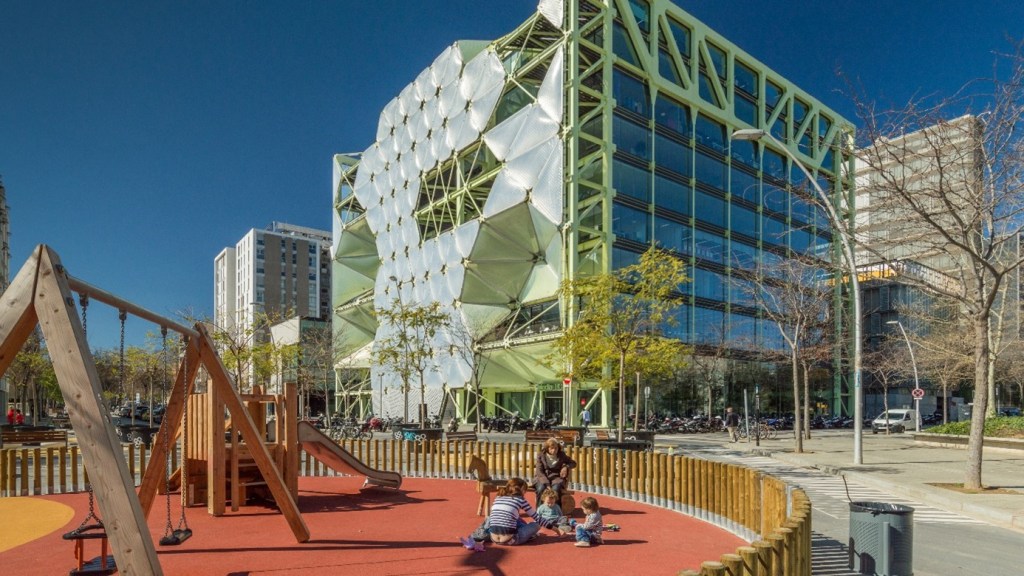
Image 2 – 22@Barcelona Innovation District, Spain (photo by author)
3. PHYSICAL CONDITIONS
3.1 Density
Densely populated urban areas facilitate the easy exchange of ideas and knowledge between individuals and organisations. When people from diverse backgrounds and industries interact regularly, they are more likely to share information, leading to the cross-fertilisation of ideas and innovation. Moreover, this concentration of various elements enhances the overall vitality of the district, making it also an attractive place for the young workforce. Talented individuals are likelier to live and work in areas with access to a vibrant ecosystem of companies, educational institutions, and cultural amenities.
When starting the development of an innovation district, a dense urban area is a prerequisite, or there must be at least the space to create that density. The density of inhabitants, companies, firms, institutions, and cultural facilities in innovation districts creates a dynamic environment where ideas, talent, and resources converge, fostering a culture of innovation and economic growth.
3.2 A compact area
An area within which the intended innovation and interaction should take place through mainly personal contacts, encounters by chance and attractive places for those meetings and deliberations should have a limited size. Of course, innovations also occur within (inter)national networks, but here, it is primarily about strategic and personal meetings to exchange essential information and generate new ideas. Distance then plays a crucial role. Rosenthal and Strange (2003) argue that such interaction should mainly occur within the first mile (1.6 km). Using a recent study on some campuses, other researchers argue “that to stimulate unplanned meetings on campus, most facilities should be located within a 5-minute radius: a 5-minute campus” (Jansz et al., 2023). If one assumes only walking, this leads to a limited area. If one were to take the centre of a circle (and remember that many innovation districts have a different shape), you would end up with about 50 ha. However, not everyone is in that centre, and from one peripheral location to another would take 10 minutes, which is still a good time for many workers. Moreover, more short-distance transport options exist, like bicycles, electric scooters and public transport.
For many of the current innovation districts, 50 ha is the lower limit (the minimum ‘mass’), and 300 ha is the upper limit. 22@Barcelona has an area of 200 ha, but within it, it distinguishes four clusters with different functions of roughly equal size. The Boston Innovation District is about 400 ha and distinguishes five sub-areas. Sophia Antipolis (France), Macquarie Park Innovation District (MPID) in Sydney, and Monash Technology Precinct (MTP) in Melbourne are counted among the innovation districts by some researchers and government officials. However, with 2,400 ha, 700 ha and another 700 ha, respectively, these districts are of a different scale and are more likely to be innovation areas rather than compact, walkable innovation districts.
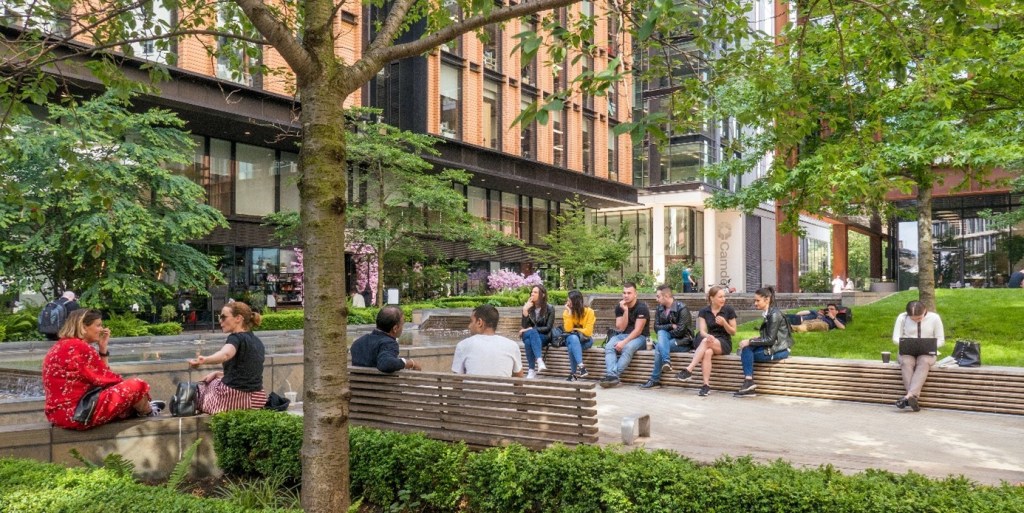
Image 3 – Meeting space in public area, Knowledge Quarter London, United Kingdom (photo by author)
3.3 Public space design
A third condition is the attention paid to public space design in the development plan. Public spaces are essential in realising a prosperous innovation district because they are the physical environment where people meet each other, build social connections and exchange knowledge and ideas. An attractive environment can also stimulate creativity. That is why high-quality public spaces are not just aesthetic additions to innovation districts; they are essential components that promote collaboration, creativity, sustainability, and a sense of place. Apart from stimulating collaboration and the exchange of information and ideas, high-quality public spaces also enhance the quality of life in the area. Moreover, public spaces contribute to the branding of an innovation district. Thoughtfully designed spaces can help create a distinct identity for the neighbourhood, which can be promoted nationally and internationally, attracting talent, businesses, and investment. Private spaces of companies and institutions can be made more or less public by opening plinths in buildings.
3.4 Multimodal accessibility
Regarding accessibility, all available modalities should get equal attention in the plans. Physical and digital accessibility are essential in developing an innovation district because they increase the connectivity of an area and contribute to the development of an efficient and functional innovation ecosystem. Physical accessibility means that an area is easily accessible by public transport, cycle paths and roads, and sufficient parking is available. These measures make it easier for people to move to and within the innovation district, making them more likely to participate in the activities and programming on offer. With that interaction in mind, digital accessibility should undoubtedly be considered. Think of, for instance, a public Wi-Fi network. It is clear that hefty, vast infrastructure in an innovation district can act as a psychological barrier and is therefore undesirable.
3.5 Multifunctionality in the physical environment
The aforementioned economic multifunctionality of an innovation district is also reflected in its architecture, urban planning, and physical aspects through a deliberate combination of mixed-use development, flexible spaces, collaboration hubs, and an emphasis on sustainability and accessibility. Innovation districts typically feature mixed-use developments that combine commercial, residential, and recreational areas.
4. MANAGEMENT AND ORGANISATION
Another pre-condition is to have a good idea of the management structure. Management and organisation are critical and extremely difficult because there are many owners in a (generally) existing situation. Right from the start, all relevant parties will have to be involved. There is undoubtedly a risk that the parties will be limited to the (innovative) companies and institutions in an initial situation.
4.1 Public-private cooperation
A public-private partnership of businesses, institutions, governments and residents is a logical consequence of an existing urban area with multiple owners in almost all cases. Although an innovation district primarily seeks to promote economic objectives, the residential function cannot be ignored. After all, it is also that mix of functions that make an innovation district attractive. It is, therefore, inconceivable that residents would not be involved in the organisation and management of the area.
Both public and private parties should be managed by individuals who are respected and supported by entrepreneurs, residents and others. All parties must be represented in a management organisation where coordination takes place, and the long-term strategy is determined, implemented and adjusted.
Given the municipality’s role in this area development and its complex nature, setting up an interdisciplinary team on the local government side is appropriate. After all, it is not only about (physical) planning but equally about economics, public housing, culture, etc.
4.2 Organisation
The management of an innovation district can be shaped in different ways, depending on the specific context and objectives of the district. Below are some possibilities:
- Public-private partnership: a common way to manage an innovation district is through a public-private partnership, in which the public and private sectors work together to develop and manage the district. Think of a form of a joint development company or a company or organisation appointed by the government.
- Self-governance: some innovation districts opt for a self-governance model, where the management structure is built from the organisations already operating in the district. This may be a non-profit organisation or an association of entrepreneurs committed to the district’s growth and development.
- Community-based governance: another approach is community-based governance, where the local community is essential in managing the district. This can be done, for example, through a Community Development Corporation, which is set up and run by residents and entrepreneurs.
- Hybrid: many innovation districts have a hybrid management structure, using elements of several of the above approaches.
Most importantly, management in an innovation district is transparent and accessible to all stakeholders. From the first start, all parties should be involved in producing the start document and (later on) the development strategy. Moreover, there is clear accountability and communication between the various parties involved in the development and management of the district. The organisation theme also includes coordination of investments, policy formulation and implementation.
Unlike a science park, the clout of an innovation district’s management organisation should not be overestimated. This is mainly due to the already mentioned highly divided ownership within such an area. That is why managers must be empathetic and flexible, among other things.
4.3 Long-term strategy
Delays in area developments, or worse, ‘stalling’, often have the same causes. The five main ones are sequential planning, wrong assumptions, choosing too soon, lack of support and management overkill (Van Aar & Van Dinteren, 2010). A flexible long-term strategy is necessary to meet these complicated processes. So, starting the process with a detailed plan with a clear time horizon is not the best way to start (apart from the fact that all parties should have had a say in that document). When the development process starts, changes must be anticipated and improvements made. After all, it takes 20 to 25 years (if not more) for an innovation district to reach full development.
5. CONCLUSION
Although an innovation district should show the above characteristics, this does not mean that these districts are uniform. Yigitcanclar et al. (2020) show that numerous differences can occur within these features.
Looking at the attributes mentioned above, it is not said that science parks seeking to respond to the current needs of companies, institutions, and employees can quickly transform into an innovation district. However, numerous elements in the innovation district concept can be wholly or partially adopted by these science parks and help them maintain a good connection with the market. One might find inspiration to modify the science park concept by transferring some of the assumed success factors of innovation districts to that concept. Van Dinteren & Jansen (2021) suggest three considerations that might help the management of science parks to adjust to the present and near-future demand by the people working in these innovative companies and the companies themselves:
- consider adding housing (including an impact on service level and reachability by public transport services);
- consider a shift towards multiple target groups (stimulating cross-overs);
- consider emphasising community management (a stronger focus on the workforce and creating an attractive and stimulating work environment).
In conclusion, this article noted that there are many initiatives to develop innovation districts in the Netherlands. Opinions differ on how many plans there are and at what stage of development they are. Only if we properly analyse the state of affairs for our country’s current innovation district initiatives using the conditions mentioned here will it become clear which ones can now be taken seriously and have the potential to develop into an innovation district.
LITERATURE CITED
- Dinteren, Jacques van, Paul Jansen (2021), Areas of Innovation. Innovation Area Development Partnership. https://iadp.co/new-book-on-innovation-areas/
- Jansz, S.N.; Mobach, M.; van Dijk, T. (2023), The 5-Minute Campus. In: Int. J. Environ. Res. Public Health 2023, 20, 1274. https://doi.org/10.3390/ijerph20021274
- Kayanan, Carla M. (2002), A critique of innovation districts: Entrepreneurial living and the burden of shouldering urban development. In: Economy and Space (0), 1–17.
- Lawrence, S., Hogan, M., and Brown, E. (2019). Planning for an innovation district: questions for practitioners to consider. RTI Press Publication No. OP-0059-1902. Research Triangle Park, NC: RTI Press. https://doi.org/10.3768/rtipress.2018.op.0059.1902
- Rosenthal, S. S., & Strange, W. C. (2003), Geography, industrial organisation, and agglomeration. In: Review of Economics and Statistics, 85(2), 377–393. https://doi.org/10.1162/003465303765299882
- Van Aar, Urban; Jacques van Dinteren (2010), Een stevig fundament is flexibel. Marketing en stedebouw geïntegreerd beschouwd. In: Real Estate Magazine.
- Yigitcanclar, Tan; Rosemary Adu-McViea, Isil Erolb (2020), How can contemporary innovation districts be classified? A systematic review of the literature. In: Land Use Policy 95.
 Innovation Area Development Partnership (IADP)