
A taxonomy of Organised Innovation Spaces
Luis Sanz, IASP; Magnus Klofsten, Linköping University, Sweden; Jacques van Dinteren, IADP / Zjak Consult; Paul Jansen, Arup / IADP
Summary
Organised innovation spaces, such as science parks, innovation districts, and incubators, serve as hubs for innovation, fostering collaboration among start-ups, established firms, and research institutes. As public-private partnerships and funding initiatives, such as Horizon Europe, evolve, a unified framework to understand these spaces and their interactions with regional innovation systems is essential. This chapter presents a taxonomy of organised innovation spaces based on location and scale, governance and management, and target users and services. By categorising innovation spaces such as science and technology parks, innovation districts, and living labs, stakeholders can better recognise their roles and governance, aiding investment decisions and shaping more inclusive innovation policies.
This article is published as a chapter in the book by Jacques van Dinteren and Paul Jansen (eds,) ‘Organised Innovation Spaces’. Nijmegen: Innovation Area Development Partnership (2026). The book will be digitally available in autumn 2026.
Understanding the role of innovation ecosystems is crucial for advancing new ideas and technologies. However, the terminology used to describe these ecosystems and their physical settings can be inconsistent, leading to confusion for potential users and investors. The taxonomy of organised innovation spaces addresses this challenge by providing a clear framework for understanding these spaces and their roles within broader innovation ecosystems.
According to the Horizon Europe Regulation, an innovation ecosystem brings together material resources (funds, facilities, and equipment), institutional entities (including research and technology organisations, higher education institutions, companies, and venture capitalists), and policy-making bodies that collectively enable technology development and innovation. Innovation spaces function within these broader ecosystems as physical ‘outposts’ or hubs where innovation activity is concentrated. They bring together diverse players, create targeted support services, and offer spaces for networking, experimentation, and practical collaboration. Operating under an open innovation model, they often host multiple competing or complementary groups on shared premises, such as start-up incubators, accelerators, and innovative firms in the same sector.
This article presents a taxonomy of organised innovation spaces, enabling policymakers, investors, and entrepreneurs to identify their essential characteristics, including the services they offer, the governance structures that underpin them, and the user groups they serve. This standardised framework can also help more efficiently match innovation actors with potential financiers and partners, thereby supporting the growth of innovation ecosystems.
Policy context and previous work
The European Union has been a key player in promoting innovation through its Cohesion Policy, which encourages place-based approaches such as Smart Specialisation Strategies (S3). During the 2021–2027 programming period, this approach includes a Partnerships for Regional Innovation pilot to disseminate best practices across regions and enhance environmental sustainability within local innovation systems. Horizon Europe, another EU initiative, also focuses on building cohesive and dynamic European innovation ecosystems, recognising the importance of physical spaces, such as science parks, incubators, and living labs, in nurturing fresh ideas.
Past research by the Joint Research Centre (JRC) has illuminated several challenges and opportunities in this realm. One JRC study examined how public-private partnerships can facilitate the development and operation of science and technology parks or innovation districts. Another investigation examined new investment models for urban innovation ecosystems, showing how public and private funding can be combined to regenerate city areas while maintaining a balanced focus on social and environmental value creation.
The work on the geographies of innovation identified five spatial models: industrial parks, business parks, science parks, technology parks, and innovation districts. Building on that typology, this study incorporates more flexible, less clearly defined concepts, such as areas of innovation and living labs, where governance can be more fluid and boundaries less fixed.
Methodology
The first step was an exploratory analysis of various innovation-related initiatives and entities. This process narrowed the scope to physical spaces that support or host innovation activities, referred to as organised innovation spaces. Non-physical entities (digital platforms, clusters, associations, networks) are excluded. Three main criteria guided the taxonomy:
1. Location and scale
- Urban, peri-urban, or (occasionally) rural sites
- Spatial reach: a single building, a campus, a neighbourhood, or a more extensive city section
- Clearly delimited boundaries versus indistinct or scattered areas
2. Governance and management structure (hence ‘organised’)
- Formal versus informal organisation: a formal organisation has legal standing and a dedicated management team; an informal one relies on a more flexible group without formal authority
- Comprehensive versus non-comprehensive management. In a comprehensive model, managers control many aspects of the space, from tenant selection to infrastructure investments. A non-comprehensive model focuses more on facilitation and coordination without central authority over real estate or large-scale decisions
3. Target users and services
- Users may include start-ups, SMEs, larger firms, research institutes, students, and local communities.
- Services often involve business acceleration, funding advice, Intellectual Property (IP) support, testing facilities, networking, and training.
Based on these dimensions, a provisional taxonomy was drafted and refined with expert feedback at the 39th IASP World Conference. The final taxonomy encompasses several types of organised innovation spaces, including science and technology parks, industrial co-innovation campuses, innovation districts, areas of innovation, incubators and accelerators, and living labs.
Science and technology parks
Science and technology parks (hereafter referred to as science parks) are generally led by specialised professionals who foster innovation among resident companies and knowledge institutions, promoting the exchange of ideas between universities, research centres, businesses, and the broader market. As physical locations, science parks commonly incorporate land, purpose-built infrastructure, and office or laboratory space, all within well-defined boundaries.
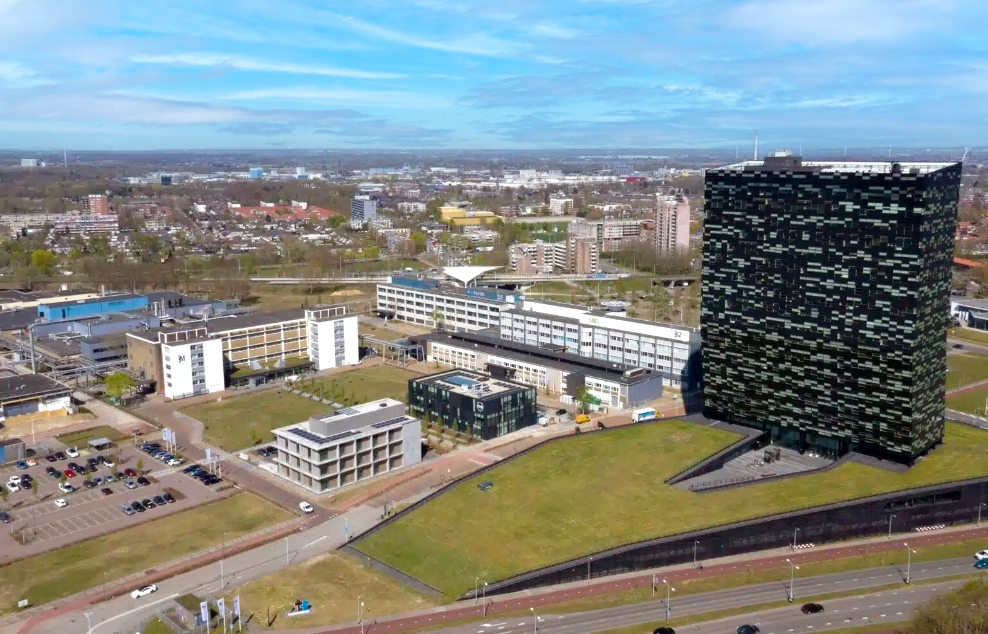
Figure 1: Noviotech Campus, Nijmegen, the Netherlands (copyright Noviotech Campus)
They can offer a range of tenancy models, from selling or leasing plots of land to providing office or lab facilities. However, renting is the more prevalent practice in most modern science parks. Depending on their focus, science parks may be open to any innovation-driven enterprise, be geared towards a few dominant sectors, or be restricted to a single field, such as biotechnology. Historically established to commercialise university research, their remit has expanded over time to support broader regional or national development. Many now employ an ‘open’ innovation strategy that connects academia, industry, and government to spur local economic growth.
Typically covering between 100,000 and 1,000,000 square metres, science parks often sit in or near urban areas, delineated by a marked site within a city’s limits. Management typically takes the form of a formally constituted organisation with its own bylaws, led by a dedicated on-site team; a hallmark that distinguishes science parks as ‘management-intensive.’ Ownership may be entirely public, entirely private, or a combination of both, often involving partnerships with local or regional governments and universities. The management body determines tenancy, oversees facilities, establishes commercial terms, and provides a comprehensive governance framework that encompasses everything from site maintenance to new developments.
Science parks typically host technology- and innovation-oriented enterprises at all stages of growth, from early start-ups to multinational firms, alongside research entities such as university labs or institutes. They also accommodate professional service providers in specialised fields, including technology transfer, intellectual property, and market research.
What distinguishes science parks is the extensive suite of services they offer. In addition to basic support services such as security, maintenance, and conference facilities, many providers offer or outsource value-added services, including incubation programmes, networking opportunities, licensing advice, and specialised infrastructure.
Examples
- Malaga TechPark (Málaga, Spain)
Founded in 1992, it hosts over 600 firms and employs 20,000 people. Its focus is on ICT, engineering, consulting, and health. Located in a natural setting, it offers pre-incubators, incubators, and free business advice.
- BioSquare (Boston, USA)
BioSquare spans 5.7 hectares in central Boston and features 2,300,000 m² of lab and office space near the Boston University Medical Campus. It supports life sciences firms seeking advanced research facilities and flexible leasing options.
- Kilometro Rosso (Lombardy, Italy)
This campus unites companies, universities, and research centres in advanced manufacturing, engineering, and more. It provides networking, financing, marketing support, and laboratories that promote open innovation.
Industrial co-innovation campuses
Industrial co-innovation campuses often emerge from large, established companies seeking to refresh their innovation approach. Over time, major corporations may become burdened by bureaucracy, limiting their willingness to take risks. One way to address this is by creating smaller, start-up-like units operating outside the main corporate structure. Another option is to open the existing corporate campus to partner firms, start-ups, or suppliers, thereby establishing a co-innovation community.
A key distinction from a science park is that an industry leader, rather than a university or a leading knowledge institute, serves as the central anchor, usually owning or controlling the land. By inviting other companies to collaborate and share resources, the anchor firm seeks to accelerate R&D and jointly develop new products. In some instances, if the anchor company departs, the site may evolve into a more conventional science park, as happened at the High Tech Campus in Eindhoven, the Netherlands.
Since the co-innovation model is relatively new, its best practices are still evolving. In principle, it centres on near-market applications and product development, whereas a science park often supports more academically driven research. These campuses range from 15 to 50 hectares, sometimes more minor, and are typically located on the outskirts of a city, on industrial land owned by the anchor firm. Some examples house only a handful of tenants, yet even smaller campuses can offer substantial opportunities for collaboration.
The anchor company generally initiates and manages the campus, occasionally with the support of the government or the university. A steering committee may be formed where multiple partners contribute funding or resources. Management is usually formal and far-reaching, focusing on the needs of the anchor and its co-located partners. Unlike science parks, which are operated by public or mixed boards, co-innovation campuses are predominantly led by the private sector, with universities or public agencies in secondary roles.
These campuses host innovative companies working in the anchor firm’s sector or in complementary fields. Services often include:
- Access to advanced R&D facilities owned by the lead company.
- Product development workshops and testing support.
- Business consulting or training programmes.
- Networking events that encourage knowledge exchange.
Participants benefit from the anchor’s market leadership, financial resources, and R&D infrastructure, while the anchor gains exposure to new ideas and potential collaborators.
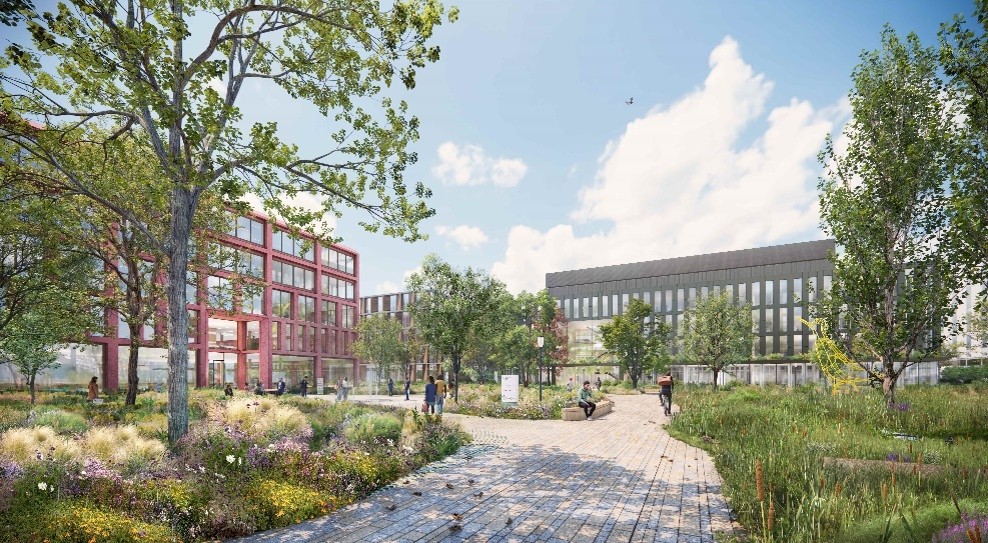
Figure 2: artist’s impression of the further development of the Biotech Campus Delft, the Netherlands
Examples
- Biotech Campus Delft (the Netherlands; Figure 2)
Led by DSM, this site hosts start-ups, SMEs, and research groups working on industrial biotechnology. It provides laboratories, pilot facilities, and opportunities for collaboration to support sustainable, bio-based innovations.
- Novartis Campus (Basel, Switzerland)
Covering 20 hectares, Novartis is creating an open network for biotech, digital healthcare, and research institutions. Renowned for its cutting-edge architecture, the facility includes start-up support, shared facilities, and creative collaboration spaces.
- Solvay Campus (Neder-over-Heembeek, Belgium)
Solvay is converting 20 buildings into a high-tech innovation space focused on chemistry and advanced materials. It encourages R&D links with start-ups, partners, and universities.
Innovation districts
Innovation districts are urban areas, often mixed-use neighbourhoods, where companies, start-ups, research institutes, and cultural amenities co-locate to spark innovation. Unlike science parks, which tend to specialise, innovation districts typically encompass a broad mix of activities: commercial offices, housing, retail, cultural institutions, and leisure facilities. They may take shape in once-declining or underused city districts, revitalised through targeted planning and development. A few are built from scratch, for example, as part of a significant event site, but more commonly evolve from older industrial or commercial zones that begin to draw in higher-value, knowledge-based ventures.
Innovation districts emphasise direct, in-person interaction and leverage existing urban fabric. Their boundaries are usually fluid or designated solely for coordination, rather than walled or fenced off. They often cover 50-200 hectares (though some extend beyond that) and are ideally situated in city centres or midtowns, where they benefit from robust transport links, varied housing options, and cultural amenities.
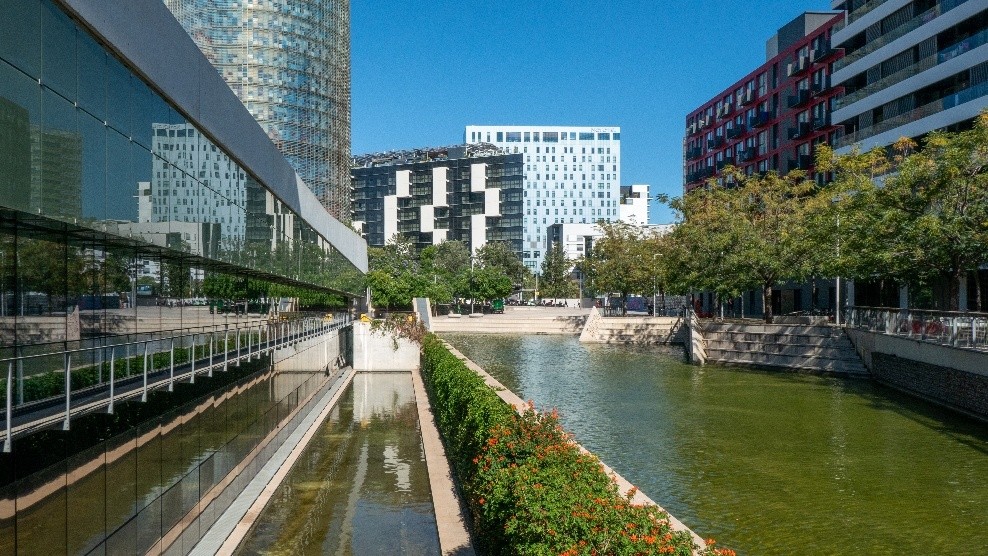
Figure 3: 22@barcelona innovation district (photo credit: Jacques van Dinteren)
Because these districts typically span multiple properties and involve numerous stakeholders, governance can be more fragmented than in a standard science park. A management body, often a public-private partnership, helps define long-term goals, coordinate infrastructure, and organise shared programmes or services. Private developers, investors, universities, hospitals, and municipal authorities also play key roles in the development process.
Approaches to management vary: some districts are administered through public-private partnerships involving local governments, developers, and businesses, while others adopt a community-based format led by residents, non-profits, or local groups. Certain districts employ a self-governance model managed by property owners or business associations, whereas a hybrid approach can combine these methods. Management often centres on intangible elements such as community engagement, branding, and event coordination rather than the more comprehensive control found in science parks.
Innovation districts attract a diverse range of participants, including start-ups, large corporations, research and cultural institutions, residents, and visitors, and encourage ‘crossovers’ as ideas converge from different fields. Many have no strict admission policy, allowing any interested organisation to establish operations.
Services may include basic real estate provisions alongside dedicated innovation support, such as co-working spaces or venture mentoring, commonly delivered through partnerships with local start-up accelerators or philanthropic bodies. This vibrant mix of activities fosters ‘creative collisions’ and accelerates the emergence of novel ideas.
Examples
- Kendall Square Innovation District (Cambridge, Massachusetts)
Evolving around MIT, Kendall Square boasts a dense cluster of biotech, digital, and research firms, plus residential and retail options. Within a one-mile radius, around 66,000 people work in a vibrant urban campus.
- Hagastaden (Stockholm, Sweden)
Situated between Stockholm and Solna, Hagastaden integrates life science firms with Karolinska Institutet and the New Karolinska Solna Hospital. By 2030, this 100-hectare redevelopment will feature mixed residential, work, and research facilities accommodating approximately 50,000 people.
- Knowledge Quarter (London, UK)
Spanning one mile around King’s Cross Station, it clusters over 85 cultural, research, and scientific bodies. Workshops, training, and shared resources strengthen cross-sector collaboration and local community engagement.
Areas of innovation
Areas of innovation generally extend beyond science parks or districts, sometimes encompassing entire cities, multiple neighbourhoods, or even broader regions. As defined by the International Association of Science Parks and Areas of Innovation (IASP), they are “places designed and curated to attract entrepreneurial-minded people, skilled talent, knowledge-intensive businesses, and investments,” underpinned by a rich mix of infrastructure, institutional networks, social capital, and specialised services.
These areas often take shape around an existing innovation hub, such as a university or research centre, and expand outward over time. They can also bring together several organised innovation spaces, including science and technology parks, incubators, and living labs, all operating within the same more expansive geography. Unlike innovation districts, which are usually confined to a compact urban area, areas of innovation tend to be more dispersed, forming a patchwork of specialised sites and institutions. This flexibility enables them to connect multiple clusters and sectors across a broader geographic area.
Local or regional government agencies typically coordinate these efforts, though the scale and diversity of participants often mean a non-comprehensive approach. A dedicated agency or public-private organisation may orchestrate events, facilitate networking, and provide business services; however, individual sub-areas generally maintain their own management structures. While formal bodies, such as foundations, non-profit agencies, or publicly owned companies, may exist, their authority typically does not extend to building control or strict tenant selection. Instead, they focus on broader strategies that attract investment and foster community ties throughout the region.
Areas of innovation accommodate a broad spectrum of stakeholders, including large corporations, start-ups, research institutions, investors, local communities, and universities. Typical services focus on connecting different sub-areas, marketing the region to potential investors and skilled talent, enhancing the quality of life through improved amenities and housing, and providing cross-cutting training and networking platforms. In this way, areas of innovation function as ecosystems in their own right, coordinating collaboration among various specialised nodes dispersed over a wider territory.
Examples
- Gothenburg (Sweden)
Within a 2 km radius, the city is home to three science parks, two universities, and numerous testbeds. Business Region Göteborg coordinates collaborations and investments, uniting primary automotive, life sciences, and ICT firms.
- Ann Arbor (Michigan, USA)
Ann Arbor SPARK unites government, business, and the University of Michigan. It offers incubation, expansion services, and mobility testbeds, revitalising the automotive sector and fostering tech-driven local growth.
- Atlanpole (Greater Nantes, France)
Connecting nearly 500 companies and 71 research organisations, Atlanpole drives innovation in biotech, ICT, advanced manufacturing, and more. It is the official science-based incubator of the Pays de la Loire region.
Incubators and accelerators
Incubators and accelerators support early-stage ventures by providing resources such as office space, mentorship, training, and assistance in securing funding. Traditional incubators often serve knowledge- or technology-intensive start-ups, allowing for a longer timeframe for business viability. In contrast, accelerators typically offer short, intensive programmes aimed at rapidly scaling selected start-up cohorts.
Incubators first gained prominence in the 1960s and have since become a worldwide phenomenon. They are frequently linked to universities or technology parks, and many large corporations establish internal incubators to nurture innovative ideas among employees. Most incubators rent space rather than own it and are typically located near universities or city centres to access local talent and networks. Some are small, hosting only a handful of teams, while others operate multiple sites or provide virtual services, offering remote mentorship and resources.
These facilities generally serve early-stage entrepreneurs developing new concepts, teams developing prototypes or minimum viable products, and students or researchers seeking to translate their ideas into market opportunities. Services can be ‘hard’, for instance, office facilities and access to funding, or ‘soft,’ such as coaching, networking events, and peer learning. Workshops on pitching, intellectual property, and growth strategies are often a core component of what incubators offer.
Incubators may be operated by public institutions, private corporations, or non-profit organisations, resulting in varied governance structures. Public incubators often involve universities or local authorities backed by government funding. Private incubators, frequently tied to corporate programmes, focus on developing or commercialising technologies relevant to the sponsoring firm. Mixed models combine both public and private financing. Day-to-day operations are typically managed by a small team, sometimes supplemented by specialised managers or external mentors. Regardless of ownership, there is typically a clear structure, ensuring incubator managers can select participants and deliver essential support programmes effectively.
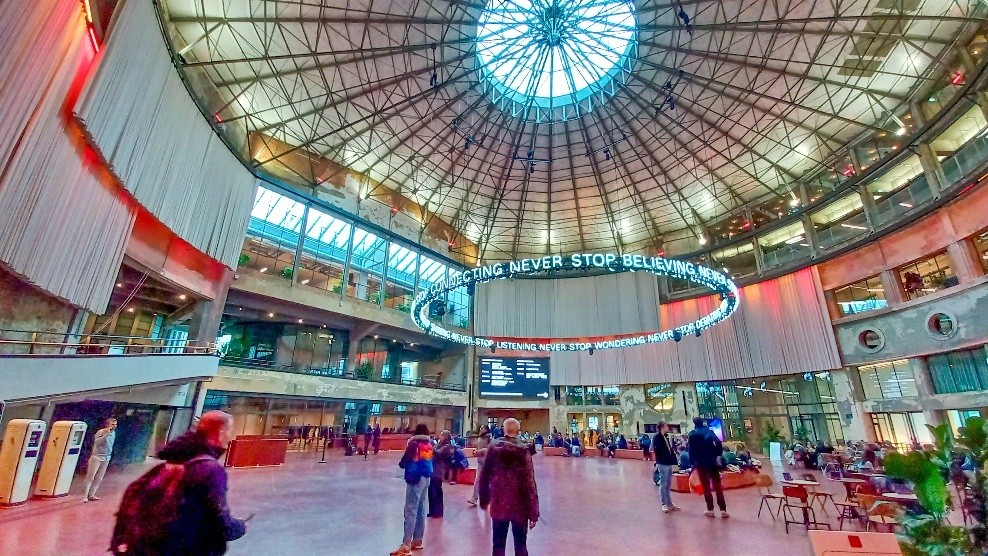
Figure 4: the ‘Winterpaleis’ technology hub in Ghent (photo credit: Jacques van Dinteren)
Examples
- Imec.istart (Leuven, Belgium)
This accelerator aids tech start-ups with coaching, mentorship, and pre-seed funding. Since 2011, it has supported more than 260 companies in software, nanotechnology, and robotics, enhancing proof-of-concept validation and market growth.
- Sting (Stockholm, Sweden)
Located in Stockholm, Sting supports 25–30 new tech ventures annually with tailored coaching, expert clinics, funding of up to €50,000, and introductions to investors such as Propel Capital.
Living labs
Living labs are user-focused, open innovation ecosystems that utilise co-creation and real-life experimentation to engage citizens, businesses, research organisations, and public authorities in the development and testing of new solutions. While initially adopted by technology firms to pilot emerging products, the concept has expanded to address challenges in healthcare, energy, mobility, and sustainability, often under the broader scope of ‘smart city’ initiatives.
Key elements of a living lab include active user engagement, real-world testing environments, multi-stakeholder collaboration, and iterative design cycles. Urban living labs concentrate on citywide or neighbourhood-scale issues, such as public space or climate adaptation. In contrast, rural living labs focus on more dispersed communities, often addressing digitalisation or social innovation beyond major urban centres.
Living labs vary significantly in scale. Some are confined to a single building or campus, while others stretch across entire districts or regions, either by designating specific sites for testing or by coordinating multiple smaller labs. Most operate as public-private-people partnerships, bringing together government bodies, research institutions, businesses, and community members. Governance can range from top-down (initiated by a municipal agency) to bottom-up (driven by grassroots organisations), though it typically falls between these extremes. Many labs rely heavily on project funding and collaboration, so their management tends to be non-comprehensive, emphasising facilitation, participatory methods, and ongoing feedback rather than rigid hierarchies.
Decision-making at the project level involves setting priorities, establishing timelines, allocating resources, and determining how end users will participate. Intellectual property arrangements can be complex, requiring a balance between the open knowledge-sharing ethos of living labs and businesses’ commercial interests. The goal is to turn ideas into tangible applications that benefit public authorities, tech companies, non-profits, and citizen groups.
Living labs often provide physical or virtual spaces for prototyping and testing new technologies or policies, host co-creation workshops and user research sessions, and offer data collection and analysis capabilities, particularly relevant in mobility or environmental projects. They can also act as platforms for community-led initiatives. By prioritising user-centred methods, living labs inform urban policy, create more inclusive products, and foster closer connections between citizens and local institutions. Additionally, they contribute to regulatory learning, enabling authorities to explore how emerging technologies and services can be integrated within existing legal frameworks.
Examples
- HSB Living Lab (Gothenburg, Sweden)
This ten-year project combines student housing with real-time research on sustainable buildings and materials. Partners include Chalmers University of Technology and industry players, who are testing innovations in energy efficiency and user behaviour.
- Living Lab for Health (Catalonia, Spain)
Managed by IrsiCaixa, it tackles health challenges through participatory research, systemic solutions, and educational programmes. It partners with universities, businesses, and public institutions and is partly funded by EU grants and private sponsors.
- Energy & Water – Greater Copenhagen Living Lab (Denmark)
A public-private initiative that unites Copenhagen’s Environmental Educational Services and HOFOR, it showcases sustainable energy and water solutions and engages students and residents in co-designing climate adaptation.
Conclusions
The conceptual analysis of physical innovation environments, supported by practical examples, enables the delineation of distinct profiles of organised innovation spaces.
Science and technology parks are usually located in urban or peri-urban areas and comprise one or more sites with clearly defined boundaries. This physical boundedness often shapes governance: a legally constituted management organisation and on-site teams typically exercise extensive control over premises, services and activities. Compared with other organised innovation spaces, their concentrated location, formal organisational structure and comprehensive management are defining features. They commonly provide a broad service portfolio, ranging from basic support to high-value-added services, aimed primarily at established innovation actors, such as companies, research organisations, and higher education institutions.
Industrial co-innovation campuses share many of these traits. They operate within a clearly defined area, are governed by a formal, comprehensive governance model, and provide a wide range of facilities and services to industry and academia. The key difference is leadership and ownership. Whereas science and technology parks are often driven by, or closely anchored to, an academic institution, industrial co-innovation campuses are typically initiated and managed by a single industrial actor, frequently a leading company in its sector. They are therefore often located on an industrial site provided by the principal firm and are more likely to be found on the urban fringe than in a dense city centre.
Innovation districts generally cover a broader area and are less clearly bounded than parks or industrial campuses. They are developed in an urban context, often as regeneration projects in run-down or underused neighbourhoods. While they are usually led by a formal organisation (public, private or a partnership), their management is typically less comprehensive. The focus is on coordination, orchestration, ecosystem development and community engagement rather than direct control of facilities. Innovation districts also host a wider range of users beyond firms, research and higher education institutions, including hospitals, employees, students, and residents, who benefit from proximity and contribute to the ecosystem.
Areas of innovation extend this continuum further, spanning dispersed geographies across urban and peri-urban zones. They may sometimes have formally established bodies, but their scattered nature generally results in orchestration rather than comprehensive management. Their distinguishing feature is critical mass: they assemble a broad range of actors, including higher education institutions, public administrations, businesses and clusters, often incorporating other organised innovation spaces such as science and technology parks, universities, incubators, accelerators and living labs, with universities and parks frequently acting as focal points.
Incubators are usually formally organised with relatively small teams exercising comprehensive control over operations. They tend to be sector-focused and concentrate on very early-stage and early-stage start-ups, resulting in a narrower target group. They may be located within a science and technology park, a university, or a corporate setting, and some large firms apply incubator practices internally to stimulate future growth.
Finally, living labs typically have a more informal set-up, often as consortia, with limited management focused on enabling interaction rather than operating a dedicated site. They can be urban or non-urban depending on their thematic focus. Their hallmark is inclusive participation, with public authorities, knowledge institutions, businesses and civil society (especially citizens and community members) engaged as co-creators in innovation.
Although overly broad generalisations should be avoided, as the phenomenology of organised innovation spaces can also exhibit consistent variations, a transversal approach to the results allows final observations across the four criteria selected to identify the organised innovation spaces. Firstly, each organised innovation space presents a relatively circumscribed profile in terms of geographic location (excluding living labs); however, the distinguishing element appears to be spatial concentration and the presence of clearly defined boundaries. In this respect, it would seem that as the spatial concentration of the organised innovation space decreases (e.g., innovation districts, areas of innovation, living labs), governance becomes softer and more oriented toward orchestration, and strictly understood management tends to cover an increasingly narrow set of activities.
With regard to targeted users, it can be noted that such flexibility is also more conducive (or better suited?) to frontier models of innovation, i.e., involving a wider selection of quadruple-helix stakeholders (citizens, final users, students), and/or entailing participatory processes and co-creation methods. Conversely, as conceptual categories, none of the organised innovation spaces (excluding incubators/accelerators) presents a clear profile in terms of the maturity of the companies hosted, as real-life examples are heterogeneous.
In conclusion, this research attempted to address the need for the systematisation of the knowledge on innovation ecosystems,
focusing on their physical dimension, namely, organised innovation spaces. Far from being an exhaustive account of all innovation-
related actors and entities, this contribution investigates only one of the many pieces that compose the multifaceted innovation ecosystem puzzle, leaving room for further work on other non-physical dimensions of (open) innovation and co-creation, as well as potential intersections between the two.
This is a highly abridged version of the report ‘Organised innovation spaces’. The study was commissioned by the European Commission’s Joint Research Centre and edited by Alessandro Fazio and Anna Battiston. Sanz, L., Klofsten, M., Van Dinteren, J. and Jansen, P., A Taxonomy of Organised Innovation Spaces, Battiston, A. and Fazio, A. editors, Publications Office of the European Union, Luxembourg, 2023, doi:10.2760/628200, JRC134965.

