
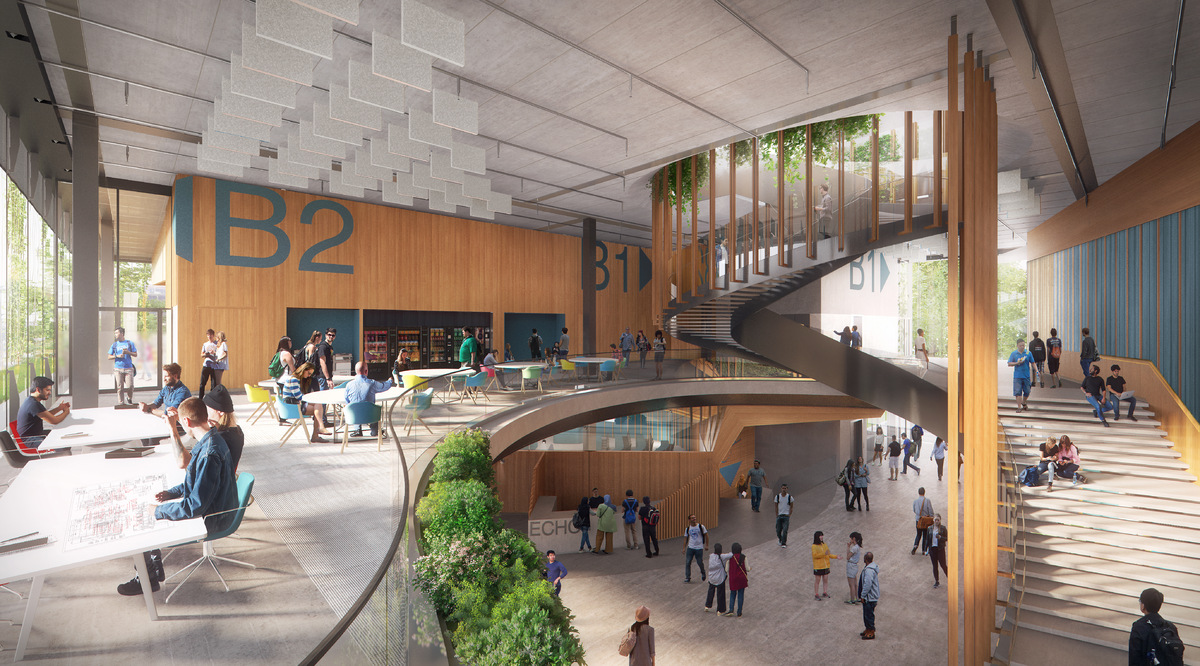
An organised innovation space (often referred to as an innovation area) includes science and technology parks, industrial innovation campuses, innovation districts, incubators and accelerators. These places typically sit within broader innovation ecosystems and thrive on connectivity: between companies, knowledge institutions, governments, investors, designers, managers and, crucially, the people who work there every day.
Developing, renewing, and operating innovation areas is fundamentally different from creating conventional business parks or office districts. Success depends less on the physical product alone and more on the interaction between place, people and performance. Networks, community, services, governance and identity are not “add-ons”; they are core ingredients. This is precisely where interdisciplinary learning becomes essential: the challenges span real estate, urbanism, economic development, organisational design, brand and communications, and day-to-day area management.
That is why IADP focuses on network building and knowledge exchange. Our partnership connects professionals from multiple disciplines who work in innovation areas across different roles: advisers, developers, investors, designers, park managers, public-sector stakeholders, and ecosystem builders. By exchanging practical experience, methods and lessons learned, we build a shared understanding of what makes innovation environments work in practice, and how to adapt them as conditions change.
Within the IADP network, partners actively share insights and approaches across a broad set of topics, including:
- area strategy and positioning (purpose, identity, target sectors, value proposition);
- concept development and programming (amenities, shared facilities, services and placemaking);
- masterplanning, landscape and urban design (quality of public space, mobility, mixed use);
- real estate development and asset strategy (phasing, flexibility, retrofit versus new build);
- investment, finance and business models (viability, revenue models, risk allocation);
- ecosystem, network and community building (partnerships, talent, events, engagement);
- management and governance (roles, responsibilities, operating models, performance metrics).
Several significant trends are increasing the need for cross-disciplinary learning and collaboration, making knowledge exchange between partners more valuable than ever:
- The shift from “space” to “service”: users expect hospitality-grade amenities, shared programmes and community management, not just buildings.
- Hybrid work and changing demand: occupiers seek flexibility, smaller footprints, higher-quality shared spaces and stronger reasons to come together.
- Mission-driven innovation and societal transitions: energy, circularity, health and digitalisation require collaboration across sectors and stakeholders, changing how areas are positioned and managed.
- Climate resilience and sustainability requirements: decarbonisation, adaptation, energy systems and nature-based solutions affect design, investment decisions and operations simultaneously.
- Talent competition and inclusion: innovation areas must attract, retain and support diverse talent through experience, accessibility, housing/mobility links and a strong sense of belonging.
- Data-driven area management: smarter operations and measurable impact demand new capabilities around data, privacy, governance and performance monitoring.
- Retrofit and intensification: upgrading existing districts while keeping them operational requires integrated approaches to phasing, stakeholder alignment and financing.
Working effectively with these trends rarely follows a linear process. It requires iteration, continuous alignment and learning across disciplines and organisations. IADP provides a platform where that learning is structured, shared, and translated into better decisions, helping partners and stakeholders create innovation areas that perform, evolve, and remain relevant over time.
 Innovation Area Development Partnership (IADP)